 Bellingham Roofing
 Fairhaven's Waterfront Setting Is Hard on a Shingle Roof
Fairhaven sits close to Bellingham Bay, and that waterfront position shapes what a roof has to put up with year after year. Salt-laden air drifts in off the water, near-constant winter rain drives sideways under eaves and around flashing, and the deep shade from mature trees and marine humidity keeps roof surfaces damp for months at a stretch. None of this is dramatic on its own, but stacked together over a Whatcom County winter, it wears through an asphalt shingle roof faster than the same product would age fifty miles inland.
A shingle roof built for Fairhaven isn't a different product than one built for a dry climate — it's the same materials installed with more attention to the details that keep water and moisture out: sealed laps, correct flashing, and airflow underneath the shingles that lets the deck dry out between storms.
Salt Air Accelerates Wear on Metal Components
Shingles themselves tolerate salt air reasonably well, but the metal parts of a roofing system — flashing, drip edge, nail heads, vent housings — corrode faster near the water than they do further inland. A roof that looks fine from the ground can have flashing that's thinned out or fasteners that have started to rust, both of which lead to leaks long before the shingles themselves are worn out.
Moss Season Runs Long in This Neighborhood
Between the marine humidity, shaded lots, and a rainy season that can stretch from October well into spring, moss and algae have a long window to take hold on a Fairhaven roof. Moss isn't just cosmetic — it holds moisture against the shingle surface, works its way under shingle edges as it grows, and can lift tabs enough to let wind-driven rain in underneath.
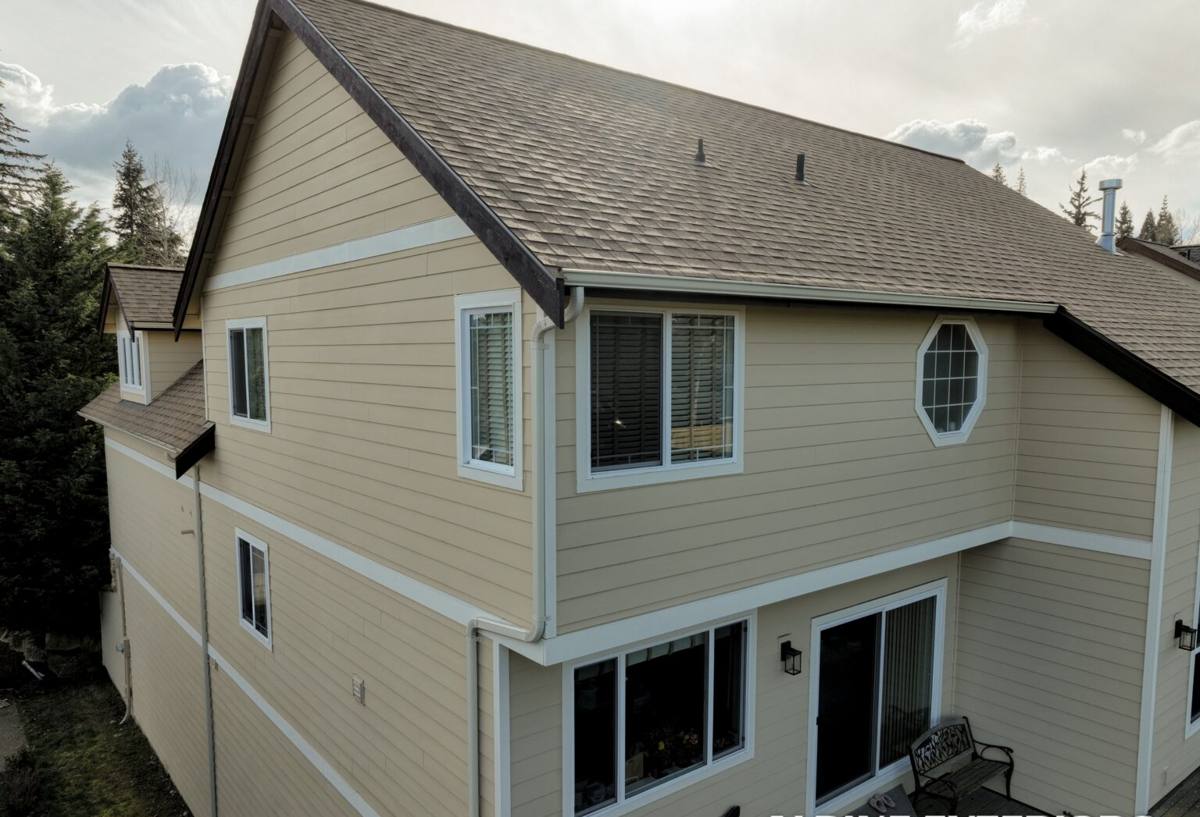
What a Correctly Built Shingle Roof Needs Here
A roof designed for this climate leans on a handful of details that matter more here than they would somewhere drier:
- Ice-and-water shield at eaves, valleys, and around penetrations, not just the minimum code strip
- Algae-resistant (AR) shingles where moss and streaking are a known issue on the lot
- Corrosion-resistant flashing and fasteners rather than standard-grade metal
- Balanced intake and exhaust ventilation so the underside of the deck can dry between rain events
- Properly lapped and sealed underlayment as a second line of defense, since no shingle roof is 100% watertight on its own
Ventilation Matters as Much as the Shingles Themselves
A shingle roof in a damp climate fails from underneath as often as it fails from the top. If a roof doesn't have enough intake at the eaves and exhaust at the ridge, moisture from inside the house and moisture that works its way past the shingles both get trapped against the underside of the deck. Over a few seasons that shows up as soft spots, premature shingle curling from the inside out, and mold or rot in the attic — none of which is visible from the yard.
Signs a Fairhaven Roof Needs a Closer Look
Most shingle roof problems give some warning before they turn into an active leak. Worth checking for:
- Granules collecting in gutters or at the base of downspouts
- Moss or dark streaking building up on north-facing or shaded slopes
- Shingle edges that look lifted, curled, or cracked, especially after a windstorm
- Rusty streaking below metal flashing or vent stacks
- Daylight or water stains visible from inside the attic
- Ceiling stains that appear after heavy or wind-driven rain specifically
Any one of these on its own isn't an emergency, but it's worth a professional look before the next storm season rather than after a leak shows up on the ceiling.
Our Asphalt Shingle Roofing Process
The steps don't change much from one roof to the next, but how carefully each one is done is what determines whether a roof holds up in a wet, salty climate or starts giving trouble in five years instead of twenty.
- Inspection and deck check. We look at the existing roof, gutters, and attic ventilation, and check the decking underneath old shingles for soft spots or rot once tear-off begins.
- Tear-off and deck repair. Old shingles and underlayment come off completely; any damaged sheathing gets replaced rather than covered over.
- Ice-and-water shield and underlayment. Extra protection goes down at eaves, valleys, and roof penetrations, with synthetic underlayment across the rest of the field.
- Flashing. New flashing at chimneys, walls, valleys, and vent penetrations — this is where the majority of roof leaks actually originate, not the shingle field.
- Shingle installation. Shingles go down to manufacturer specifications for nailing pattern and exposure, which affects both wind resistance and warranty coverage.
- Ventilation. Ridge and soffit vents are installed or corrected so the roof system can breathe and dry properly year-round.
- Final walkthrough. We check the finished roof, clean up the site, and go over care and maintenance specific to the property.
Repair or Replace? What Actually Drives That Decision
Not every roof problem in Fairhaven means a full replacement. The honest answer usually comes down to age, how widespread the damage is, and what's happening underneath the shingles.
| Factor | Leans Toward Repair | Leans Toward Replacement |
|---|---|---|
| Roof age | Under 12-15 years | Past 18-20 years or original manufacturer warranty expired |
| Damage location | Isolated to one slope, flashing, or vent | Spread across multiple slopes or the whole roof |
| Granule loss | Minor, scattered | Heavy loss, bare patches visible |
| Decking condition | Solid, no soft spots found | Soft, delaminated, or water-stained decking |
| Moss/algae presence | Surface growth, removable | Growth under shingle edges, lifted tabs |
| Interior signs | None | Attic moisture, ceiling stains, or active leaks |
We'll tell you honestly which side of that line your roof falls on. A repair that genuinely solves the problem is a better outcome for you than a replacement you didn't need — and it's also a faster job for us, so there's no reason to push a bigger project than the roof calls for.
Choosing the Right Shingle for a Coastal, Moss-Prone Lot
Asphalt shingles come in a few tiers, and the right one for a Fairhaven property depends on sun exposure, tree cover, and how long you plan to stay in the home.
| Shingle Type | Typical Lifespan | Best Suited For |
|---|---|---|
| 3-tab | 15-20 years | Budget-focused projects, less wind and moss exposure |
| Architectural (laminate) | 25-30 years | Most Fairhaven homes; better wind and impact resistance |
| Algae-resistant (AR) upgrade | Same as base shingle | Shaded, damp, or heavily tree-covered lots |
| Premium/designer laminate | 30+ years | Homes prioritizing appearance and maximum durability |
For most homes in this neighborhood, we lean toward architectural shingles with an algae-resistant rating as the practical baseline — the upgrade cost over standard shingles is modest, and it directly addresses the moss and streaking issue that's most common on shaded, water-adjacent lots. We'll walk through the real trade-offs for your specific roof rather than defaulting to the most expensive option.
Why It Matters That We Already Work in Fairhaven
A roofing crew that works this neighborhood regularly already knows which slopes tend to hold moss longest, how prevailing wind off the bay tends to drive rain into certain wall-and-roof intersections, and what permitting or inspection expectations apply to older homes in this part of Bellingham. That's not something a crew coming in from outside the area picks up on the first job.
It also means we're not guessing at material choices. We know which shingle upgrades are worth the money on a shaded, salt-air lot and which ones are unnecessary spending for a property that gets more sun and less moss pressure. That local pattern recognition is part of what keeps a roofing estimate honest instead of generic.
Keeping a Fairhaven Roof Healthy Between Services
A well-installed shingle roof in this climate still benefits from basic upkeep. Clearing debris and moss buildup once or twice a year, keeping gutters flowing so water doesn't back up under the shingle edge, and trimming back overhanging branches to cut down shade and debris all extend the life of the roof between full inspections. None of this replaces a periodic professional check, especially after a hard windstorm, but it goes a long way toward keeping small issues from becoming interior leaks.
If you're dealing with moss buildup, a roof that's getting up in years, or you just want an honest read on where your roof stands, we're happy to take a look. Reach out for a free, no-pressure estimate — the form below gets you started.