 Bellingham Roofing
 Edgemoor's Exterior Challenge: Trees Above, Bay Below
Edgemoor sits along the bluffs and wooded slopes near Bellingham Bay, and that setting cuts both ways. The tree canopy that gives the neighborhood its character also means roofs stay shaded and damp longer than homes out in the open. The bay proximity that gives many properties a water view also means salt-laden air and driving rain off the water reach the exterior of the house more directly than they would a few miles inland. Homes here work harder than the average Whatcom County house, and the exterior systems — roof, siding, windows, decks — need to be built and maintained with that combination in mind.
We've worked on enough homes in this part of Bellingham to know it's not one single threat that wears down a roof or a wall of siding. It's the layering of several things at once: moisture that doesn't dry out quickly under tree cover, salt air that slowly degrades exposed metal and finishes, and wind-driven rain that finds every weak seam. None of that is dramatic on its own. It's cumulative, and it's exactly the kind of wear that gets missed until it's expensive.
What Salt Air Actually Does to a Roof and Siding
Salt air isn't just a coastal talking point — it has a measurable effect on building materials over years of exposure. Airborne salt is corrosive to unprotected or poorly coated metal, and it accelerates the breakdown of certain sealants and finishes faster than a purely inland climate would.
On the roof
Exposed fasteners, flashing, and any bare metal components are the most vulnerable points. Galvanized flashing that would hold up for decades in a dry inland town can start showing surface corrosion sooner near the bay. This is why fastener and flashing material selection matters more here than it does on a roof twenty miles east — it's not a place to default to the cheapest option.
On siding and trim
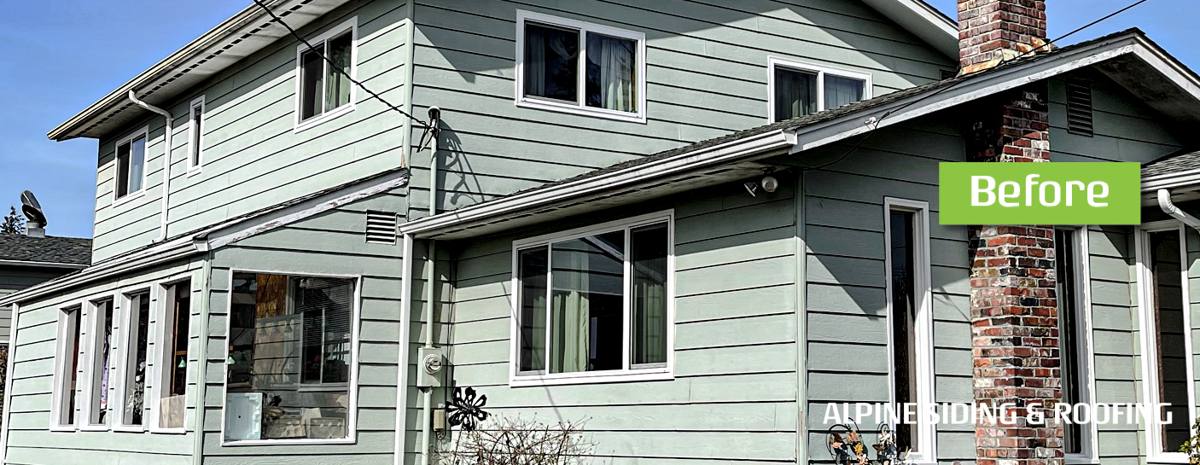
Salt-laden moisture works into seams, nail heads, and butt joints in siding, and it can accelerate finish wear on painted or stained wood trim. Homes closer to the bluff edge, with more direct exposure to marine air, tend to show this first around window trim and lower courses of siding.
Moss Season and Shaded Roofs
Whatcom County's wet season is long, and in a wooded neighborhood like Edgemoor, tree cover keeps roof surfaces damp well after the rain stops elsewhere. That combination — shade plus moisture plus mild temperatures — is exactly what moss needs to establish itself.
Moss isn't just cosmetic. As it spreads across a roof surface, it holds moisture against the shingles or shakes underneath it, lifts edges as it grows, and creates a rougher surface that catches more debris and holds even more water. On a roof under heavy tree cover, moss that isn't addressed can shorten the usable life of the roofing material by trapping moisture against it season after season. Gutters and valleys under overhanging branches are usually the first place we see buildup, since that's where organic debris collects alongside the moisture.
Regular moss treatment and debris removal is one of the cheapest things a homeowner can do to protect a roof in this kind of setting, and it's often skipped simply because it's not visible from the ground.
Driving Rain and Wind Exposure Near the Bluff
Bellingham's weather off the bay isn't usually violent, but it is persistent and often wind-driven, especially on properties with more open exposure toward the water. Wind-driven rain behaves differently than rain falling straight down — it gets pushed up under shingle edges, into siding laps, and around window and door openings that would otherwise shed water fine in calmer conditions.
This is why proper flashing detail, underlayment, and installation technique matter more on exposed Edgemoor lots than a generic installation approach would suggest. A roof or siding job that's technically "up to code" can still let water in over time if the flashing and lap details weren't built for wind-driven exposure specifically.
Roofing Services for Edgemoor Homes
We handle roof replacement, repair, and maintenance for the range of roofing styles found throughout this part of Bellingham, from older homes with mature tree cover to newer builds with more open sightlines toward the bay.
| Material | How it handles salt air & moss exposure | General maintenance need |
|---|---|---|
| Asphalt composition shingle | Good performance with proper ventilation and moss control; algae-resistant granules help in shaded, damp settings | Moderate — periodic moss and debris removal |
| Metal (standing seam or panel) | Long-lasting if properly coated fasteners and finishes are used; poor-grade metal or exposed fasteners corrode faster near the bay | Low, but fastener and coating quality matters at install |
| Cedar shake | Attractive but more moisture-sensitive under tree cover; needs airflow and diligent moss/debris management to avoid premature rot | High — regular inspection and treatment |
| Synthetic/composite shingle | Resists moisture absorption well; good option for heavily shaded, damp lots | Low to moderate |
We'll walk you through which option fits your specific lot — how much tree cover you have, how exposed the roof is to bay wind, and what you're trying to balance between upfront cost, appearance, and long-term upkeep. There's no single "best" roof for Edgemoor; it depends on your particular setting.
Roof repair and inspection
For homeowners not ready for a full replacement, we do targeted repair work — flashing fixes, moss and debris removal, leak diagnosis, and ventilation improvements. A lot of roof damage we find in this neighborhood traces back to a slow leak around a valley or chimney flashing that had been dripping quietly for a season or two before it showed up as a ceiling stain.
Siding, Windows, and Decks — The Rest of the Exterior
Roofing gets most of the attention, but the same salt air, moisture, and shade conditions affect every other exterior surface on an Edgemoor home.
Siding
We install and repair fiber cement, wood, and vinyl siding, matched to how much sun and wind exposure a given elevation of the house actually gets. North- and west-facing walls under tree cover typically need different attention than a south-facing wall in more open sun.
Windows
Window seals and frames near the bay take on more moisture cycling than windows further inland. We look closely at flashing and seal integrity around window openings, since that's a common entry point for the kind of slow water intrusion that's hard to spot until it's caused interior damage.
Decks
Outdoor living space is part of the appeal of a wooded, bay-adjacent lot, and decks here deal with the same moss, shade, and moisture exposure as the roof. Proper board spacing, fastener choice, and regular cleaning go a long way toward keeping a deck sound and safe for years rather than needing early board replacement.
Why a Local Crew Matters for This Neighborhood
A contractor who only works inland or in drier parts of Whatcom County won't necessarily think to spec corrosion-resistant fasteners, plan for heavier moss maintenance, or detail flashing for wind-driven rain the way a crew that regularly works bay-adjacent, wooded properties will. Edgemoor's mix of mature trees and bay exposure is a specific combination, and getting it right the first time — rather than discovering the gaps a few winters later — comes down to experience with this exact kind of setting.
We're a Bellingham-based crew, and we treat every estimate as a chance to actually look at your lot: how much tree cover you have, which direction your roof and walls face relative to the bay, and where water and debris tend to collect. That's the information that should drive material and maintenance recommendations, not a generic checklist.
Maintenance Checklist for Edgemoor Homeowners
A short list of things worth doing on a regular basis if your property has meaningful tree cover and bay exposure:
- Clear gutters and valleys of needles and debris at least twice a year, more often under heavy tree cover
- Have moss growth treated before it spreads across large sections of the roof, not after
- Inspect flashing around chimneys, valleys, and roof penetrations annually
- Check window and door seals for signs of water staining or soft trim
- Look at exposed metal fasteners and hardware periodically for early corrosion
- Keep tree branches trimmed back from the roofline to improve airflow and sun exposure
- Walk deck boards seasonally and address soft spots or loose fasteners early
Getting Started
Whether you're dealing with a moss-covered roof that's overdue for attention, siding that's showing wear on the shaded side of the house, or you're planning ahead for a full exterior refresh, it helps to start with an honest look at what your specific property is dealing with. If you're in Edgemoor or elsewhere around Bellingham and Whatcom County, we're happy to come take a look and give you a straightforward, no-pressure estimate — just fill out the form below to get started.