 Bellingham Roofing
 Exterior Contractors Serving Barkley
Barkley sits close enough to Bellingham Bay and the surrounding waterways that its homes deal with a very particular mix of weather. It's a newer, mixed residential area compared to some of Bellingham's older neighborhoods, which means a lot of roofs, siding jobs, and decks in Barkley are hitting the age where the first major maintenance decisions start coming due. We work on homes throughout Whatcom County, and Barkley's exterior needs tend to follow a predictable pattern tied directly to our regional climate.
This page covers what we typically see on Barkley homes, how our roofing, siding, window, and deck work is suited to this area, and what to think about before you hire anyone to work on your house.
What Bellingham's Climate Does to a Home Here
Whatcom County weather is mild compared to a lot of the country, but "mild" doesn't mean easy on a building. Three things do most of the damage over time:
- Salt air — proximity to the bay means airborne salt and moisture settle on metal flashing, fasteners, and hardware, accelerating corrosion faster than an inland home of the same age.
- Driving rain — Bellingham's rain often comes in sideways with wind, which pushes water into laps, seams, and joints that would stay dry in a straight-down rain. This is why lap direction, flashing details, and caulking quality matter more here than in drier climates.
- A long moss season — shaded, damp roof and siding surfaces here can grow moss and algae for most of the year, not just a few winter months. Left alone, that growth holds moisture against the surface and works its way under shingles, siding laps, and trim.
None of this means Barkley homes are falling apart faster than anywhere else — it means the maintenance schedule and materials have to be chosen with these specific stresses in mind, rather than defaulting to whatever's standard in a drier region.
Roofing in Barkley
Moss, Algae, and Roof Life
Moss is the most visible sign of the local climate at work, but it's rarely the actual damage — it's the early warning. Once moss establishes itself on shingles, it holds water against the granule surface, and over a few seasons that shortens the shingle's effective life. On north-facing slopes and roof sections shaded by trees, we see moss growth start well before the shingles themselves are actually failing. Regular moss removal and treatment, done correctly, can meaningfully extend a roof's useful life without needing a full replacement.
Roof Age and Material Fit
A lot of Barkley homes are still on their original roofs or first replacement. When a roof does need replacing, we look at slope, shading, and prevailing wind direction on that specific house before recommending a material or installation approach — a roof tucked under trees with a lot of north-facing shade needs a different moss-management plan than one that sits open to sun and wind.
Flashing and Penetrations
Most roof leaks in this climate don't come from the field of the shingles — they come from flashing around chimneys, vents, skylights, and valleys, where driving rain and salt-air corrosion do the most work over time. We pay close attention to these details on every inspection, since they're the most common failure point on Bellingham-area roofs.
Siding That Holds Up to Coastal Moisture
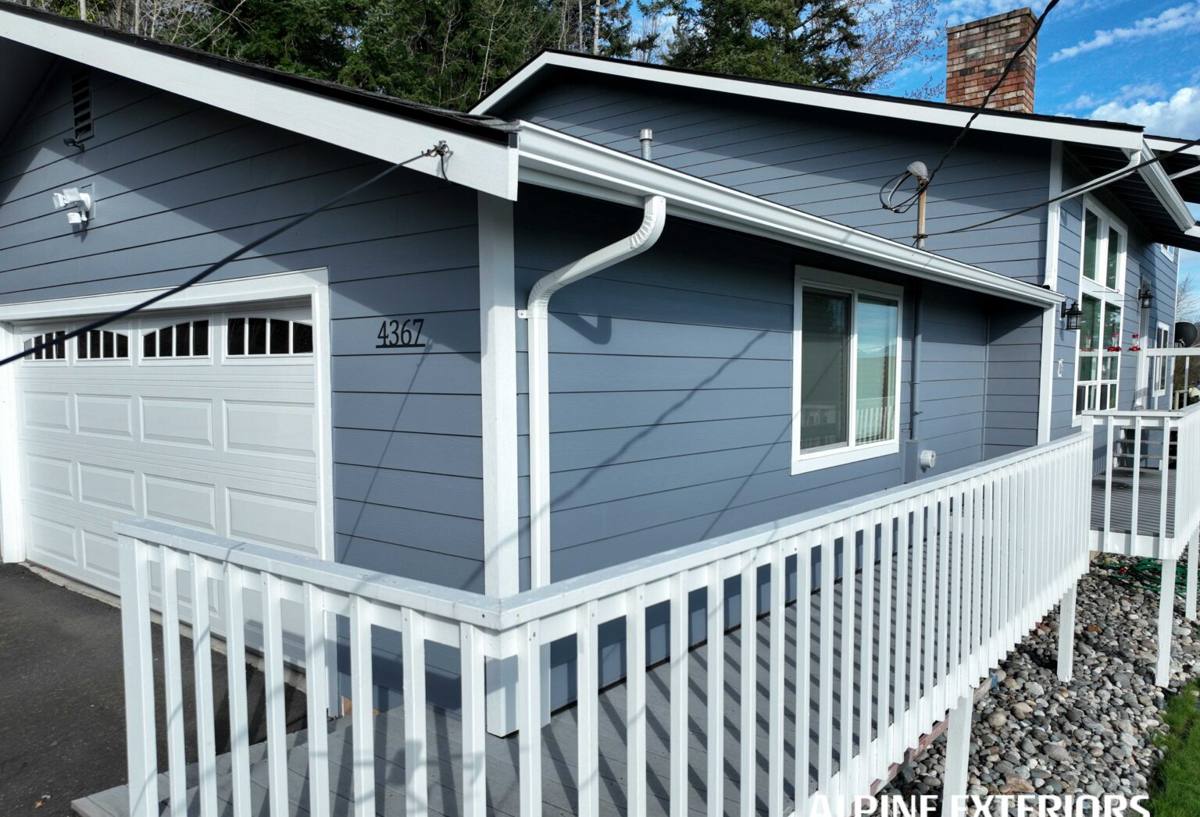
Siding on a Barkley home is doing constant work against wind-driven rain. The biggest issues we see aren't usually the siding material failing outright — they're moisture getting behind it through poor flashing, gaps at trim and window edges, or caulking that's aged past its useful life. Our approach to siding work here focuses on:
- Proper flashing and water-resistive barrier detailing behind the siding, not just the visible surface
- Correct lap and joint installation so wind-driven rain sheds outward instead of finding a path in
- Material choices that match the home's exposure — a wall facing prevailing wind and rain needs more attention to sealing and maintenance than a sheltered wall
- Trim and corner details, which are common points where moisture gets behind siding unnoticed for years
We're happy to talk through the trade-offs between siding materials honestly — including maintenance burden, how each handles moisture over time, and installation sensitivity — rather than pushing whatever's easiest to sell.
Windows: Comfort, Condensation, and Moisture Control
Older or poorly sealed windows in a wet climate like ours show their age in a specific way: condensation between panes, fogging, drafts, and sometimes soft or discolored trim around the frame from long-term moisture intrusion. In Barkley's exposure to bay-driven wind and rain, window flashing and sealing quality matters as much as the window unit itself. A well-installed window with mediocre flashing will leak eventually; a good window with correct flashing and sealing will hold up for decades. We treat the installation detail work — not just the glass — as the part that actually determines how a window performs here.
Decks Built for Wet-Weather Durability
Decks take a different kind of punishment: standing moisture, freeze-thaw cycling in colder snaps, UV from summer sun, and the same driving rain that affects roofs and siding. The most common deck problems we see in this area are:
- Ledger board attachment points where water collects against the house — a common source of hidden rot
- Fastener corrosion from salt air, especially on older decks built with standard (non-coated) hardware
- Board spacing and drainage that wasn't set up to shed water fast enough for our rain totals
- Railing posts and stair stringers, which sit closer to grade moisture and take longer to dry out between rain events
Whether it's a repair, a resurface, or a full rebuild, we build decks with corrosion-resistant fasteners and drainage detailing suited to this climate, not a generic spec pulled from a drier region.
What Drives Cost on an Exterior Project
Every home is different, but these are the main factors that move a project's price up or down. We give real numbers during an on-site estimate — this is meant as a general guide.
| Factor | Why It Matters |
|---|---|
| Roof/wall access and pitch | Steeper roofs and tight lot lines slow work down and affect equipment needs |
| Extent of hidden damage | Rot or moisture intrusion found once material is removed adds scope that can't always be predicted upfront |
| Material choice | Different roofing, siding, and decking materials carry different upfront costs and long-term maintenance needs |
| Number of penetrations/details | Chimneys, skylights, dormers, and multiple window openings add labor and flashing work |
| Tear-off vs. overlay (roofing) | Full tear-off costs more upfront but lets us address decking and flashing issues an overlay would hide |
| Current condition | Proactive maintenance (moss removal, caulking, minor repair) is consistently cheaper than deferred, full-scope replacement |
Why a Local Crew Matters Here
Exterior work in Whatcom County isn't the same job as exterior work somewhere dry and inland. A crew that works this area regularly knows which roof slopes in Barkley hold moss longest, which wall exposures take the worst of the driving rain, and how salt air changes what fasteners and flashing hold up over time. That local knowledge shows up in small decisions — where extra flashing goes, which side of the house gets a longer-lasting sealant, how a deck's drainage is angled — that don't show up on a spec sheet but matter a lot ten years later. We're a Bellingham-based crew, and the way we build and repair reflects what actually holds up in this specific climate, not a generic national standard.
A Simple Maintenance Checklist for Barkley Homes
- Inspect the roof for moss and algae growth at least once a year, more often on shaded, north-facing slopes
- Check flashing around chimneys, vents, and skylights for lifting, corrosion, or gaps
- Look at siding trim and corner joints for cracked or missing caulking
- Watch for condensation between window panes, which signals a failed seal
- Inspect deck ledger boards and fastener hardware for rust or softness, especially near the house connection
- Clear gutters and downspouts regularly — clogged drainage sends water where it shouldn't go, straight into siding and fascia
- Address small moisture issues right away — they get more expensive the longer they sit
If you're not sure whether something you're seeing on your roof, siding, windows, or deck is normal wear or an early problem, we're glad to take a look. Fill out the form below for a free, no-pressure estimate — we'll walk the property, tell you honestly what we see, and give you real numbers to work with.