 Bellingham Roofing
 Roofing and Exterior Care for the Puget Area of Bellingham
Homes in the Puget area of Bellingham sit close enough to the water that salt air, wind-driven rain, and long stretches of shade become part of daily life for a roof and its siding. If you've owned a home here for more than a winter or two, you already know the pattern: rain that comes in sideways during a windstorm, gutters that fill with fir and cedar needles faster than expected, and roof slopes that stay damp long after the rain has stopped because the sun just doesn't reach them for much of the year. None of that is unusual for this part of Whatcom County, but it does mean exterior work here has to account for conditions that a lot of national roofing and siding guidance simply doesn't address.
We work on homes throughout Bellingham and the surrounding communities, and Puget's mix of older homes and newer infill construction gives us a good cross-section of what tends to go wrong and why. This page walks through what we typically see, how our roofing, siding, window, and deck work is approached for this specific environment, and what a homeowner should actually look for when hiring someone to work on their home.
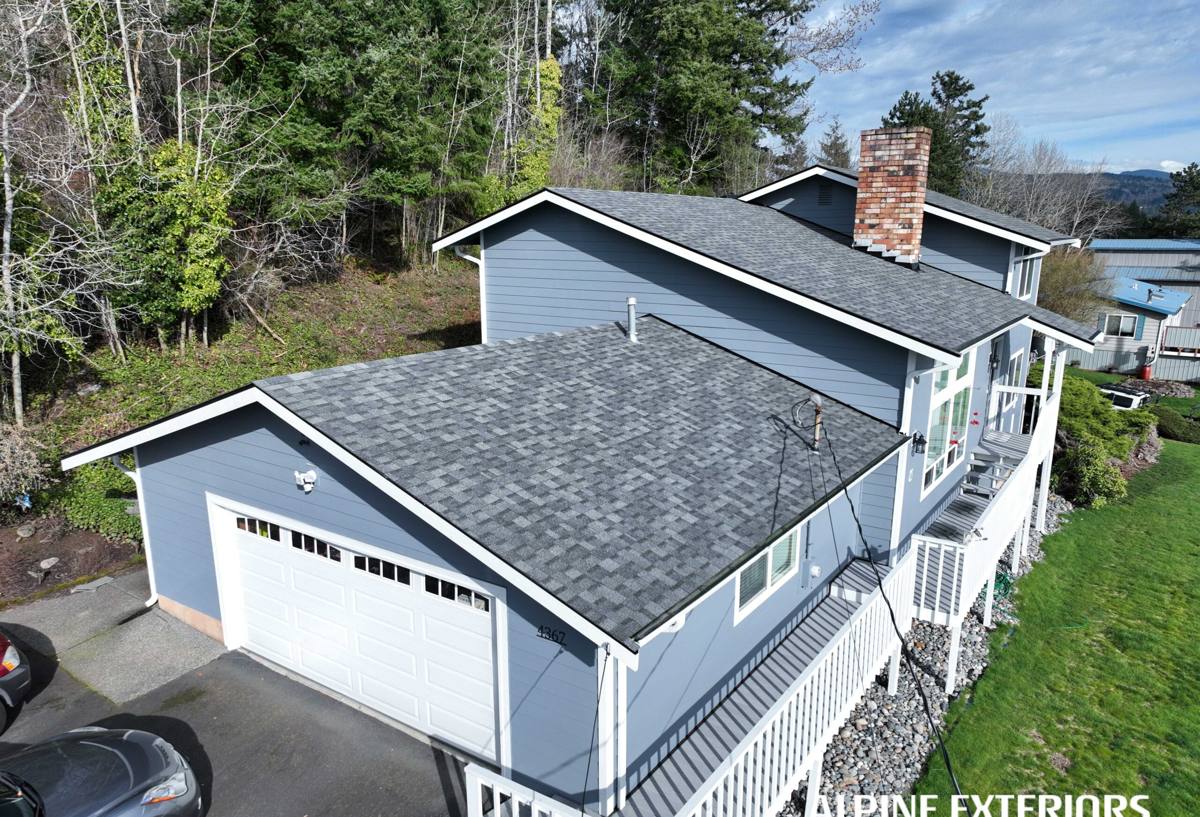
What Puget's Climate Does to a Roof
Salt Air and Metal Fasteners
Proximity to Bellingham Bay means the air here carries more salt than it does further inland. Salt air accelerates corrosion on exposed metal — nail heads, flashing seams, gutter hangers, and any fastener that isn't rated for coastal exposure. On older roofs, this often shows up as rust streaking below flashing points or fasteners that have backed out because the metal has weakened. It's a slow process, which is exactly why it gets missed; homeowners notice the streaking but not the underlying fastener corrosion until a leak forces the issue.
Driving Rain and Wind-Driven Water Intrusion
Bellingham gets plenty of steady rain, but the real damage usually comes from wind-driven rain during winter storms, when water is pushed sideways under shingle edges, around chimney flashing, and into any gap where a roof-to-wall transition wasn't detailed well. A roof that sheds a straight-down rain just fine can still leak during a windstorm if the underlayment, flashing laps, and valley details weren't built with wind-driven water in mind.
Moss, Shade, and Moisture Retention
Puget's tree cover is part of what makes it a nice place to live, but shaded, north-facing roof slopes stay damp for extended periods, especially through the long moss season that runs from fall through spring. Moss holds moisture against the roofing material, works into shingle laps, and can lift edges over time. On cedar shake or older composition roofs, an untreated moss problem left for a few seasons can meaningfully shorten the roof's remaining life. Regular moss treatment and gutter clearing matters more here than in drier parts of the state.
Roofing Services We Provide in the Puget Area
- Full roof replacement — composition shingle, metal, and cedar options suited to coastal exposure
- Roof repair — localized leak repair, flashing replacement, and storm damage assessment
- Moss treatment and preventive cleaning to protect shingle life through the wet season
- Gutter and downspout inspection tied to roof drainage, since undersized or clogged gutters back water up under roof edges
- Attic ventilation review, since poor ventilation combined with coastal humidity accelerates sheathing rot from the inside
When we assess a roof in this area, we're not just looking at shingle condition. We check flashing at every penetration and wall transition, look at fastener condition where accessible, and evaluate whether the ventilation is doing its job in a climate that doesn't give a roof many chances to fully dry out. A roof that looks fine from the ground can still have flashing or fastener issues that only show up on a closer inspection.
Siding Built for Coastal Exposure
Siding takes a similar beating from salt air and moisture as roofing does, just at a different pace. Wood and older composite sidings are especially vulnerable to moisture wicking at butt joints and corners if caulking and paint maintenance fall behind. We install and repair fiber cement, engineered wood, and vinyl siding options, and our recommendation depends on the home's exposure, budget, and how much ongoing maintenance the homeowner wants to take on.
Why We're Selective About Certain Siding Products
Some siding products that perform reasonably well in drier, more sheltered locations aren't a good match for direct coastal exposure — not because the product is inherently bad, but because certain materials are more sensitive to installation detail (like proper flashing and drainage planes) in wet, salt-air conditions, and the maintenance burden to keep them performing well is higher than most homeowners want to sign up for. We'll walk through the trade-offs honestly, including upfront cost, expected maintenance, and how each option holds up to the specific exposure your home gets.
Windows: Managing Condensation and Wind Load
Coastal Bellingham homes deal with two window issues more than most: condensation from humidity differentials, and wind load from winter storms. Older single-pane or early double-pane windows in this area often show fogging between panes (a sign the seal has failed) or drafts around frames that have shifted slightly over the years. When we replace windows here, we pay attention to proper flashing integration with the siding and weather barrier — a well-built window installed with poor flashing detail will leak regardless of the window's quality rating.
Decks in a Wet, Shaded Environment
Decks in Puget face a tougher combination than most people expect: shade from tree cover keeps deck surfaces damp longer after rain, which accelerates wood rot and makes composite decking's low-maintenance appeal genuinely worth the added upfront cost for a lot of homeowners. Ledger board attachment and proper flashing where the deck meets the house are the two spots we inspect most closely on older decks, since that's where trapped moisture does the most structural damage — often invisibly, from the inside out.
Cost Factors to Consider
Every home and job is different, and any contractor giving you an exact number before walking the property is guessing. That said, here are the main factors that move cost up or down on exterior projects in this area:
| Factor | Why It Matters Here |
|---|---|
| Roof pitch and access | Steeper roofs and limited access (common on hillside lots) add labor time and safety equipment needs |
| Existing moisture damage | Hidden rot found once old materials are removed is common in coastal, shaded homes and can add scope |
| Material choice | Composite decking and fiber cement siding cost more upfront than wood but require far less coastal maintenance |
| Flashing and detail work | Proper flashing at every transition takes more time than a rushed install, but it's what actually stops leaks in wind-driven rain |
| Tree cover and moss history | Homes with heavy shade may need more frequent moss treatment built into a long-term maintenance plan |
What to Look for When Hiring a Contractor in This Area
Whatcom County's coastal exposure means experience here actually matters — a crew that's mostly worked drier, inland jobs may not think to check the things that matter most in Puget's environment. Here's a practical checklist for vetting anyone you're considering for roofing, siding, window, or deck work:
- Ask whether they're licensed and insured in Washington, and verify it rather than taking their word for it
- Ask what flashing details they use at wall-to-roof and deck-ledger transitions — a vague answer is a red flag
- Ask how they handle fastener corrosion in coastal-exposure areas specifically
- Get a written scope of work, not just a price — vague scopes lead to disputes over what was actually included
- Ask about their moss and moisture maintenance recommendations for shaded roof sections
- Check that any bid accounts for the possibility of hidden rot or damage once old materials come off
A local crew that works this specific coastline regularly will have already seen the failure patterns unique to it — that's worth more than a lower bid from someone unfamiliar with the area.
Why Local Experience Matters in Puget
Bellingham's Puget neighborhood isn't identical to inland Whatcom County, and it isn't identical to more exposed waterfront areas either — it sits in its own microclimate of salt air, tree-shaded moisture retention, and wind-driven storms off the bay. Contractors who work across all of Bellingham and the surrounding area, rather than just one type of neighborhood, tend to catch these details because they've already dealt with the failure modes specific to coastal, shaded lots. That local pattern recognition is often the difference between a repair that holds and one that needs redoing in a few years.
Get a Free, No-Pressure Estimate
If you're dealing with a roof, siding, window, or deck issue in the Puget area — or just want an honest read on where your home stands before a problem develops — we're happy to take a look. There's no pressure and no obligation, just a straightforward assessment from a crew that knows this stretch of Bellingham. Use the form below to request your free estimate.