 Bellingham Roofing
 Why This Decision Is Harder in Bellingham Than It Looks
Every roof eventually forces a choice: patch it again, or replace it. In most of the country that decision comes down to age and a leak or two. In Whatcom County, the calculation is more layered. Salt air drifting in off Bellingham Bay accelerates corrosion on metal flashing, fasteners, and valleys. Driving rain off the Sound finds every weak seam and works it wider. And our long, damp moss season — often eight or nine months of the year with enough shade and moisture to keep growth active — chews through shingle mat and granule coverage faster than drier climates ever see. A roof that would coast for another five years in eastern Washington can be genuinely on the fence here at year fifteen.
This page walks through how we actually think about that decision when we're standing on a roof in Bellingham, Fairhaven, Lynden, or anywhere else in the county. No sales pitch — just the factors that matter and how to weigh them.
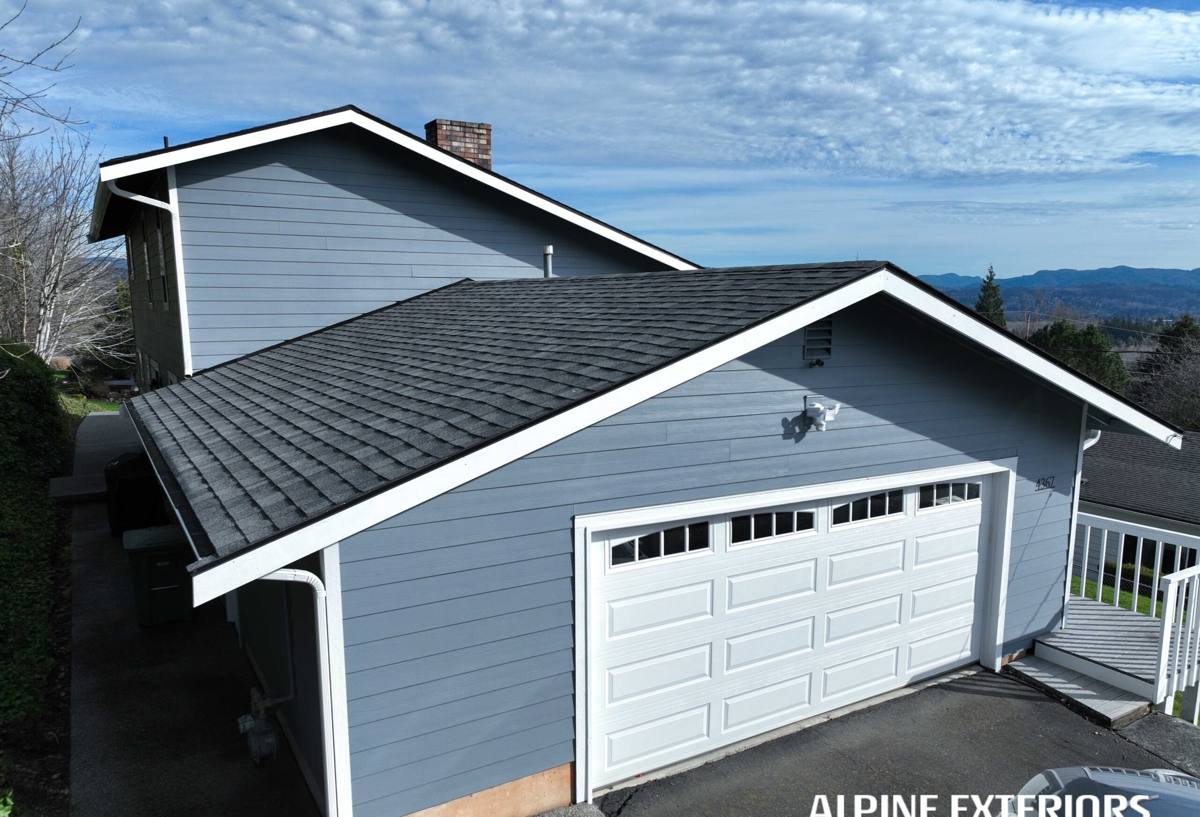
Start With What's Actually Failing
Repair versus replace isn't really one question — it's several smaller ones stacked together. Before anything else, we want to know exactly what's wrong and how it got that way.
Isolated Damage vs. Systemic Wear
A single cracked pipe boot, a lifted ridge cap after a windstorm, or a chimney flashing leak on an otherwise sound roof is almost always a repair. These are localized failures — one component gave out, the rest of the roof is still doing its job. Systemic wear is different: granule loss across large sections, shingles curling or cupping uniformly, moss staining that's returned two or three times despite cleaning, or leaks showing up in new spots each winter. That pattern tells you the roofing material itself is reaching the end of its service life, not that one part broke.
How Old Is the Roof, Really
Age matters, but so does what's under the shingles. A 12-year-old roof installed with poor ventilation or a compromised underlayment can be in worse shape than a 20-year-old roof that was installed correctly and has been maintained. We look at the roof's actual condition, not just the number on the permit.
Signs That Usually Point to Repair
- A leak traced to one clear source — a boot, a flashing seam, a nail pop — with no widespread staining elsewhere in the attic
- Storm damage limited to a section of the roof, such as wind-lifted shingles on one slope
- Moss and moisture staining that's cosmetic and hasn't yet caused granule loss or soft decking
- The roof is under 15 years old (asphalt) and otherwise structurally sound
- Gutter or flashing issues causing water intrusion that aren't related to the shingle field itself
Signs That Usually Point to Replacement
- Multiple leaks in different areas, especially ones that reappear after repair
- Shingles that are brittle, cracking underfoot, or losing granules in handfuls
- Soft or spongy decking found during an attic or roof-surface inspection — a sign moisture has been getting past the shingles for a while
- Persistent moss growth that keeps coming back within a season or two of cleaning, especially on north-facing slopes that stay shaded most of the day
- Visible sagging anywhere in the roofline
- The roof is nearing or past its material's expected lifespan and repairs are becoming frequent
The Cost Question: Repair Now, or Pay Once
Repairs are cheaper in the moment, which is exactly why homeowners default to them. But a repair on a roof that's already failing broadly is money that doesn't carry forward — it buys you a season or two, not years. Replacement costs more up front but resets the clock on the whole system: decking, underlayment, flashing, and shingles all become new and covered under a fresh warranty.
The honest way to think about it is a simple ratio: if a repair costs more than roughly a third of what a full replacement would run, or if you're facing a second or third repair within a few years, replacement is usually the better use of money. One well-timed repair is a smart deferral. Three repairs in four years on the same roof is a slow-motion replacement you're paying extra for.
Rough Cost Factors to Weigh
| Factor | Leans Toward Repair | Leans Toward Replacement |
|---|---|---|
| Extent of damage | Localized, one slope or component | Spread across multiple slopes or the whole roof |
| Roof age | Under 15 years (asphalt) | 18+ years or past material's rated life |
| Repair history | First repair in several years | Second or third repair in a short span |
| Decking condition | Firm, no soft spots found | Soft, stained, or rot present |
| Moss/moisture pattern | Cosmetic, cleans up and stays clean | Recurs quickly, staining deepening each season |
| Plans for the home | Selling soon, need it functional short-term | Staying long-term, want to stop recurring costs |
What a Bellingham Roof Inspection Actually Checks
Before we recommend either path, we look at the roof as a system, not just the shingles on top. That means:
- The shingle field itself — granule loss, curling, cracking, and any storm damage
- Flashing at chimneys, valleys, skylights, and wall intersections, where salt-air corrosion and driving rain do the most damage over time
- Attic ventilation and any signs of trapped moisture, which speeds up mat deterioration from underneath
- Decking condition, checked by walking the roof and, where accessible, viewing from the attic side
- Moss and organic growth patterns, especially on shaded north and northwest-facing slopes common on lots with mature tree cover around Bellingham
- Gutter and drainage function, since standing water and overflow are often what turns a small leak into a bigger repair
That inspection is what actually drives the recommendation — not a default answer, and not a guess.
Why Local Climate Changes the Math
Two identical roofs — same age, same shingle brand, same install quality — will not age the same way in Bellingham as they would inland. Salt air off the bay slowly works on exposed metal fasteners and flashing edges, which is why we pay close attention to those components even when the shingle field itself still looks decent. Driving rain, especially in the fall and winter storm pattern common to Whatcom County, tests every seam and lap repeatedly rather than just occasionally, so marginal workmanship or aging sealant gets exposed sooner here than in drier regions. And the moss season — realistically running most of the year given our humidity and shade cover — means organic growth isn't a once-a-decade nuisance, it's an ongoing maintenance factor that, left unaddressed, holds moisture against the shingle surface and shortens its working life.
None of that means every roof in Bellingham needs replacing early. It means the "how many years are really left" estimate has to account for local conditions, not a national average lifespan chart.
Repair-Then-Replace: A Legitimate Middle Path
Sometimes the right answer isn't strictly one or the other. If a roof is functionally sound but a few years from the end of its life, a targeted repair to stop an active leak — paired with a plan and a budget for replacement in the near term — can be the most sensible route. What we try to avoid is a homeowner sinking repair money into a roof section after section over several years without ever addressing the underlying material's age. That pattern almost always costs more in total than planning one clean replacement.
Questions to Ask Before You Decide
- Is the damage limited to one area, or showing up in multiple spots?
- How old is the roof, and how does that compare to its material's expected lifespan?
- Has this roof been repaired before, and how recently?
- Is there any sign of soft decking or moisture getting past the shingle layer?
- How long do you plan to stay in the home?
- Would a repair actually solve the problem, or just delay the same failure?
Walking through these honestly — ideally with an inspection to back up the answers rather than guesswork — is what leads to a decision you won't second-guess a year later.
Getting a Straight Answer
The goal of an inspection should be a clear recommendation with the reasoning behind it, not an automatic push toward the bigger job. Sometimes a repair really is the right call, and a good roofer will tell you that even though it's the smaller invoice. If you're weighing repair versus replacement on a Whatcom County home, we're glad to take a look, walk you through exactly what we find, and lay out the honest options — no pressure either direction. Reach out for a free estimate and we'll give you a straight read on where your roof actually stands.