 Bellingham Roofing
 Roofing and Exterior Work Built for Silver Beach Conditions
Silver Beach sits close enough to the water that homes here face a slightly different set of problems than houses further inland in Bellingham. The combination of salt-laden air off Bellingham Bay, wind-driven rain, and long stretches of shade from mature evergreens adds up to faster wear on roofing, siding, windows, and decks than you'd see in a drier, more open part of Whatcom County. We've worked on enough homes in this pocket of the city to know what tends to fail first and why, and we build our approach around that instead of applying a one-size-fits-all fix.
This page walks through what we typically find on Silver Beach homes, how we approach roofing, siding, windows, and decks for this specific environment, and what a homeowner here should actually look for when hiring an exterior contractor.
Why Silver Beach's Climate Is Harder on a Home
Salt Air and Corrosion
Proximity to the water means airborne salt settles on exposed metal — flashing, fasteners, gutter hardware, hinges, and railings. Over years, that accelerates rust and corrosion in ways that don't show up as fast on homes even a mile or two inland. It's not dramatic, but it's steady, and it's the kind of thing that gets missed until a fastener fails or a flashing seam starts leaking.
Driving Rain and Wind Exposure
Bellingham gets a lot of rain overall, and Silver Beach's position closer to open water means storms often arrive with more wind behind them. Wind-driven rain doesn't just fall straight down — it gets pushed sideways into siding laps, window trim, and roof edges, finding gaps that would never be a problem in a calmer rain. Flashing details and sealed transitions matter more here than in a sheltered inland lot.
Moss, Shade, and Moisture Retention
Whatcom County's long, wet fall-through-spring stretch already favors moss growth on roofs, but shaded lots near the water hold moisture even longer after a storm passes. Moss doesn't just look bad — it holds water against shingles and underlayment, works its way under tabs, and can shorten the effective life of a roof by years if it's never addressed.
Roofing Services for the Silver Beach Area
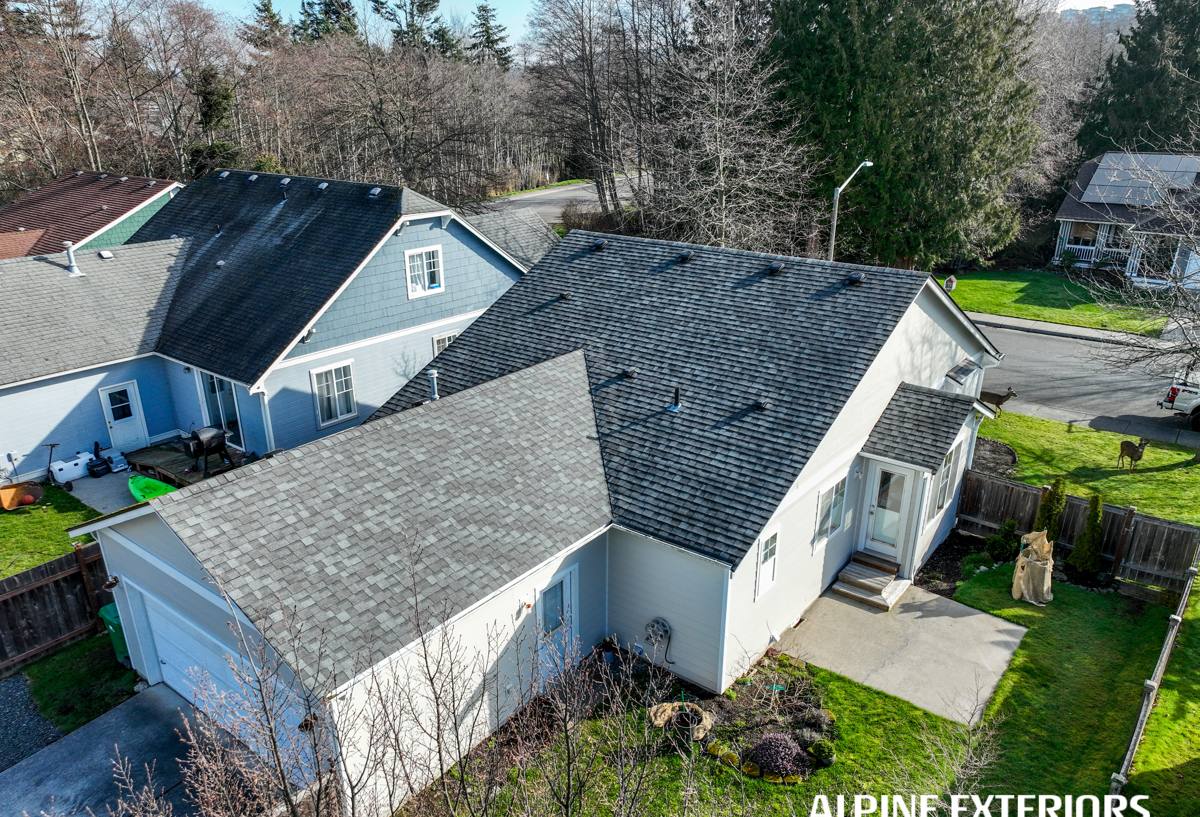
Roofing in this area is mostly about managing moisture and moss over the long haul, not just installing a new roof and walking away. We look at ventilation, flashing details around chimneys and valleys, and gutter performance as part of any roofing job, since those are usually what determine whether a roof lasts its full expected lifespan here or fails early.
- Roof inspections that specifically check for moss buildup, soft spots, and flashing corrosion
- Moss treatment and removal, done carefully to avoid granule loss on asphalt shingles
- Full roof replacements with materials chosen for wind and moisture performance, not just upfront cost
- Flashing repair and replacement around chimneys, skylights, and roof-to-wall transitions
- Gutter and downspout work to keep water moving away from the roof edge and foundation instead of pooling
We don't push one roofing material as a universal answer. The right choice depends on the home's exposure, roof pitch, tree cover, and the homeowner's budget and maintenance expectations — we'll walk through the honest trade-offs for your specific roof rather than a generic recommendation.
Siding That Holds Up Near the Water
Siding on Silver Beach homes takes on two challenges at once: moisture intrusion from driving rain and slow material breakdown from salt exposure. We pay close attention to house wrap and flashing behind the siding, since a siding failure here is almost never just about the visible surface material — it's usually about what's happening (or not happening) behind it.
What We Watch For During Siding Work
- Proper overlap and sealing at seams, corners, and window/door trim
- Adequate drainage plane behind the siding so any moisture that gets in can get back out
- Fastener choice — corrosion-resistant hardware matters more this close to the water
- Ventilation gaps that let siding dry out between storms instead of staying damp
We install fiber cement, engineered wood, and vinyl siding options, and we'll talk through the maintenance reality of each rather than just the upfront look. Some products need more attention in a salt-air, high-moisture environment than others, and it's worth knowing that before you choose, not after.
Windows: Sealing Out Wind-Driven Rain
Older single-pane or poorly flashed windows are one of the most common leak points we find on homes in this part of Bellingham. It's rarely the glass itself — it's the flashing and sealant around the frame failing after years of wind pushing rain sideways into gaps that were fine when the window was first installed.
When we replace or repair windows near Silver Beach, we treat the flashing and integration with the siding as just as important as the window unit itself. A high-quality window installed with poor flashing will leak; a modest window installed with correct flashing usually won't. We also talk with homeowners about energy performance, since well-sealed windows make a real difference in heating costs through Bellingham's long wet season.
Decks: Built for Damp, Shaded Conditions
Decks near the water deal with a rougher combination of factors than a typical backyard deck — moisture that lingers longer under tree cover, salt exposure on fasteners and hardware, and in some cases a view worth building around. We focus on ledger board flashing, proper drainage under and around the deck, and fastener and hardware selection that won't corrode prematurely.
Common Deck Issues We See in This Area
- Rot at the ledger board where the deck attaches to the house, often from poor flashing
- Rusted or corroded fasteners and structural hardware
- Moss and algae buildup on deck boards that stay shaded and damp most of the year
- Inadequate spacing between boards, trapping moisture instead of letting it drain and dry
Whether it's a repair, a resurfacing, or a full rebuild, we design decks in this area with drainage and material longevity as the starting point, then work in the look and layout the homeowner wants.
Comparing Common Exterior Material Choices for This Environment
Every material has trade-offs, and the right answer depends on your home's exposure, budget, and how much upkeep you want to take on. Here's a general comparison for homes in a salt-air, high-moisture setting like Silver Beach:
| Material | Moisture/Salt Performance | Maintenance Level | General Notes |
|---|---|---|---|
| Asphalt shingle roofing | Good with proper ventilation and moss control | Moderate — periodic moss treatment recommended | Cost-effective, widely used, needs attention to flashing details |
| Metal roofing | Very good, sheds moss and moisture well | Low, but fasteners need corrosion-resistant hardware | Higher upfront cost, strong long-term performance near water |
| Fiber cement siding | Strong resistance to moisture and salt-driven wear | Low to moderate — periodic repainting | Heavier material, needs correct flashing behind it |
| Vinyl siding | Good, doesn't corrode, but can become brittle over time | Low | Budget-friendly, less flexible in extreme temperature swings |
| Wood decking | Moderate — needs regular sealing near water and shade | Higher — regular cleaning and sealing | Natural look, more upkeep in damp, shaded conditions |
| Composite decking | Good moisture and moss resistance | Low | Higher upfront cost, less sealing/staining required |
What to Look For When Hiring a Contractor in This Area
Not every contractor working in Whatcom County has real experience with the specific problems that show up near the water. Before hiring anyone for roofing, siding, window, or deck work in Silver Beach, it's worth asking a few direct questions.
- Do they have current Washington state contractor licensing and insurance, and will they show you proof without hesitation?
- Can they explain how they'll handle flashing and moisture management specific to a home near the water — not just a generic answer?
- Do they inspect for moss and ventilation issues as part of a roofing estimate, or only quote the visible surface work?
- Will they give you a written estimate that breaks down materials and labor, not just a lump-sum number?
- Do they offer a clear warranty on workmanship, separate from the manufacturer's material warranty?
A contractor who can answer these clearly and specifically, rather than with vague reassurance, is usually the one who's actually done this kind of work before.
Our Approach to Silver Beach Homes
We treat every property here as its own case rather than applying a standard package. A home tucked under mature trees with heavy shade needs a different moss and moisture plan than one with more open exposure to wind off the water. That starts with an honest inspection — we'll tell you what's urgent, what can wait, and what's simply cosmetic, so you're not paying to fix something that isn't actually a problem yet.
Because roofing, siding, windows, and decks all interact with each other — flashing ties them together, drainage paths cross between them — we find it's usually more effective to look at a home's exterior as one connected system rather than treating each service as a separate, unrelated project. That's part of why we handle all four under one crew instead of subcontracting pieces out.
Getting Started
If you're noticing moss buildup, a slow leak, siding that feels soft in spots, drafty windows, or a deck that's showing its age, it's worth having someone look before the damage spreads further. We offer free, no-pressure estimates for homes in Silver Beach and throughout the Bellingham area — use the form below to get a straightforward assessment of what your home actually needs.