 Bellingham Roofing
 Roofing Built for Blaine's Coastal Conditions
Blaine sits right at the edge of Semiahmoo Bay, a few miles from the Canadian border, and that location shapes everything about how a roof ages here. Homes close to the water take on salt-laden air almost year-round, and that salt doesn't stay outside — it settles into metal flashing, fastener heads, and gutter systems, working corrosion into places a roof in a drier inland town would never see. Add in Whatcom County's long stretch of wet months, and you've got a roof that's under near-constant moisture load for a good chunk of the year.
We've worked on enough roofs in this corner of the county to know the difference between a roof that's just wet and a roof that's actually failing. That distinction matters, because plenty of roofs here look rough on the surface — mossy, streaked, a little tired — while the actual structure and underlayment are still sound. Our job is to tell you the truth about which one you've got before you spend a dollar.
What Salt Air Actually Does to a Roof
Salt air is corrosive to unprotected or poorly coated metal. On a roof, that shows up first in fasteners, drip edge, flashing around chimneys and skylights, and gutter hangers. Once corrosion starts on a fastener, it can loosen its grip on the material it's holding, which is how small leaks start showing up in places that look fine from the ground. This is one reason we pay close attention to metal component quality and coating on every roof we install in Blaine, not just the shingles or panels themselves.
Moss: The Slow, Steady Threat
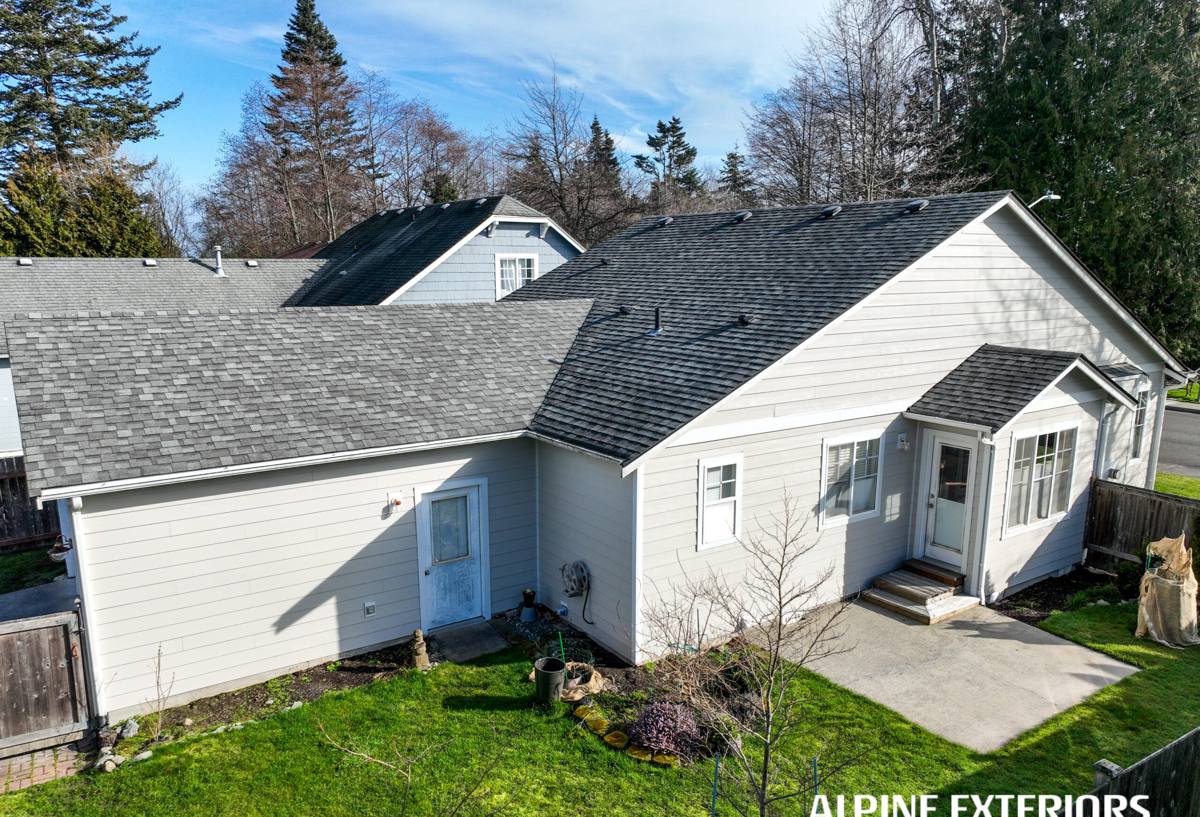
If you've lived in Blaine for more than a season, you already know moss is not an occasional nuisance — it's a near-permanent tenant on north-facing slopes and anywhere shade and moisture linger. Moss itself doesn't punch holes in a roof, but it does something arguably worse over time: it holds water against the roofing material and lifts shingle edges as it grows, creating small channels where wind-driven rain can work its way underneath.
The long moss season here — realistically much of the year in shaded areas — means a roof that isn't inspected or cleaned regularly can develop hidden moisture damage well before any interior leak shows up. By the time you see a stain on a ceiling, the underlying decking may have been wet for months.
Our Approach to Moss Management
- Gentle removal methods that don't strip granules or damage the roofing surface
- Zinc or copper strip installations near ridgelines to slow regrowth naturally
- Trimming recommendations for overhanging branches that keep shaded areas damp
- Scheduled follow-up checks rather than one-time cleanings that get forgotten
We treat moss control as maintenance, not a one-time fix. A roof that gets attention once a year holds up dramatically better than one that only gets looked at when something's already wrong.
Driving Rain and the Details That Matter
Storms coming off the water here don't just drop rain straight down — wind pushes it sideways, under eaves, and into any gap in flashing or siding that a calmer climate might let slide. This is why we treat flashing detail work, not just shingle or panel selection, as the real difference-maker on a coastal roof. Valleys, chimney step flashing, and the transitions where a roof meets a wall or dormer are the spots most likely to leak in a driving rain, and they're also the spots most likely to get rushed by a crew that doesn't work this specific coastline regularly.
Proper underlayment selection also matters more here than in drier parts of the state. A synthetic underlayment with good water-shedding capacity, installed with attention to lap direction and fastener pattern, buys real protection during the weeks when horizontal rain is the norm rather than the exception.
Roofing Material Options for Blaine Homes
There's no single "best" roofing material for every home — it depends on your roof's slope, your home's style, your budget, and how much long-term maintenance you want to take on. Here's how the common options stack up for this specific climate:
| Material | Moisture & Salt Resistance | Maintenance Level | Typical Lifespan |
|---|---|---|---|
| Architectural asphalt shingle | Good with proper ventilation and flashing | Low to moderate | 25-30 years |
| Standing seam metal | Excellent when properly coated and grounded | Low | 40-50+ years |
| Composite/synthetic shake | Good; resists moss better than cedar | Low to moderate | 30-40 years |
| Cedar shake | Requires diligent upkeep in wet, mossy conditions | High | 20-30 years with upkeep |
We're honest with homeowners about cedar in particular: it's a beautiful, traditional look, but in a climate with this much sustained moisture and moss pressure, it demands a maintenance commitment that not every homeowner wants to sign up for. That's not a knock on the material — it's just a fact about how wood behaves when it stays damp for long stretches of the year. If you love the look but not the upkeep, composite shake gives you a similar appearance with a lower maintenance ceiling.
Siding, Windows, and Decks: The Rest of the Envelope
A roof doesn't work in isolation — it's one piece of your home's overall defense against Blaine's marine weather. We handle siding, windows, and decks alongside roofing because these systems interact more than most homeowners realize. Poor roof drainage can stain or rot siding below it. Old, leaky windows can let moisture into wall cavities that eventually shows up as a roofing or fascia problem. A deck built without the right ledger flashing can send water straight into the framing behind your siding.
Siding in a Salt-Air Environment
Fiber cement and quality vinyl both hold up well against salt air, provided installation details — house wrap, flashing at windows and doors, proper caulking — are done correctly. We see more siding failures caused by installation shortcuts than by the material itself.
Windows
Aging window seals are a common source of hidden moisture intrusion in coastal homes. If your windows are original to a home built more than 20 years ago, it's worth having them checked as part of any roofing or siding project, since the same crew and the same access points make it efficient to address everything at once.
Decks
Decks facing the water take the brunt of driving rain and salt spray. Proper board spacing for drainage, corrosion-resistant fasteners, and correctly flashed ledger boards are non-negotiable details for a deck that's going to last in this environment.
What Drives the Cost of a Roofing Project
Every roof is different, but a few factors consistently move the price up or down:
| Factor | Why It Matters |
|---|---|
| Roof pitch and access | Steeper or harder-to-access roofs take longer and require more safety setup |
| Number of penetrations | Chimneys, skylights, and vents each need individual flashing work |
| Extent of decking repair needed | Moisture damage found during tear-off can add material and labor |
| Material choice | Metal and composite options generally cost more upfront than asphalt |
| Current moss or moisture damage | Existing damage may require deck replacement before new roofing goes on |
We give homeowners a real number after a real inspection — not a phone-quote guess. Because so much of the risk here is hidden moisture damage rather than obvious wear, an in-person look at your specific roof matters more in Blaine than it might somewhere drier.
Why a Local Crew Matters Here
Roofing crews that mostly work inland or in drier climates sometimes miss the details that matter most on this stretch of coastline — the flashing overlap that needs to be a little more generous, the fastener spec that resists salt corrosion, the ventilation balance that keeps moisture from condensing under the decking in a marine climate. We work Whatcom County's coastal communities regularly, which means we're not guessing at how a roof performs here — we're seeing the results year after year, on homes with the same wind exposure, the same rainfall patterns, and the same moss pressure as yours.
That local familiarity also means we know what a normal amount of moss or weathering looks like versus a sign of a real problem, which keeps us from either alarming homeowners unnecessarily or missing something that needs attention.
A Simple Maintenance Checklist for Blaine Homeowners
- Have gutters and downspouts cleared at least twice a year — clogged gutters back water up under roof edges
- Check north-facing and shaded roof sections for moss buildup each spring and fall
- Look at exposed metal flashing periodically for early signs of corrosion or lifting
- Trim back tree limbs that keep sections of the roof shaded and damp
- After major windstorms, do a visual check for lifted shingles or dislodged flashing
- Have a professional inspection every few years, even if nothing looks obviously wrong
Getting Started
Whether you're dealing with visible moss, a suspected leak, an aging roof you're not sure will make it through another wet season, or you're looking at siding, windows, or a deck alongside roofing work, the first step is the same: an honest, in-person look at what's actually going on. If you're in Blaine or elsewhere around Bellingham and Whatcom County, we're happy to come take a look, answer your questions straight, and give you a clear picture of your options. There's no pressure and no obligation — just a free estimate and a straightforward assessment you can use to make the right call for your home.