 Bellingham Roofing
 Birch Bay: A Different Kind of Exposure Than Inland Bellingham
Birch Bay sits right on the water in northern Whatcom County, and that changes what a roof, a wall of siding, or a set of exterior windows has to deal with over the course of a year. Homes a few miles inland in Bellingham catch plenty of rain, but they're mostly shielded from direct salt spray and the steady wind that comes off the open water. Birch Bay homes don't get that shelter. Salt-laden air, wind-driven rain that hits siding sideways instead of straight down, and a long, damp moss season all work on a house here in ways that homeowners further inland rarely have to think about.
None of this means a home at Birch Bay needs exotic materials or constant repair. It means the choices matter more, and the installation details that get skipped on an easy inland job can't get skipped here. That's the mindset we bring to every roofing, siding, window, and deck project in the area.
What Salt Air and Wind-Driven Rain Actually Do
Salt air is corrosive to exposed metal — fasteners, flashing, gutter hardware, and any hardware on doors or window frames. Left unprotected or installed with the wrong grade of metal, these components can start showing rust or pitting years before they would inland. It's a slow process, but it's constant, and it's one of the first things we check on any Birch Bay property, whether we're there for a roof estimate or a siding repair.
Wind-driven rain is a separate issue. When rain comes in at an angle instead of falling straight down, it finds every gap in flashing, every undersized overlap in siding, and every weak seal around a window. A roofing or siding system that would perform fine on a calm inland lot can leak at Birch Bay simply because the water pressure against the wall or roof plane is higher and more sustained. This is why lap details, flashing depth, and sealing at penetrations (vents, chimneys, window trim) deserve extra attention on coastal jobs — it's not overbuilding, it's matching the work to the actual conditions.
Moss: The Slow, Patient Problem
Whatcom County's wet fall-through-spring stretch is long, and Birch Bay's marine humidity keeps roofs and shaded siding damp longer than drier inland lots. Moss and algae thrive in that moisture, especially on north-facing roof slopes and any surface that stays shaded most of the day. Left alone, moss holds water against roofing material, works its way under shingle tabs, and can shorten the life of an otherwise sound roof. It's rarely an emergency, but it's a maintenance item that needs to actually happen — not just get mentioned once and forgotten.
Roofing for Birch Bay Homes
Roofing is usually the highest-stakes exterior system on a coastal property because it takes the most direct weather and is the hardest to inspect yourself. For Birch Bay homes we look at a few things beyond the standard shingle-and-underlayment package:
- Corrosion-resistant fasteners and flashing metals suited to salt exposure, not just whatever is cheapest at the yard
- Algae-resistant shingle options where moss and algae staining has been a recurring problem on the existing roof
- Ventilation that actually moves air through the attic — poor ventilation traps moisture and speeds up moss growth and shingle aging from underneath
- Careful attention to valleys, penetrations, and edge flashing, since these are where wind-driven rain finds its way in
Whether a roof needs a full replacement or just targeted repair depends on the age of the existing roofing, how much of it is affected, and what's happening underneath the surface layer — not just what's visible from the ground. We look at all of that before recommending either option.
Siding: Standing Up to Coastal Moisture
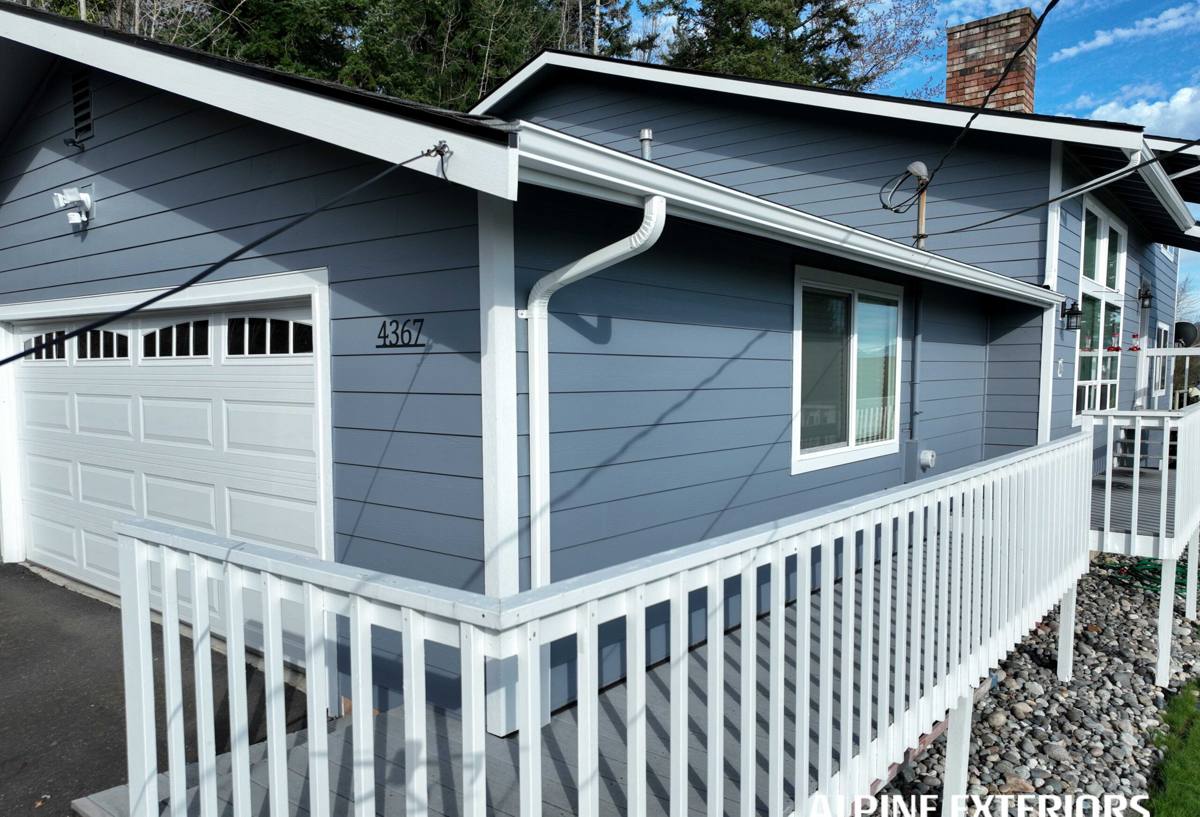
Siding on a Birch Bay home is doing constant work — shedding wind-driven rain, resisting salt exposure, and holding up under repeated wet-dry cycles through the winter. The products we install most often on coastal Whatcom County homes are fiber cement and quality vinyl and composite siding, chosen based on the home's exposure, style, and the homeowner's maintenance preferences.
We're selective about wood siding on direct coastal exposure. It can look great, but it demands a maintenance schedule — refinishing, caulking, moisture checks — that a lot of homeowners don't want to sign up for once they understand what salt air and driving rain do to painted or stained wood over time. That's a trade-off we'll walk through honestly rather than sell around.
Whatever the material, the installation details matter more here than inland: proper rainscreen or drainage gap behind the siding, correctly lapped house wrap, and flashing at every window and door opening. Those details are what keep wind-driven rain from getting behind the siding in the first place, which is the actual cause of most moisture damage — not the siding material itself.
Windows: Comfort and a Tighter Building Envelope
Older or poorly sealed windows are one of the most common weak points we find on coastal homes. Wind off the water finds gaps around window frames that wouldn't be noticeable on a sheltered inland lot, and that shows up as drafts, condensation between panes, and higher heating bills through the winter. Replacement windows with proper flashing and sealing address both the comfort problem and the water-intrusion risk at the same time, since the window opening is one of the most common paths for rain to get behind siding.
We also pay attention to glass and frame specs suited to coastal salt exposure — corrosion-resistant hardware and frame materials that won't pit or seize up the way lower-grade hardware can near the water.
Decks: Built for Outdoor Living Near the Water
A lot of Birch Bay properties are built around outdoor living — decks, patios, and outdoor spaces meant to take advantage of the water view. Those same decks take the brunt of salt air and sun exposure year-round. For decking, that means:
- Fasteners and structural hardware rated for coastal/corrosive exposure, not standard interior-grade hardware
- Composite decking as a low-maintenance option where moisture and salt exposure make wood upkeep a bigger commitment
- Proper spacing and drainage in the deck structure so water doesn't sit and accelerate wear on boards or framing
- Railings and connectors that won't corrode and loosen over a few seasons of salt air
If wood decking is the preference, we'll be upfront about the refinishing schedule it needs to hold up near the bay, so there are no surprises a couple of years in.
Material Comparison for Coastal Exposure
| Material | Coastal/Salt Air Durability | Moss & Algae Resistance | Typical Maintenance |
|---|---|---|---|
| Architectural asphalt shingles (algae-resistant) | Good, with proper flashing | Good — built-in algae resistance | Periodic moss/debris removal |
| Standard asphalt shingles | Good | Fair — more prone to staining | More frequent moss treatment |
| Metal roofing | Very good with coastal-rated finish | Very good — sheds moss more easily | Low, occasional inspection |
| Fiber cement siding | Very good | Good | Periodic caulk/paint checks |
| Vinyl/composite siding | Good | Good | Occasional washing |
| Untreated wood siding/decking | Fair — needs upkeep | Fair — needs treatment | Regular refinishing required |
This isn't a ranking of "good" versus "bad" materials — it's a picture of what each one asks of a homeowner once it's exposed to Birch Bay's climate. We'll size these trade-offs against your budget and how much ongoing maintenance you actually want to take on.
Why a Local, Bellingham-Based Crew Matters Here
A contractor who mostly works dry, sheltered inland neighborhoods can do fine work and still get caught off guard by what a direct-waterfront property in Whatcom County demands. Knowing that Birch Bay roofs need extra attention on north-facing moss buildup, that siding needs real drainage behind it to handle wind-driven rain, and that fasteners and flashing need to be rated for salt exposure isn't something you learn from a manual — it's something you learn from doing the work in this specific area, season after season.
Being based in Bellingham also means we're not driving in from out of the county for a warranty callback or a follow-up inspection. If something needs a second look after a storm rolls through off the water, we're close enough for that to be a normal part of the job, not a scheduling headache.
A Simple Seasonal Checklist for Birch Bay Homeowners
- Check north-facing and shaded roof slopes for moss buildup each fall and spring
- Clear gutters and downspouts before the heavy fall rains start
- Look for rust or corrosion on exposed fasteners, hinges, and deck hardware once a year
- Inspect caulking and sealant around windows and doors annually — coastal wind and UV exposure break it down faster than inland conditions
- Rinse salt residue off siding and decking periodically, especially after storms with strong onshore wind
- Watch for soft spots or discoloration on wood decking, which can signal moisture getting into the wood
Catching small issues on this list early is almost always cheaper than waiting for them to turn into a repair project.
Getting Started
If you're dealing with moss buildup on a roof, siding that's showing signs of wear from wind and salt, drafty windows, or a deck that needs attention, we're happy to take a look and give you an honest read on what's actually needed versus what can wait. We offer free, no-pressure estimates for Birch Bay homeowners — just fill out the form below to get started.