 Bellingham Roofing
 Roofing Built for Sunnyland's Climate
Sunnyland sits close enough to Bellingham Bay that salt-laden air is a real factor in how exterior materials age here, not just a talking point. Add in the driving rain that comes off the Sound during fall and winter storms, plus a moss season that can run eight months or more in shaded, tree-lined streets, and you have a combination that wears differently on a roof than it would twenty miles inland. We've worked on homes throughout this part of Bellingham long enough to know which failure points show up first, and we build our roofing work around preventing them rather than just patching them after the fact.
This page covers roofing, siding, windows, and decks as they apply specifically to homes in and around Sunnyland — what tends to go wrong, what a proper repair or replacement looks like, and what questions are worth asking before you hire anyone for exterior work in this neighborhood.
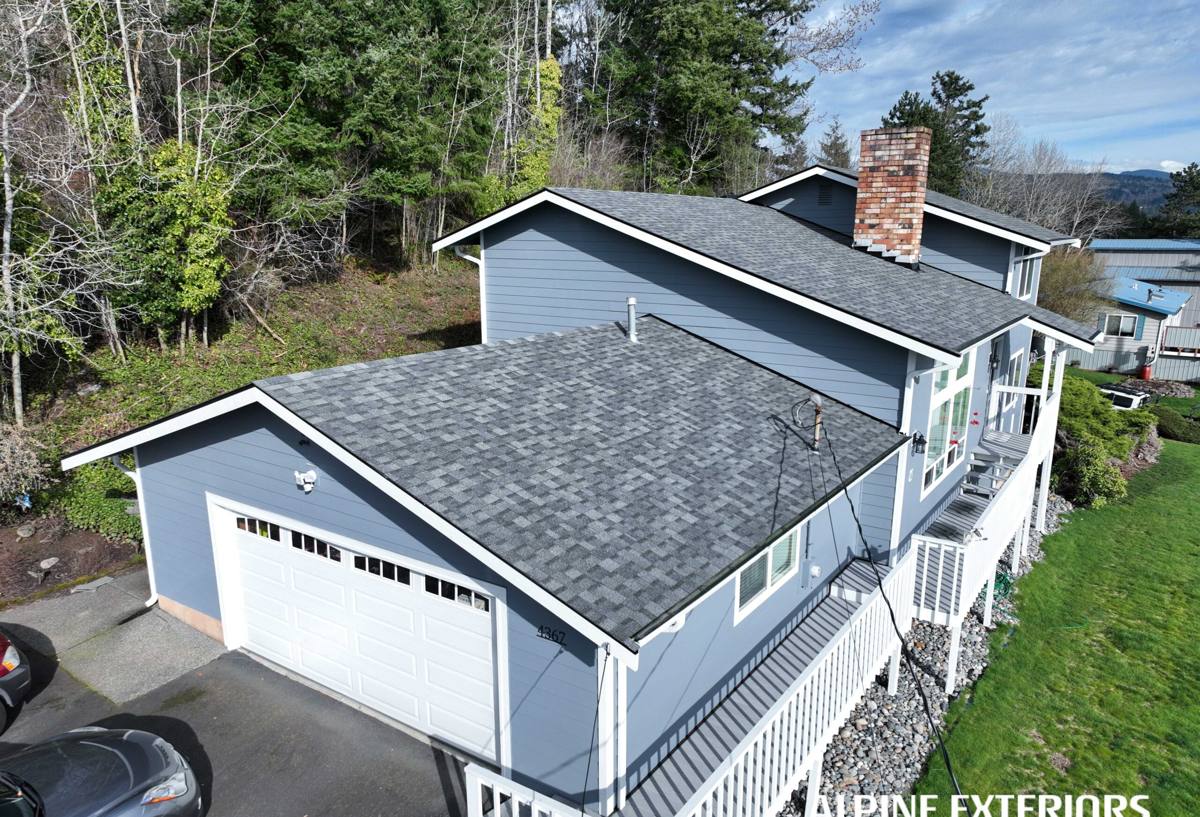
Why Moss and Moisture Are the Real Enemy Here
Whatcom County's rain isn't unusually heavy compared to other parts of western Washington, but the combination of moisture, mild temperatures, and shade from mature trees creates ideal conditions for moss, algae, and lichen growth on roofing surfaces. On composition shingle roofs, moss doesn't just sit on top — its root structure works into the granule layer and the mat beneath it, lifting shingle edges and holding water against the surface long after the rest of the roof has dried out.
What Moss Actually Does to a Roof
- Lifts shingle tabs, creating gaps where wind-driven rain can get underneath
- Holds moisture against the roof deck longer than bare shingle, accelerating granule loss
- Traps organic debris (needles, leaves) that further slows drying
- In valleys and north-facing slopes, can build up enough to redirect water flow
The fix isn't a one-time power wash. Moss removal has to be done carefully — high-pressure washing can strip granules and shorten the life of a shingle roof just as much as the moss itself. We use low-pressure methods and treatments appropriate to the roofing material, and for homes with a history of heavy moss return, we'll talk through zinc or copper strip installation as a longer-term suppressant.
Salt Air and Its Effect on Roofing and Metal Components
Proximity to Bellingham Bay means airborne salt is a factor for homes on the western side of the neighborhood in particular. Salt air accelerates corrosion on exposed metal — flashing, fasteners, gutters, and vent caps are the components most affected. Galvanized steel that would last decades in a drier inland climate can start showing rust streaks and pitting years earlier near the water.
When we're doing roofing work in this area, we pay close attention to fastener and flashing material selection. Stainless steel or properly coated fasteners cost more up front but hold up far better against salt exposure than standard galvanized options, and the difference shows up in fewer callback repairs down the road.
Common Salt-Air Wear Points
| Component | Typical Issue | What We Look For |
|---|---|---|
| Roof flashing | Pitting, rust streaking, seam failure | Corrosion-resistant materials, proper sealant, correct overlap |
| Gutters and downspouts | Premature rust, seam leaks | Fastener condition, hanger spacing, drainage capacity |
| Roof fasteners | Rust bleed staining shingles below | Fastener grade, backing out over time |
| Vent caps and boots | Cracked rubber boots, corroded caps | Age, UV and salt exposure, seal integrity |
Siding: Standing Up to Wind-Driven Rain
Sunnyland's mix of older and newer homes means we see a wide range of siding conditions — original wood lap siding on some of the neighborhood's older houses, vinyl and fiber cement on more recent builds. Regardless of material, the failure pattern in this area is consistent: wind-driven rain finds its way behind siding at poorly sealed joints, window trim, and butt seams, and once moisture gets behind the cladding it has nowhere to go but into the sheathing.
What We Check on a Siding Inspection
- Caulking and sealant condition around windows, doors, and penetrations
- Overlap and fastening pattern on lap siding — undersized nails or over-driven fasteners are a common cause of early failure
- Signs of moisture staining or soft spots at the base of walls and around window sills
- House wrap or building paper condition where siding has been pulled for repair
- Corner boards and trim for rot, especially on north- and west-facing walls that see the most weather
We install and repair fiber cement, vinyl, and wood siding, and we'll give you a straight answer about which fits your home and budget rather than pushing one product across the board. Fiber cement holds up well against the combination of moisture and impact this area sees, but it's heavier and more labor-intensive to install correctly — the trade-off is a longer-lasting, lower-maintenance wall system versus a higher installed cost.
Windows: Where Bellingham's Weather Finds the Gaps
Older single-pane and early dual-pane windows are common in Sunnyland's established housing stock, and they're often where homeowners first notice the effects of the local climate — condensation between panes, drafts during storms, and fogged glass are all signs of failed seals rather than a cosmetic issue. Replacing failed window units does more than improve comfort; it closes off one of the more common paths for wind-driven rain to work its way into wall cavities.
What to Look For in a Window Replacement
- Proper flashing integration with the surrounding siding — a good window installed with poor flashing will leak regardless of the window's quality
- Vinyl or fiberglass frames that resist the freeze-thaw and moisture cycling typical of a marine climate
- Correct sizing and shimming so the sash operates smoothly and seals fully
- Sill pan flashing at the base of the opening, which is one of the most overlooked details in window replacement and one of the most important for keeping water out
Decks: Built for Year-Round Exposure
A deck in Sunnyland spends most of the year wet, shaded, or both, depending on the lot's tree cover. That combination is hard on both wood and composite decking if the substructure isn't built with drainage and airflow in mind. We see the same handful of issues repeatedly: ledger board attachment that wasn't properly flashed, joists without adequate spacing for air movement underneath, and fastener corrosion in older decks built before coated deck screws were standard.
For new deck builds or replacements, we focus on the parts that don't show once the decking is down — proper ledger flashing, joist tape or flashing on top of the framing, and hardware rated for exterior and, where relevant, near-coastal exposure. Composite decking has become a popular choice locally because it sidesteps the annual staining and sealing that wood decking needs to hold up against this much moisture, though it costs more up front and still needs a properly built substructure underneath it — composite doesn't fix bad framing, it just hides it for a while.
Comparing Roofing Materials for This Area
| Material | Moss Resistance | Salt Air Durability | Typical Lifespan Here |
|---|---|---|---|
| Composition shingle (standard) | Moderate — needs periodic treatment | Good with proper fasteners/flashing | 18-25 years |
| Composition shingle (algae-resistant) | Better — copper granules slow regrowth | Good with proper fasteners/flashing | 20-28 years |
| Metal (standing seam) | Very good — sheds moss more easily | Requires marine-grade coating/fasteners | 40-50+ years |
| Cedar shake | Poor without regular maintenance | Moderate — needs careful detailing | 20-30 years with upkeep |
None of these is a universally "right" answer — it depends on your roof's exposure, your home's architecture, and your budget for upfront cost versus long-term maintenance. We'll walk through the trade-offs specific to your roof rather than defaulting to whatever's easiest to sell.
What a Seasonal Maintenance Routine Should Cover
A lot of the exterior problems we get called out for in this neighborhood are preventable with basic seasonal attention. Here's a general checklist we recommend to homeowners in the Bellingham area, adjusted for what this climate actually demands:
- Clear moss and debris from roof surfaces and valleys before the heavy fall rains arrive
- Clean gutters and downspouts at least twice a year — more often if you're under conifers
- Check and refresh exterior caulking around windows and doors annually
- Inspect deck ledger boards and fasteners for corrosion or loosening each spring
- Look for soft or discolored siding at wall bases, a common early sign of moisture intrusion
- Have flashing around chimneys, skylights, and roof penetrations checked every few years
Why Hiring a Local Crew Matters
Exterior work in Whatcom County isn't the same job as exterior work in a drier climate, and it shows in the details — flashing choices, fastener selection, moss treatment approach, and how a crew sequences work around our rain patterns. A crew that works this area regularly knows what actually fails first on a Sunnyland roof or a wall facing the prevailing weather, and builds the repair or installation to address that, not a generic spec sheet. We're licensed and insured to work in Washington, and we stand behind the work we do because we're not going anywhere — this is our community too.
If you're dealing with a roof that's holding moss no matter what you try, siding that's showing its age, windows that fog up every winter, or a deck that needs more than a fresh coat of stain, we're happy to take a look. Reach out for a free, no-pressure estimate — someone local will walk your property, tell you honestly what's going on, and lay out your options without any obligation to move forward.