 Bellingham Roofing
 Exterior Work Built for Lynden's Climate
Lynden sits in the Nooksack River valley in Whatcom County, close enough to the water and the Canadian border that the same marine weather pattern that soaks Bellingham and the rest of the county reaches every farmhouse, rambler, and new-build subdivision here too. Homes in and around Lynden deal with long stretches of low clouds, driving rain that comes in sideways more often than straight down, and a moss season that can run eight or nine months out of the year on north-facing roof slopes and shaded siding. None of that is unusual for this part of Washington, but it does mean exterior materials and workmanship have to be matched to the conditions, not just picked off a showroom floor.
We do roofing, siding, windows, and decks, and we treat all four as one system. Water doesn't care which trade installed which component — it finds the weak seam between the roof edge and the siding, the gap around a window flange, or the ledger board where a deck ties into the house. A crew that only knows one of those trades tends to fix their piece and leave the transitions to chance. We build and repair all of them, so the flashing details actually line up.
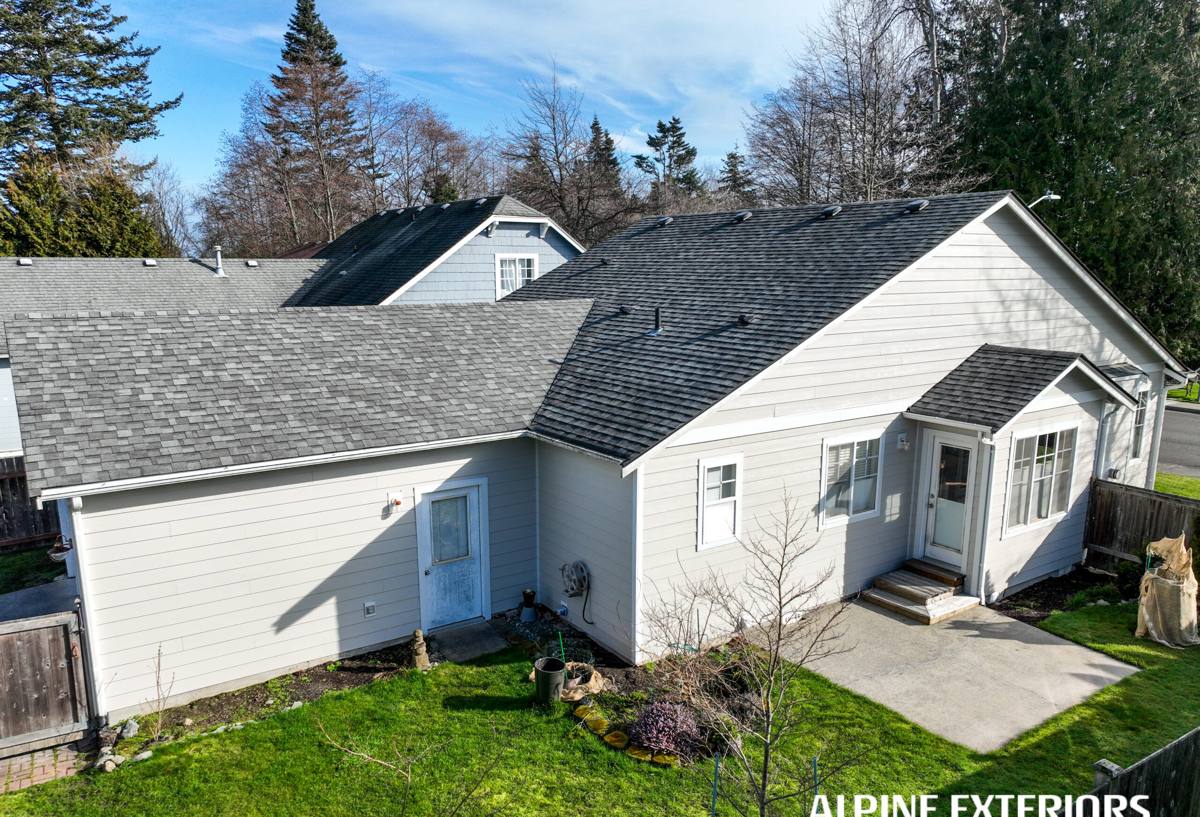
What Driving Rain and Moss Actually Do to a House Here
On the Roof
Wind-driven rain doesn't just land on a roof, it gets pushed up under shingle tabs, into nail holes, and along ridge and hip lines that were flashed a little too casually. Add in moss, which holds moisture against the roofing material long after a storm passes, and you get slow, hidden rot in the decking underneath — the kind that doesn't show up as a leak in the ceiling until it's been going on for a year or two. Moss also lifts shingles at the edges as it grows, which opens the door for wind to get underneath and peel them.
On Siding and Trim
Lap siding and trim boards on the shaded or north side of a house — often the side facing a tree line or a neighboring structure, which is common on the larger lots around Lynden — stay damp the longest. That's where you'll see paint failure first, then swelling at butt joints and outside corners, and eventually soft spots where water has been wicking into end grain for a while. Caulking that was never designed to flex with wet Northwest winters cracks and opens small gaps that let water behind the siding instead of stopping it.
Around Windows and Decks
Window flashing that was installed as an afterthought instead of integrated with the building's water-resistive barrier is one of the most common sources of hidden damage we find during siding tear-offs. Decks take a different kind of abuse — standing water on horizontal surfaces, ledger connections that trap moisture against the house rim joist, and fasteners that corrode faster than people expect in a damp coastal climate.
Roofing: Repair, Replacement, and Everything Between
Not every roof problem needs a full tear-off. We look at the age of the roofing, the condition of the decking underneath, how much moss and granule loss there is, and whether the flashing at penetrations and valleys is still doing its job. A lot of the time a roof with 8-10 years of life left just needs moss treatment, a few flashing repairs, and better attic ventilation to stop it from aging early. When a roof is past that point, or the decking has soft spots from long-term moisture, replacement is the honest answer.
Material Comparison for Whatcom County Conditions
| Material | Typical Lifespan Here | Moss Resistance | Maintenance Needs |
|---|---|---|---|
| Standard 3-tab asphalt | 15-20 years | Low — needs regular treatment | Periodic moss removal, gutter checks |
| Architectural (dimensional) asphalt | 25-30 years | Moderate, better with algae-resistant granules | Occasional moss treatment |
| Metal panel roofing | 40-50+ years | High — sheds moisture fast, less moss buildup | Low; check fasteners and sealant over time |
| Cedar shake | 20-30 years with upkeep | Low without ongoing care | Regular treatment and inspection required |
We install and repair asphalt and metal roofing, and we're straightforward about trade-offs on the others. Cedar shake looks great and has a long tradition in this region, but it demands a maintenance commitment most homeowners underestimate in a climate this wet — that's a matter of realistic upkeep, not a knock on the product itself.
Siding: Matching the Material to the Exposure
Fiber cement, engineered wood, and vinyl all have a place, and the right choice depends on the specific exposure of the house — how much direct sun and wind it gets versus how shaded and still the air stays on certain walls. On heavily shaded elevations, we lean toward materials and details that dry out faster and shrug off moisture better, because that's where problems show up first. We also pay close attention to rainscreen gaps and proper house wrap integration, which matter more in a climate where siding stays damp for days at a time than they do in a drier region.
Siding replacement is also the best time to fix problems that have been hiding underneath — soft sheathing, missing or failed flashing, insulation that got wet and never dried. We open things up, show homeowners what we find, and address it before closing the wall back up, rather than sealing a moisture problem inside a new siding job.
Windows: Where Small Gaps Cause Big Problems
Window replacement in this climate is as much about the installation as the window itself. A well-built window installed with poor flashing integration will leak eventually; a mid-grade window installed correctly with proper flashing, sill pans, and sealant will usually outperform it. We install vinyl and fiberglass window lines chosen for good thermal performance and moisture handling, and we integrate every flashing detail with the surrounding siding or trim so water sheds outward instead of finding its way behind the wall.
Old aluminum-frame windows, common in older homes throughout the county, are frequent culprits for condensation and drafts. Replacing them is often as much about comfort and lower energy bills as it is about stopping water intrusion.
Decks: Built to Handle Standing Water and Wet Winters
A deck in this part of Washington spends a good chunk of the year wet. That changes how we frame it, fasten it, and finish it. Proper slope for drainage, gaps between boards sized for the decking material, corrosion-resistant fasteners and hardware, and correct ledger flashing where the deck meets the house are non-negotiable details, not upgrades. We build with pressure-treated framing and offer both wood and composite decking, explaining the honest maintenance difference between them — wood needs periodic sealing and staining to hold up, composite costs more up front but needs far less annual attention.
We also repair existing decks: replacing rotted ledger boards, re-flashing connections that were never sealed properly, and rebuilding railings and stairs that have weathered out. A deck repair is also a good opportunity to check for the kind of hidden water damage at the house connection that can otherwise go unnoticed for years.
Why a Local Crew Matters in a Town Like Lynden
Lynden has a mix of older farmhouses, agricultural properties with outbuildings, and newer residential construction, and each type of property tends to have its own common failure points. A crew that works this area regularly recognizes those patterns quickly — which roof valleys tend to hold moss, which siding types age fastest on shaded farm lots, which older homes were built with flashing details that don't hold up to modern rain loads. That familiarity saves time diagnosing problems and helps us give homeowners a straight answer instead of a guess.
Being local also means we're accountable here. If something needs a follow-up visit, we're not driving in from out of the area — we're already working in the neighborhood.
A Practical Maintenance Checklist for Lynden Homeowners
- Clear moss off roof surfaces before it builds a thick mat, especially on north-facing slopes
- Keep gutters and downspouts clear so water isn't backing up under roof edges
- Check caulking and trim joints on siding each fall before the wet season sets in
- Look for soft or discolored siding near ground level and around window sills
- Inspect deck ledger boards and fasteners annually for rust or softness
- Re-seal or re-stain wood decking on a regular schedule rather than waiting for visible wear
- Watch for condensation or fogging between window panes, a sign the seal has failed
Getting Started
Most exterior problems in Whatcom County start small — a lifted shingle tab, a hairline gap in caulking, a deck board that's starting to cup — and get more expensive the longer wind-driven rain and moss are allowed to work on them. If you're noticing something that doesn't look right on your roof, siding, windows, or deck, it's worth having it looked at before another wet season goes by. We offer free, no-pressure estimates for homeowners in Lynden and the surrounding area — use the form below to get one scheduled.