 Bellingham Roofing
 A Wooded Lake Community With Its Own Weather Habits
Sudden Valley sits in the forested hills above Lake Whatcom, a few minutes outside Bellingham in Whatcom County. It's a different environment than a lot of the city proper: more tree canopy, more shade, more standing moisture on roofs and siding that never quite gets a full day of sun to dry out. Add in the marine-influenced weather that moves through this corner of Washington — driving rain off the Sound, damp air carrying a trace of salt, and a moss season that can run most of the year in the shadier lots — and you end up with exteriors that age differently than a house out in the open on a south-facing slope.
We work on homes throughout Bellingham and greater Whatcom County, and Sudden Valley comes with its own checklist in our heads before we even get out of the truck: tree cover, roof pitch, how much afternoon sun a given elevation gets, and whether the siding has been fighting algae longer than it should have.
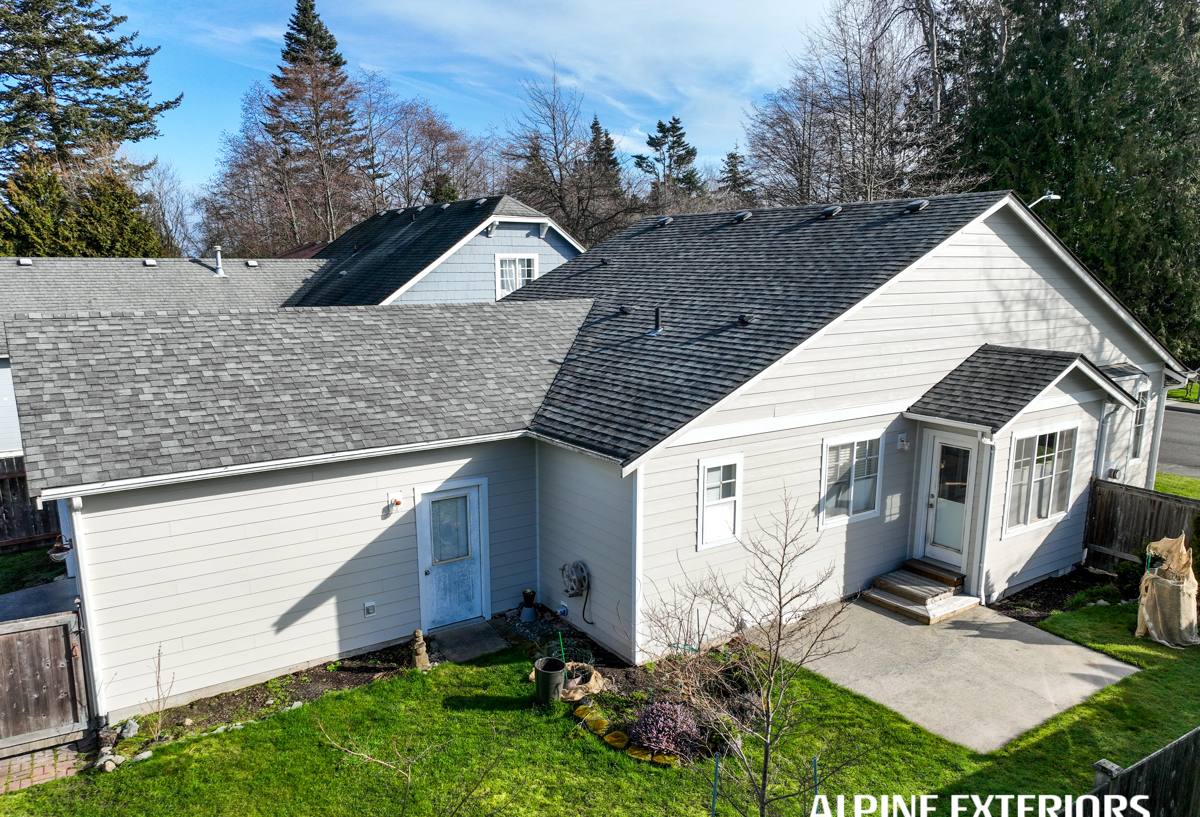
What the Local Climate Actually Does to a House
Moss and Algae
Moss doesn't need much — shade, moisture, and organic debris to root in. Sudden Valley's tree canopy provides all three in abundance. On roofs, moss holds water against shingles and underlayment, works into laps and fasteners, and can lift shingle edges over a few seasons if it's never removed. On siding, algae and moss show up first on the north and west faces, in the gaps behind trim, and anywhere gutters overflow onto the wall below.
Driving Rain
Storms coming off the water don't fall straight down — wind pushes rain sideways into walls, under eaves, and around window and door openings. That matters more for flashing and sealant details than it does for the field of a roof or a wall. A roof can shed a lot of straight-down rain and still leak at a poorly flashed valley or a window head when the wind picks up.
Needle and Leaf Debris
Heavy tree cover means a steady supply of needles, cones, and leaves landing on roofs and collecting in valleys and gutters. That debris holds moisture right where you don't want it and is one of the main reasons moss and rot show up first in valleys, behind chimneys, and at gutter lines rather than on open roof slopes.
Humidity and Wood Movement
Persistent dampness affects wood trim, fascia, and deck framing more than it affects vinyl or fiber cement. Wood that stays wet longer swells, and wood that swells and dries repeatedly is what eventually splits, cups, or lets fasteners work loose.
Roofing for Sudden Valley Homes
The right roofing choice here comes down to how well a material handles sustained moisture and shade, not just how it looks. We install and repair asphalt architectural shingles, metal roofing, and — for homes that want the look with less upkeep — composite shake products. We don't install traditional cedar shake roofing; it looks good on day one, but in a shaded, damp environment like this it needs more inspection and maintenance than most homeowners want to sign up for, and moisture retention under the shakes is a real long-term concern. That's a standard we hold ourselves to, not a knock on anyone who has one already — we'll gladly maintain an existing cedar roof and tell you honestly what shape it's in.
| Roofing Material | How It Handles Moss/Shade | Typical Lifespan Here | Maintenance |
|---|---|---|---|
| Architectural asphalt shingle | Good with periodic moss removal and zinc/copper strips | 25-30 years | Annual debris clearing recommended |
| Standing seam metal | Excellent — moss struggles to hold on smooth metal | 40-50+ years | Low; occasional debris clearing |
| Composite/synthetic shake | Good, engineered for moisture resistance | 30-50 years | Low to moderate |
| Cedar shake | Struggles in heavy shade; needs vigilant upkeep | Varies widely with maintenance | High |
For most Sudden Valley properties under heavy tree cover, we lean toward steeper-pitch-friendly materials with good moss resistance and recommend zinc or copper control strips near the ridge on shingle roofs — rain washing over the metal releases ions that discourage moss growth down the slope.
Siding That Holds Up in the Shade
Fiber cement siding is our default recommendation for this area. It doesn't rot, it holds paint well, and it tolerates the cycle of damp mornings and slow-drying afternoons that shaded lots go through most of the year. Vinyl is a lower-cost option that performs fine here too, though it can show algae staining sooner in deep shade and is less forgiving of impact damage from falling branches, which is a real consideration under tall conifers.
Whatever the siding material, the details matter more than the product in a place like this: proper rainscreen gapping so water can drain and the wall can breathe, correct flashing at every window and door, and house wrap that's lapped correctly so driving rain can't work its way behind the cladding. We see more siding failures caused by bad flashing and trapped moisture than by the siding material itself wearing out.
Windows and Driving Rain
Older or poorly flashed windows are one of the most common leak points we find on Sudden Valley service calls, especially on walls that catch wind-driven rain. Replacement windows with proper flashing pans and sealant details stop that intrusion and also cut down on the condensation that shows up on older, single-pane or failed-seal double-pane units during the damp months. We install vinyl and fiberglass-framed windows sized to the specific opening — retrofitting an ill-fitting window is a common source of the very leaks a replacement is supposed to fix.
Decks Under the Trees
A deck in a shaded, tree-heavy lot faces a harder life than one in the open. Constant leaf litter and slow-drying surfaces accelerate wood rot, especially where boards meet ledger boards, posts meet footings, and anywhere debris collects between deck boards. Composite decking sheds moisture better and doesn't need refinishing, which is a big part of why it's popular on wooded lots — but it still needs a properly built substructure and drainage underneath, since trapped moisture under any decking material, wood or composite, is what causes structural problems down the line.
- Sweep needles and leaves off deck boards and roof valleys regularly rather than letting them compact into a wet mat
- Keep gutters clear — overflow is a top cause of siding and fascia rot in heavily treed yards
- Treat visible roof moss before it spreads under shingle edges, not after
- Check window and door flashing for gaps whenever siding or trim work is done nearby
- Have deck ledger connections and post bases inspected for rot every few years, not just when something feels soft
- Trim back branches that overhang the roof to cut down shade and debris load
Why a Local Crew Makes a Difference Here
Sudden Valley is its own environment inside Whatcom County — shadier, wetter longer, and often under a community association's exterior guidelines for things like siding color and roofing style. A crew that works this area regularly already knows which slopes hold moss the longest, where driving rain tends to find weak flashing, and what it takes to get material and equipment up some of the steeper, tree-lined driveways in the community. That familiarity shows up in fewer callbacks and fewer surprises once a project is underway.
It also matters for something more basic: being reachable. If a windstorm knocks a branch through a roof or a wind-driven rain event finds a gap around a window, you want a contractor who's a short drive away and knows the neighborhood, not one working out of another county with a multi-day response time.
What Roofing and Siding Projects Typically Involve
| Factor | What Drives the Cost |
|---|---|
| Roof pitch and access | Steeper roofs and limited driveway access add labor time |
| Tear-off vs. overlay | Full tear-off costs more but lets us check the deck and flashing underneath |
| Material choice | Asphalt shingle is the most budget-friendly; metal and composite cost more upfront but need less maintenance |
| Moisture/rot repair | Any soft decking or sheathing found during tear-off adds to scope — we always flag this before proceeding |
| Siding scope | Full re-side vs. repair of damaged sections, plus whether flashing and house wrap need replacing |
We give straightforward written estimates that separate the base scope from anything conditional, like rot repair, so there are no surprises once a project is opened up.
Ready When You Are
Whether it's a roof that's collecting more moss than it should, siding that's staying damp longer than it used to, windows that let the wind-driven rain in, or a deck that needs an honest look at what's underneath, we're glad to come out and take a look. Estimates are free and there's no pressure — just a straight assessment of what your Sudden Valley home actually needs and what your options are for fixing it right the first time.