 Bellingham Roofing
 Exterior Work Built for Fairhaven's Waterfront Climate
Fairhaven sits close to Bellingham Bay, and that proximity to the water shapes almost everything about how a home's exterior ages here. Salt-laden air moves in off the water, driving rain comes at roofs and walls sideways during winter storms, and the tree cover that gives the neighborhood its character also means shade, damp air, and moss that doesn't quit for much of the year. Homes in this part of Whatcom County work harder than homes fifty miles inland, and the materials and installation details that hold up in a drier climate often fall short here.
We work throughout Bellingham, and Fairhaven's mix of older homes, hillside lots, and near-shore exposure is something we plan for specifically — not as an afterthought, but as a starting point for how we spec a roof, flash a wall, or frame a deck.
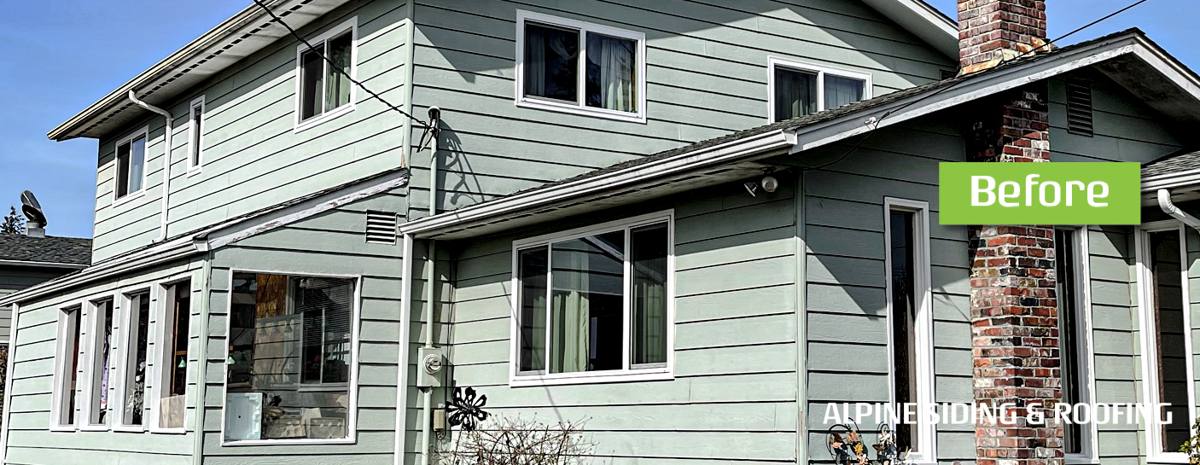
What Salt Air and Coastal Exposure Do to a Home
Airborne salt is corrosive to exposed metal — fasteners, flashing, gutters, and any hardware that isn't rated for a marine-influenced environment. On a standard asphalt roof, this usually shows up first at the flashing: nail heads and drip edge that weren't upgraded to a corrosion-resistant grade can start staining or failing years before the shingles themselves are due for replacement. On siding, salt air combines with moisture to accelerate wear on paint and caulking, so seams and joints need attention sooner than they would on an inland home.
Where We Adjust for It
- Stainless or hot-dip galvanized fasteners and flashing in exposed, wind-driven areas
- Corrosion-rated gutter and downspout hardware rather than standard-grade fittings
- Sealant and caulk products chosen for UV and salt exposure, not just general-purpose use
- Extra attention to any exposed metal on decks — railings, brackets, and fasteners
Driving Rain and Roof Performance
Bellingham's winter storms often bring rain sideways off the water, which puts more stress on roof edges, valleys, and any place where the roof meets a wall or chimney than a straight-down rain ever would. A roof that's watertight in a light, vertical rain can still leak under wind-driven rain if the underlayment, flashing laps, and valley details weren't built with that in mind.
This is why we don't treat underlayment as a formality. On homes exposed to wind off the bay, we pay close attention to:
- Ice-and-water shield or equivalent membrane at eaves, valleys, and penetrations — not just the code minimum
- Proper shingle or panel overlap sized for wind-driven conditions, not just standard exposure
- Step flashing and counter-flashing at every wall intersection, sealed and lapped correctly
- Roof-to-wall transitions checked as part of the siding work, not assumed to be someone else's problem
Roofing Material Considerations for This Area
| Material | How It Handles This Climate | Trade-Offs to Know |
|---|---|---|
| Architectural asphalt shingle | Good performance with upgraded flashing and ventilation; widest range of price points | Needs attention to moss and algae resistance in the product line chosen |
| Standing seam metal | Strong wind and rain performance, long service life with correct fastener spec | Higher upfront cost; installation quality matters more than with shingles |
| Composite/synthetic shake or shingle | Resists moisture absorption better than wood alternatives | Product and installer experience varies — ask about track record locally |
| Cedar shake | Traditional look that fits many Fairhaven homes | Higher maintenance burden in a damp, shaded climate; needs regular upkeep to avoid moss and rot |
Moss, Shade, and Roof Longevity
Fairhaven's tree canopy is part of what makes the neighborhood attractive, but shaded roof sections stay damp longer after every rain, and that's exactly the condition moss needs to establish. Once moss gets a foothold, it holds moisture against the roofing material, lifts shingle edges, and can work its way into seams over time. It's not just cosmetic — sustained moss growth shortens the useful life of a roof if it isn't kept in check.
We look at moss exposure as part of the initial roof evaluation, not as a separate problem to solve later. That can mean recommending zinc or copper strips near the ridge on a new roof, adjusting product selection for algae and moss resistance, or simply being direct with a homeowner about how often a shaded roof in this area needs a look compared to one in full sun.
Siding for Damp, Shaded, Near-Shore Homes
Siding in Fairhaven has to manage the same combination of moisture and salt exposure as the roof, plus whatever additional shade the lot's trees provide. The biggest factor in long-term siding performance here isn't usually the material itself — it's the installation details that control how water moves off the wall and away from the structure: proper flashing above windows and doors, correct overlap, and a drainage plane that lets any moisture that does get behind the siding find its way back out instead of sitting against the sheathing.
Common Siding Options We Install
- Fiber cement: Handles moisture and salt exposure well, holds paint longer than wood, and is a common choice for homes near the water
- Vinyl: Low maintenance and cost-effective, with modern profiles that fit a range of home styles
- Wood and wood-look products: Can suit Fairhaven's older homes and historic character, but need a clear maintenance conversation up front given the damp climate
We're candid about maintenance trade-offs before a project starts, not after. A siding choice that looks right for the home but demands more upkeep than a homeowner wants is a mismatch we'd rather flag early.
Windows: Sealing Out Wind-Driven Rain
Old or failing window seals are one of the more common sources of water intrusion we find in homes exposed to wind off the bay. Even a well-built wall can take on water if flashing around a window opening wasn't integrated correctly with the siding's drainage plane. When we replace windows, we treat the flashing and sealing detail around each opening as part of the job — not just swapping the sash and calling it done.
For homes with older single-pane or early double-pane windows, replacement can also address condensation and drafts that are common in a consistently damp, cool climate like this one, on top of stopping any water intrusion at the frame.
Decks Near the Water
Outdoor living space matters in a neighborhood with water views and walkable access to the waterfront, but a deck near the bay faces the same salt air and moisture exposure as the rest of the exterior — often more, since it's fully exposed to weather with no roof overhead. Fastener corrosion, ledger board rot where the deck meets the house, and moss buildup on decking surfaces are the issues we see most.
- Corrosion-resistant fasteners and structural hardware throughout, not just at the visible surface
- Proper ledger flashing where the deck attaches to the house — a frequent source of hidden rot if done wrong
- Composite or properly sealed wood decking, chosen based on how much upkeep the homeowner actually wants to do
- Drainage and airflow underneath the deck to keep moisture from sitting against structural members
What to Check Before Hiring a Contractor in This Area
Not every contractor who works in Whatcom County has hands-on experience with near-shore exposure. It's worth asking specific questions before signing a contract:
- Do they use corrosion-rated fasteners and flashing as standard practice, or only when asked?
- Can they explain how they handle valleys, roof-to-wall transitions, and window flashing on a wind-driven-rain job?
- Are they licensed and insured to work in Washington, with references from other jobs in the Bellingham area?
- Do they give a written estimate that spells out materials, not just a total price?
- Will they talk honestly about maintenance trade-offs for different siding and roofing materials, rather than pushing one product?
Working Locally in Whatcom County
A crew that works Bellingham and the surrounding Whatcom County area regularly has a feel for which streets sit in year-round shade, which lots catch the worst of the wind off the bay, and how a given home's exposure compares to its neighbors. That local familiarity shapes practical decisions — from where extra flashing is worth the cost to how often a roof in a shaded spot should be checked for moss. It's the kind of judgment that's hard to get from a crew passing through the area for a single job.
If you're weighing a roof, siding, window, or deck project on a Fairhaven or Bellingham home, we're glad to take a look and talk through what your home's specific exposure calls for. Use the form below to request a free, no-pressure estimate.