 Bellingham Roofing
 Exterior Work in Columbia, Bellingham
Columbia is one of Bellingham's older, established residential neighborhoods, with a housing stock that spans from early-1900s bungalows to mid-century ramblers and newer infill construction. That mix matters when we talk about roofs, siding, windows, and decks, because a house built in 1948 handles moisture very differently than one built in 2005, even though they're sitting in the same weather. Our crews work this neighborhood regularly, and we size up each home on its own terms rather than treating every job the same way.
What doesn't change from house to house is the climate. Bellingham sits close enough to the water that salt-laden air is part of daily life, and Whatcom County's marine weather pattern means long stretches of low-intensity rain punctuated by wind events off the Strait. Add tree cover common in Columbia's older lots, and you get near-constant shade on parts of most roofs and siding for a good chunk of the year. That combination is exactly what drives moss growth, slow wood decay, and premature wear on materials that weren't built for sustained dampness.
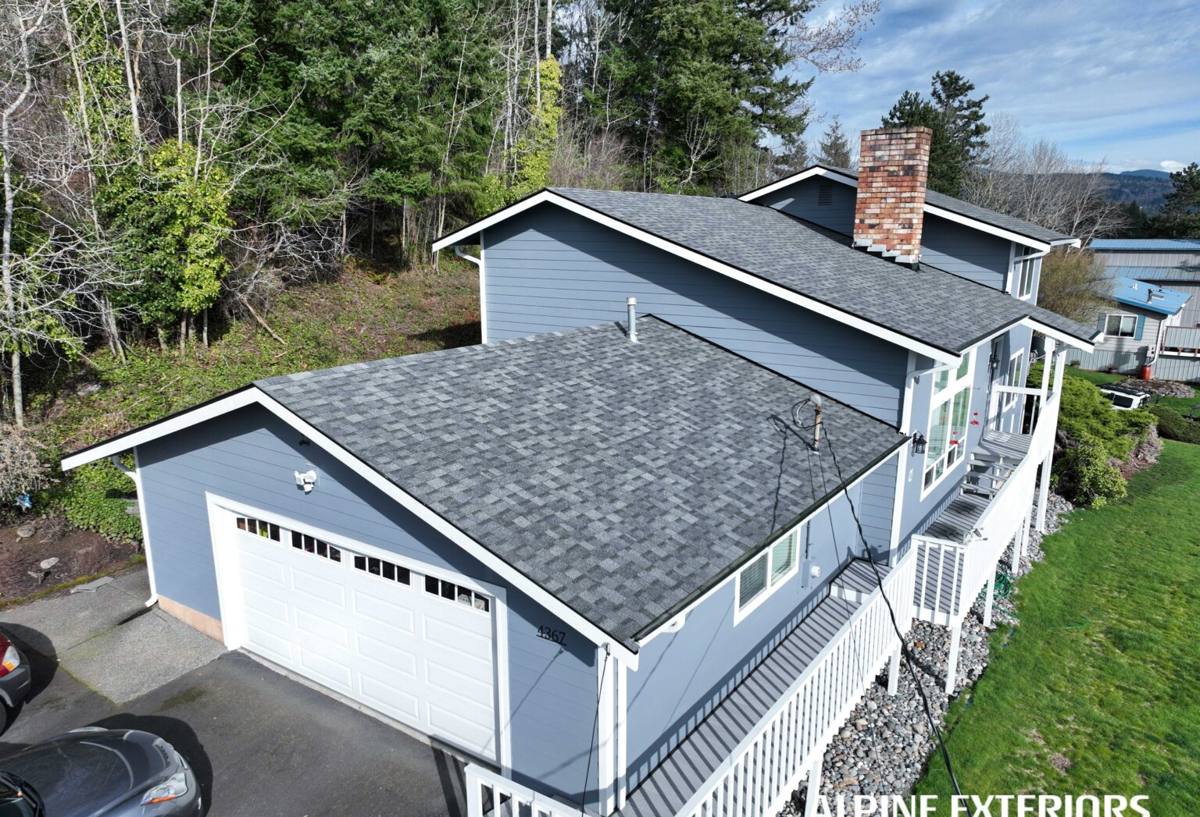
What the Climate Actually Does to a Home Here
Moss and Algae
Moss doesn't just sit on a roof looking messy — it holds moisture against shingles and underlayment, lifts shingle edges as it grows, and, left long enough, works its way under flashing. On a shaded or north-facing roof plane in Columbia, moss can establish itself within a couple of years of a roof being cleaned. Algae staining (the dark streaking you see on older comp shingle roofs) is a related but separate issue — it's cosmetic in the early stages but signals a roof surface that's staying wet longer than it should.
Driving Rain and Wind-Driven Moisture
Bellingham rain is rarely torrential, but it's persistent, and wind off the bay can drive rain sideways into wall assemblies, window flanges, and deck ledger connections. Details that would be forgiving in a drier climate — a slightly short kick-out flashing, a window without proper head flashing, a deck ledger without a gap for drainage — become real problems here over time.
Salt Air
Proximity to Bellingham Bay means airborne salt accelerates corrosion on exposed metal: nails, flashing, gutter hardware, and deck fasteners. It's a slower process than what you'd see right on the water, but it's a real factor in material selection and why we lean toward corrosion-resistant fastener and flashing specs on homes in this area rather than the cheapest option available.
Roofing in Columbia
Most homes in this neighborhood are running composition (asphalt) shingle roofs, with a smaller share of metal roofing and some older cedar shake roofs still in service or being phased out. Each has a different relationship with this climate:
- Composition shingles are the most common and most affordable, but they need decent airflow underneath (proper ridge and soffit ventilation) to avoid trapping moisture and shortening their service life in a shaded, damp yard.
- Metal roofing sheds moss more effectively than shingles because of its smooth, non-porous surface and steeper effective pitch in most installs, which is part of why we see more interest in it for heavily shaded lots.
- Cedar shake can look great and has a long history in this region, but it demands the most maintenance of the three in a climate this wet — it's the material most sensitive to trapped moisture and moss intrusion if upkeep lapses.
For roof work in Columbia we typically handle full replacements, targeted repairs (flashing failures, damaged sections after wind events, chimney and skylight leaks), moss treatment and removal, and ventilation corrections. On older homes we also check for outdated or missing kick-out flashing at roof-to-wall intersections, since it's one of the most common hidden leak sources we find on houses of this era.
Siding for a Wet, Shaded Climate
Siding on a Columbia home is doing more work than it might in a drier region — it's the primary barrier against sustained damp and, on many lots, sustained shade. We install and repair fiber cement, engineered wood, and vinyl siding, and we're honest about the trade-offs of each rather than pushing one product for every house.
| Material | Moisture Performance Here | Maintenance | Typical Lifespan |
|---|---|---|---|
| Fiber cement | Strong — dimensionally stable, doesn't absorb moisture like wood | Repaint every 10–15 years | 30–50 years |
| Engineered wood | Good if properly sealed and maintained; edges need attention | Regular caulking/paint checks | 20–30 years |
| Vinyl | Sheds water well, doesn't rot, but can trap moisture behind it if not installed with a drainage plane | Low — occasional cleaning | 20–40 years |
| Solid wood (untreated legacy siding) | Weakest in sustained damp/shade without diligent upkeep | High — regular painting and moisture checks | Varies widely with maintenance |
We don't install solid wood siding as a replacement product on new work in this climate — not because it's a bad material inherently, but because the maintenance burden and moisture sensitivity are a poor match for shaded, salt-air conditions unless a homeowner is committed to a strict upkeep schedule. For repairs or matching existing wood siding on a home that has it, we'll work with what's there and talk through what upkeep it actually needs to hold up.
Whatever material we're installing, the house wrap and flashing details behind it matter as much as the siding itself — a good product installed without proper drainage planes and window/door flashing will still let moisture in over time.
Windows
Older Columbia homes often still have original or early-replacement windows, and in a marine climate those tend to show their age through condensation between panes (failed seals), drafts, and wood rot at sills and frames where water has been sitting for years. Newer vinyl and fiberglass windows handle this climate's humidity and temperature swings well, but installation quality — proper flashing integration with the siding and weather barrier — is what actually determines whether a window leaks in five years or twenty-five.
When we replace windows here, we pay particular attention to head flashing and sill pans, since a window that looks fine on the surface can still be letting water into the wall cavity behind it if those details were skipped during a prior installation.
Decks
Decks in this neighborhood face two main enemies: sustained dampness that promotes rot and moss on horizontal surfaces, and ledger board connections that need to shed water rather than trap it against the house. A deck ledger without a proper flashing and drainage gap is one of the more serious hidden problems we find, because it's invisible until the rot is significant.
For decking material, pressure-treated lumber, cedar, and composite decking all have a place here — composite trades a higher upfront cost for lower moss/mildew maintenance, while wood decking needs more regular cleaning and sealing to perform well in a climate that doesn't give surfaces much time to fully dry between rains.
Why a Local Crew Matters in Columbia
A crew that works Whatcom County regularly knows which roof planes on a given street orientation tend to hold moss, which older Columbia homes commonly have outdated flashing details, and how to sequence exterior work around the wet season rather than fighting it. That's not something you get from a contractor who's mostly working drier inland markets and treats every roof or wall assembly the same way. We also carry proper Washington contractor licensing and insurance, which matters more here than the sales pitch — it's worth confirming for any contractor before signing anything.
Keeping Up With Maintenance Between Projects
A lot of the exterior problems we get called out for in Columbia didn't have to become full replacements — they started small and got missed. A basic seasonal routine goes a long way in this climate:
- Clear roof valleys and gutters of debris at least twice a year, more often under heavy tree cover
- Have moss treated or removed before it spreads across a full roof plane, not after
- Walk the siding perimeter annually looking for cracked caulk, gaps at trim, or soft spots
- Check deck ledger boards and fastener heads for rust or movement each spring
- Look for condensation or fogging between window panes, an early sign of seal failure
- Trim back vegetation touching the roof or siding to reduce trapped moisture and shade
None of this requires a professional every time, but catching issues at this stage is what keeps a project a repair instead of a replacement.
Getting Started
If you're in Columbia and dealing with a mossy roof, aging siding, drafty windows, or a deck that's seen better days, we're happy to take a look and give you a straightforward, no-pressure estimate — no scare tactics, just an honest read on what your home actually needs and what it can wait on. Use the form below to get started.