 Bellingham Roofing
 Roofing and Exterior Work in Happy Valley
Happy Valley sits close enough to Bellingham Bay and the surrounding hillsides that its homes take on a specific mix of weather stress you don't see everywhere in Whatcom County. The neighborhood's mature tree canopy, its proximity to the water, and the older housing stock scattered among newer infill all add up to a set of maintenance realities that are worth understanding before you decide what to do about a roof, a wall of siding, or a set of tired windows. We've worked on homes throughout Bellingham long enough to know that a roof in Happy Valley doesn't age the same way as one out on a dry, open lot east of town. Salt-tinged air, near-constant shade from big evergreens, and rain that shows up sideways more often than you'd like all play a role.
This page is about what that actually means for your roof and the rest of your exterior, and how we approach the work when we're called out to this part of town.
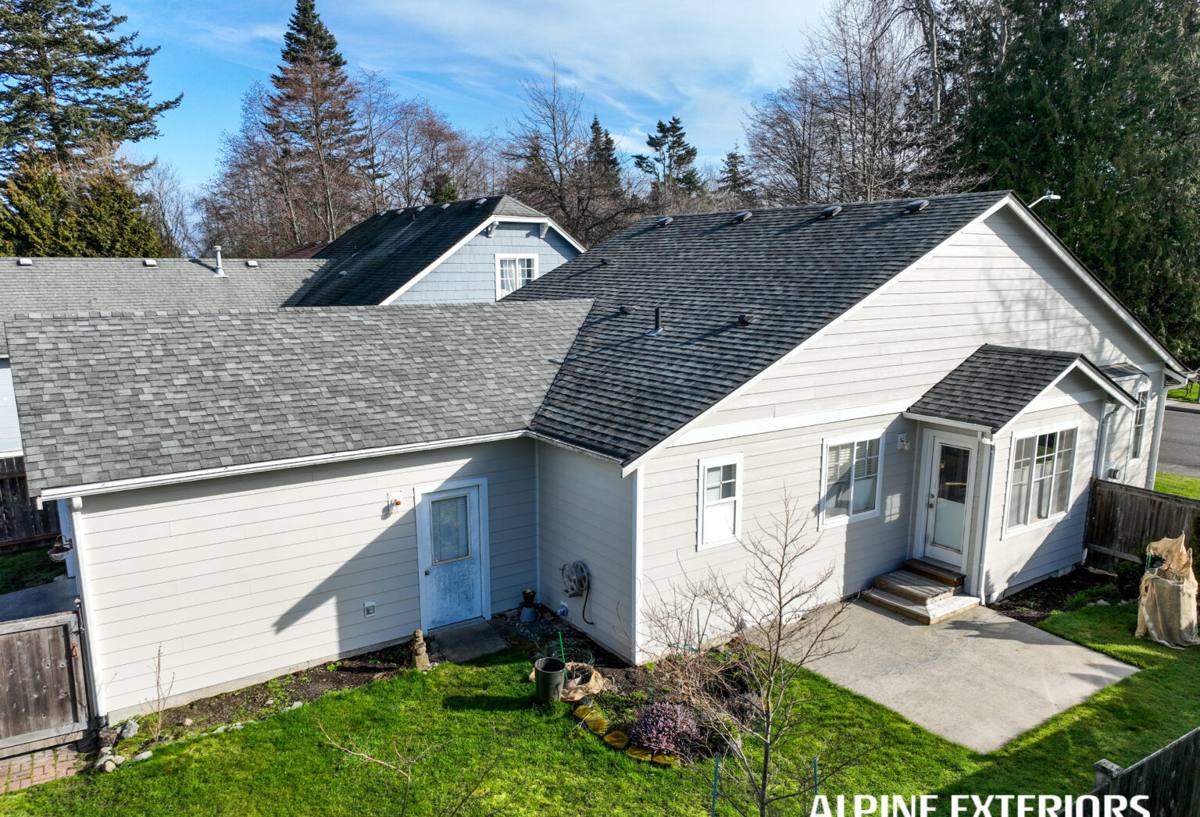
What the Local Climate Does to a Roof
Three things define exterior wear in this neighborhood, and they compound each other rather than acting alone.
Salt Air
Bellingham's coastal position means airborne salt reaches further inland than most homeowners realize, especially on windy days off the bay. Salt exposure accelerates corrosion on any exposed metal — flashing, fasteners, gutter hardware, and roof vents. Over years, that corrosion is often what fails first on a roof, well before the shingles themselves are worn out.
Driving Rain
Whatcom County doesn't just get a lot of rain, it gets a lot of wind-driven rain, which behaves differently than a straight-down downpour. Wind-driven moisture works its way sideways under lap joints, around fascia boards, and into any gap in flashing or siding that would stay dry in calmer weather. Roofs and wall systems that aren't detailed with that in mind tend to develop hidden moisture problems long before anything shows up as a visible leak.
Moss and Algae Season
Shade from mature trees, combined with a mild, wet climate that rarely gets a hard dry spell, gives moss and algae a long runway to establish themselves on roofs in Happy Valley. Once moss gets a foothold in the granules of a shingle roof or in the seams of a cedar or composite surface, it holds moisture against the roofing material almost year-round. That constant dampness is what shortens the life of a roof — not the moss itself, but what the moss traps underneath it.
Moss and Algae: The Long-Term Battle
Because this is a recurring issue for shaded, coastal neighborhoods, it's worth explaining how we actually approach it rather than treating it as a one-time cleanup.
Why It Keeps Coming Back
Moss spores are airborne and constantly present in a climate like this one. Cleaning a roof removes the existing growth, but it doesn't change the underlying conditions — shade, moisture, and mild temperatures — that let moss return. That's true no matter who does the cleaning or what product is used.
What Actually Helps
- Zinc or copper strips installed near the ridge, which release trace metal ions that discourage moss regrowth as rain washes over the roof
- Keeping overhanging branches trimmed back to reduce shade and let the roof surface dry between rain events
- Gentle, low-pressure cleaning rather than power-washing, which can strip granules and shorten shingle life
- Clear gutters and downspouts, since clogged gutters hold standing water against the roof edge and give moss an easy starting point
We treat moss control as an ongoing maintenance item, not a single fix, and we're upfront that no roofing material is completely immune to it in a neighborhood with this much shade and moisture.
Choosing a Roofing Material for This Neighborhood
There isn't one right answer for every home, but the local conditions do make some trade-offs more relevant here than they'd be in a drier climate.
| Material | How It Handles This Climate | Maintenance Notes |
|---|---|---|
| Asphalt Composition Shingle | Reliable, cost-effective, widely used in the area; algae-resistant granule options help slow discoloration | Benefits from periodic moss/gutter maintenance; typical lifespan shortens without upkeep |
| Metal Roofing | Sheds moss and water efficiently due to smooth, non-porous surface; performs well against wind-driven rain | Requires corrosion-resistant fasteners and coatings given salt air exposure |
| Cedar Shake | Traditional look that fits older homes in the area, but shade and moisture make it more moss-prone than other options | Needs more frequent cleaning and treatment to manage moisture retention |
| Synthetic/Composite Roofing | Resists moisture absorption well; performs consistently in shaded, wet conditions | Lower ongoing maintenance than wood, though moss cleaning is still recommended |
We'll walk you through what makes sense for your specific roof — its pitch, its shade exposure, and how it ties into the rest of the home's exterior — rather than pushing one material as a default.
Siding, Windows, and Decks in a Wet, Shaded Neighborhood
Roofing gets most of the attention, but the same climate factors affect the rest of a home's exterior, and we handle all of it as connected systems rather than separate projects.
Siding
Driving rain finds its way into poorly flashed siding joints and butt seams just as easily as it does roof valleys. Fiber cement and quality engineered wood products hold up well against Bellingham's moisture cycle when they're installed with proper flashing and drainage gaps behind them. We pay particular attention to window and door transitions, since those are the most common points where water gets behind siding.
Windows
Older homes in established neighborhoods like this one often still have original or early-replacement windows that were never sealed for the amount of wind-driven rain this area sees. Failed seals and rotting sills around older windows are one of the most common hidden moisture sources we find during exterior inspections. Modern window units with better weatherstripping and properly flashed installation reduce that risk significantly.
Decks
Shaded decks stay damp longer after rain, which accelerates wood rot and makes surfaces slick and slippery underfoot for much of the year. Composite decking sheds water without absorbing it and doesn't need refinishing, which matters in a climate that doesn't give you many dry weeks to do that kind of maintenance work anyway. For wood decks, proper spacing between boards and a breathable finish make a real difference in how long the structure lasts.
Signs Your Exterior Needs Attention
A lot of exterior damage in this climate develops slowly and out of sight. These are the signs worth checking for, or having a professional check for you:
- Moss or dark streaking building up on roof slopes, especially shaded ones
- Granules collecting in gutters or at downspout outlets, a sign of shingle wear
- Soft or discolored siding near window and door trim
- Windows that feel drafty or show condensation between panes
- Soft spots, rot, or fastener corrosion on deck boards and ledger connections
- Sagging gutters or water pooling near the foundation after rain
None of these on their own mean a full replacement is needed. Catching them early is usually what keeps a repair small.
Why a Local Crew Makes a Difference
A roofing or siding crew that works across a wide region, without much specific time spent in neighborhoods like Happy Valley, tends to apply generic solutions. A local crew already understands which streets sit in heavier shade, which blocks catch more wind off the bay, and which older homes in the area were built with materials and methods that need particular attention during repairs. That familiarity shortens the guesswork on every job — we're not learning the neighborhood's quirks on your project, we already know them from the last one.
It also means we're reachable. If something comes up after a job is finished — a question about a warranty, a follow-up on how a repair is holding up through the next storm season — you're dealing with the same crew, not a call center.
A Realistic Maintenance Schedule for This Climate
Because Whatcom County's wet season runs long, we generally recommend the following rhythm for homes in shaded, coastal-influenced neighborhoods like this one:
- Gutter cleaning at least twice a year, more often if the property has heavy tree cover
- A roof moss check every one to two years, with treatment as needed rather than on a fixed schedule
- A full exterior walk-around inspection every couple of years, checking siding seams, window flashing, and deck fasteners
- Prompt attention to any small leak or soft spot, since moisture problems in this climate rarely stay small on their own
Get a Straightforward Estimate
If you're noticing moss buildup, a soft spot on the deck, drafty windows, or you just want an honest read on where your roof and siding stand, we're glad to take a look. Fill out the form below for a free, no-pressure estimate, and we'll give you a clear picture of what's going on and what your options actually are.