 Bellingham Roofing
 Roofing Built for Ferndale's Coastal Conditions
Ferndale sits close enough to the water and open farmland that homes here take on a specific mix of weather stress: salt-tinged air rolling in off the Strait of Georgia and Bellingham Bay, wind-driven rain that doesn't just fall straight down but gets pushed sideways under eaves and around flashing, and a moss season that, in Whatcom County, can run nearly eight months out of the year. None of that is unusual for this part of Washington, but it does mean a roof installed with generic assumptions — the kind of specs used in a drier or more inland climate — tends to show problems early. We've worked on enough roofs in and around Ferndale to know which details matter here and which ones are just upsells.
The short version: this is not a climate that forgives shortcuts on underlayment, flashing, or ventilation. It's a climate that rewards them.
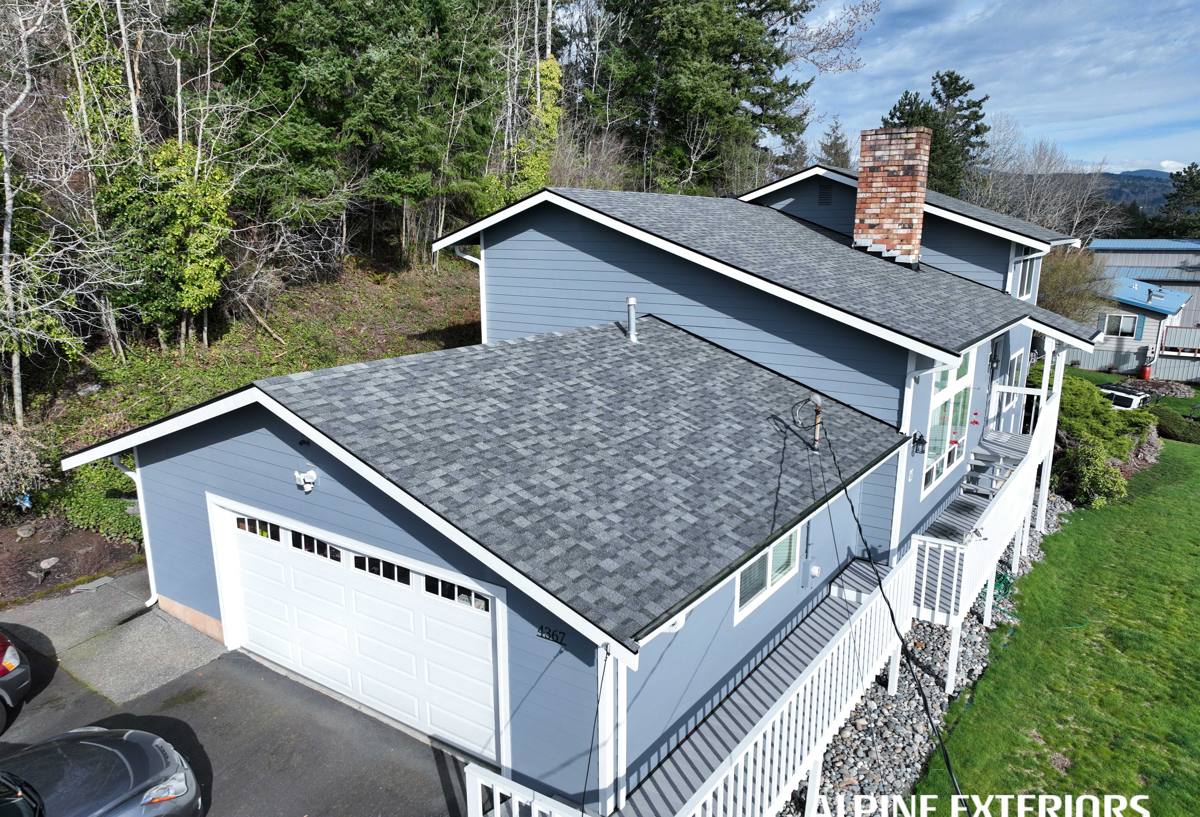
What Ferndale Homes Actually Face
Moss and Organic Growth
Moss doesn't just sit on a roof looking bad — it holds moisture against the shingle surface long after the rest of the roof has dried out, and over years that shortens shingle life and can work its way under tabs and flashing edges. North-facing slopes and roofs shaded by mature trees (common on larger Ferndale lots) are especially prone to it. Regular moss treatment and gentle removal, done correctly, is cheaper over the life of a roof than letting it establish and spread.
Salt Air and Metal Fatigue
Being close to the water means metal components — flashing, fasteners, gutters, vents — are exposed to a low but steady dose of salt in the air. Lower-grade or improperly coated metal corrodes faster in this environment than it would twenty or thirty miles inland. We pay attention to the metal we use for exactly this reason.
Wind-Driven Rain
Storms coming off the water don't always drop rain straight down. Wind pushes it sideways and up under laps, ridge caps, and around chimneys and skylights — the exact spots where a roof is most likely to leak if flashing wasn't installed with real care. This is one of the biggest reasons DIY roof repairs and poorly sealed patch jobs fail here faster than they would in a calmer climate.
Freeze-Thaw Cycling
Whatcom County doesn't get brutal winters, but it does get enough freeze-thaw swings — especially on clear, cold nights followed by wet days — to stress any water that's found its way into a roof deck or siding gap. Trapped moisture that freezes and expands is a slow, quiet way for small problems to become structural ones.
Roofing Services We Provide in Ferndale
- Full roof replacement — asphalt composition shingle, metal, and other systems suited to the local climate
- Roof repair — leak diagnosis, flashing repair, damaged shingle replacement, storm damage assessment
- Moss treatment and removal, including preventive maintenance plans
- Ventilation assessment and improvement — soffit and ridge venting to manage moisture and reduce moss growth
- Gutter and downspout work tied to the roofing system
- Roof inspections for home purchases, insurance documentation, or general peace of mind
We also handle siding, window, and deck work, which matters more than it might seem — a roof doesn't function in isolation. Fascia, soffits, siding-to-roof transitions, and deck covers all interact with how water moves off a house. A crew that only thinks about the roof itself can miss problems at these transition points.
Choosing Roofing Materials for This Climate
There's no single "best" roofing material — the right choice depends on budget, the home's structure, aesthic goals, and how much long-term maintenance a homeowner wants to take on. Here's an honest comparison of what we typically discuss with Ferndale homeowners:
| Material | Typical Lifespan | Coastal/Moss Considerations | Maintenance Level |
|---|---|---|---|
| Asphalt composition shingle | 20–30 years (algae-resistant lines run longer) | Algae-resistant granules help with moss/moisture staining; still needs periodic cleaning | Moderate |
| Standing seam metal | 40–60+ years | Sheds water and moss buildup well; needs quality coating to resist salt air corrosion | Low |
| Wood shake/shingle | 20–30 years with upkeep | More susceptible to moisture retention and moss in a marine climate | High |
| Synthetic/composite shingle | 30–50 years | Resistant to moisture and organic growth; higher upfront cost | Low to Moderate |
We're straightforward about trade-offs. Wood shake can look great and has its place, but in a marine climate with heavy moss pressure, it asks more of a homeowner in upkeep than most people want to sign up for. That's not a knock on wood shake as a product — it's a maintenance reality we think homeowners deserve to hear before they buy, not after.
Why Flashing and Underlayment Details Matter More Here
A lot of roofing problems in this region don't come from the shingles themselves — they come from what's underneath and around them. Ice-and-water shield underlayment at eaves, valleys, and around penetrations gives a roof a second line of defense against wind-driven rain that finds its way past the primary roofing material. Properly lapped and sealed flashing at chimneys, skylights, and roof-to-wall transitions is the single most common point of failure we see on older Ferndale-area roofs. Getting these details right the first time costs more in labor and materials up front — cutting corners there is exactly the kind of shortcut that shows up as a leak two or three winters later.
Beyond the Roof: Siding, Windows, and Decks
Because we work across siding, roofing, windows, and decks, we tend to look at a Ferndale home as one connected exterior system rather than a set of separate projects. A few examples of how that plays out:
- Siding that's failing at the top edge is often a sign of a roof or flashing issue above it, not just a siding problem on its own.
- Windows near rooflines or under low eaves can take on wind-driven rain the same way roofs do, and flashing details around them matter just as much.
- Decks and deck covers tied into the house need the same attention to water management as the roof itself — a poorly flashed deck ledger is a common source of hidden rot.
Handling all of these under one roof (so to speak) means fewer handoff gaps between trades, and a crew that already understands how the whole exterior of the house is supposed to work together.
What to Expect When You Work With a Local Crew
A crew based in and around Bellingham and Whatcom County isn't guessing at what Ferndale's weather does to a roof — we see it season after season on homes like yours. That local knowledge shows up in small but meaningful ways: knowing which slopes tend to hold moss longest, understanding how wind off the water actually behaves during a fall storm, and having a realistic sense of how long materials actually hold up here versus their generic warranty numbers.
It also means accountability. A local contractor has a reputation in the community to maintain and is easy to reach if something needs a follow-up look after a big storm.
Questions Worth Asking Any Roofing Contractor
- Are you licensed and insured in Washington State, and can you provide proof?
- What underlayment and flashing approach do you use for wind-driven rain and valleys?
- How do you handle moss and organic growth prevention, not just removal?
- What's included in your workmanship warranty, separate from the manufacturer's material warranty?
- Can you walk me through ventilation — how does the roof breathe, and how does that affect moss and shingle life?
Cost Factors for a Ferndale Roofing Project
Every roof is different, so we don't publish flat pricing — but the main factors that drive cost are consistent from job to job:
| Factor | Why It Affects Cost |
|---|---|
| Roof size and pitch | Steeper roofs take longer and require more safety setup and material |
| Material choice | Asphalt, metal, and composite systems carry different material and labor costs |
| Number of penetrations | Chimneys, skylights, and vents each need careful flashing, adding labor |
| Existing deck condition | Rotted or damaged decking under old roofing adds repair costs |
| Access and layout | Steep lots, tight setbacks, or multiple stories affect staging and time |
| Tear-off vs. overlay | Full tear-off costs more but is usually the right call for long-term performance |
We walk through these factors on-site so a homeowner understands exactly what's driving the number on their estimate — not just a total with no explanation behind it.
Get an Honest Look at Your Roof
If you're noticing moss buildup, a leak that shows up only during heavy wind, or you're just due for an inspection after a few Whatcom County winters, we're happy to take a look and give you a straight answer — whether that's a simple repair, a maintenance plan, or a full replacement. Reach out for a free, no-pressure estimate using the form below, and we'll walk your roof with you and explain what we see.