 Bellingham Roofing
 Why Storm Damage Looks Different in Bellingham
Whatcom County doesn't get the hailstorms or hurricanes that make national news, but that doesn't mean local roofs get off easy. Bellingham's exposure comes from a different direction: winter windstorms off the Strait of Georgia and Bellingham Bay, weeks of driving rain that finds every weak seam, and salt-laden air that quietly ages roofing materials faster than homeowners expect. Add a moss season that can run eight or nine months out of the year, and you have a climate that damages roofs gradually as often as it does suddenly.
That combination matters when it comes to insurance. A single windstorm that rips shingles loose is an easy claim to understand. Damage that built up over several wet, mossy winters is a much harder conversation with an adjuster, because insurers distinguish sharply between a "sudden and accidental" event and ordinary wear and tear. Knowing which category your roof problem falls into - before you call your insurance company - can save you a denied claim and a lot of frustration.
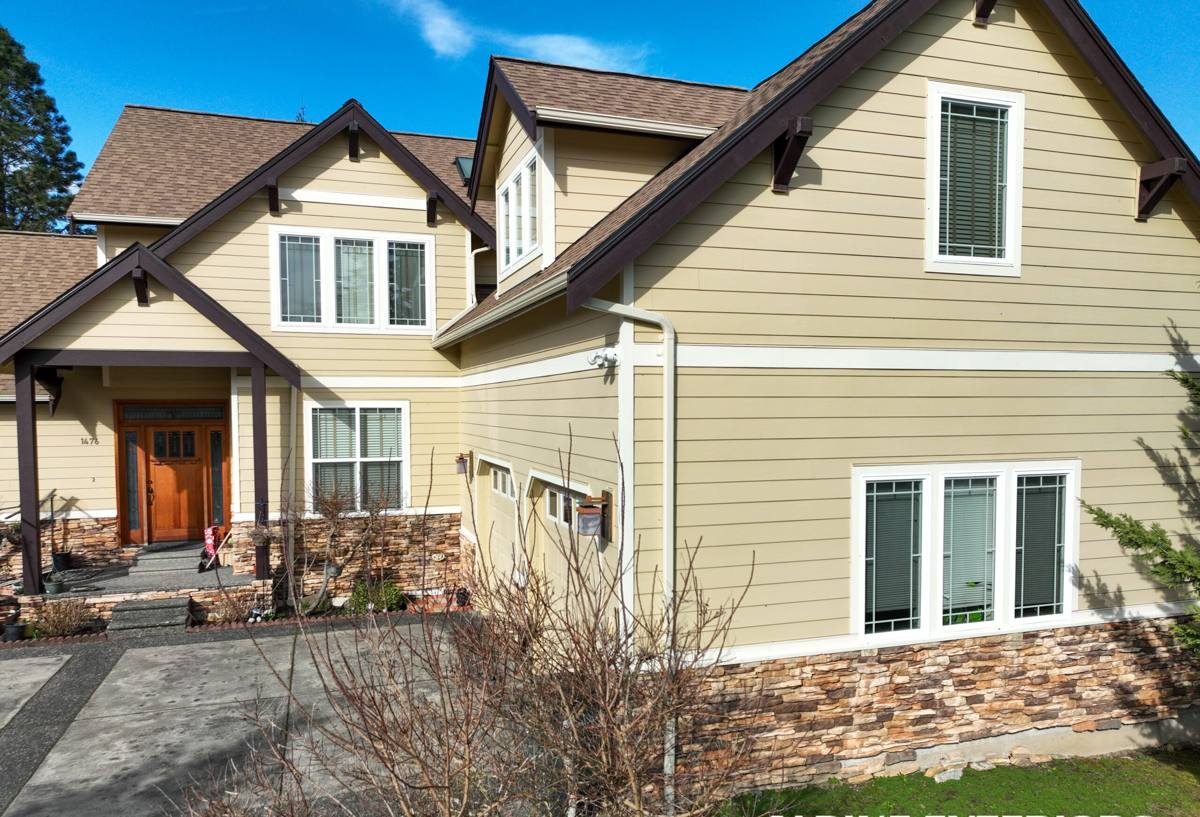
Storm Damage Patterns We See Locally
Wind and Wind-Driven Rain
Bellingham's winter storms tend to bring sustained wind more than short violent gusts, which stresses roofs differently than a brief squall. Sustained wind works shingle tabs and flashing back and forth until sealant strips let go, then wind-driven rain gets pushed sideways and upward under the roof covering instead of running off normally. This is why interior leaks after a storm often show up along walls or at the top of window trim rather than in the middle of a ceiling - the water traveled a fair distance before it found a gap.
Salt Air Corrosion
Homes closer to Bellingham Bay and the waterfront neighborhoods deal with airborne salt that accelerates corrosion on exposed metal - roof jack flashing, nail heads, gutter fasteners, and valley metal. Corrosion doesn't look dramatic after one storm, but it's often the reason a fastener finally fails or a flashing seam finally opens during a windstorm that an identical roof further inland would have shrugged off.
Moss and Trapped Moisture
Moss doesn't blow a roof off in one afternoon, but it does something almost as damaging over time: it holds moisture against the roof surface long after a storm has passed, which accelerates granule loss on shingles and can work under the edges of shakes or tiles. A storm event is often what finally exposes a spot that moss had already been weakening for a year or more.
Sudden Damage vs. Wear and Tear
This distinction drives almost every insurance decision, so it's worth being direct about it. Insurance is designed to cover sudden, identifiable events - a windstorm that lifts shingles on a specific date, a tree limb that comes down, ice damming from an unusual cold snap. It is not designed to cover a roof that has simply reached the end of its service life, or damage that accumulated from months of moss growth and moisture cycling.
The honest answer for most homeowners falls somewhere in between: a storm exposes a weakness that was already there. A roof with ten years of moss buildup and softened decking is far more likely to fail in a windstorm that a well-maintained roof of the same age would survive. An adjuster's job is to figure out how much of the damage is attributable to the storm itself versus long-term condition, and a contractor's documentation can help make that case fairly - in either direction.
How the Claims Process Actually Works
- Document immediately. Photograph any visible damage, debris, and the general condition of the roof as soon as it's safe to do so, before any temporary repairs or cleanup.
- Report the date of the storm. Insurance claims are tied to a specific weather event, so note the date and, if possible, keep any local weather reports or wind advisories that back up the timeline.
- Get a professional roof inspection. An inspection from a contractor - not just the adjuster - gives you an independent record of what's damaged, what's pre-existing, and what repair scope is actually needed.
- File the claim and schedule the adjuster visit. Have your inspection notes or estimate ready so you can compare it against the adjuster's findings.
- Review the settlement carefully. Ask specifically whether the payout is for repair or full replacement, and whether it accounts for code-required upgrades if your roof needs to be brought up to current standards.
We're happy to walk a homeowner through their own roof's condition and provide honest documentation either way - whether that supports a claim or points to a maintenance issue that isn't the storm's fault.
What Adjusters Look For
Insurance adjusters are trained to spot the difference between impact damage and degradation. They'll typically check for creased or torn shingles consistent with wind uplift, displaced or missing flashing, exposed nail heads, and any pattern of damage that matches the reported wind direction. They will also look at overall roof condition - granule loss, brittle shingles, moss coverage - because a heavily worn roof changes how a claim gets evaluated. This is exactly why having your own inspection report matters: it puts specifics on the table instead of leaving the entire assessment to a single visit from someone who has never seen your roof before.
Repair, Partial Replacement, or Full Replacement
Not every storm claim ends in a full roof replacement, and a straight-shooting contractor will tell you when a repair is genuinely enough. The right call depends on the extent of damage, the roof's age, and whether matching materials are still reasonably available.
| Factor | Favors Repair | Favors Replacement |
|---|---|---|
| Roof age | Under 10-12 years | Nearing or past expected service life |
| Damage location | Isolated to one slope or area | Spread across multiple slopes |
| Underlying condition | Deck and structure sound | Soft decking, widespread moss damage |
| Material availability | Matching shingles/tile still made | Discontinued color or profile |
| Insurance settlement | Repair-scope payout | Full replacement value approved |
Cost is always a fair question, and the honest answer is that it varies with roof size, pitch, material, and how much of the decking needs to be replaced underneath. We'll give you a straightforward, itemized estimate rather than a vague ballpark, so you can compare it directly against whatever the insurance settlement offers.
Choosing a Contractor for Storm and Insurance Work
Storm season brings out traveling crews who go door to door after a windstorm, offer a "free inspection," and pressure homeowners to sign a contract on the spot before the adjuster even arrives. That's a pattern worth being cautious about, regardless of who's doing it. A roof is a long-term investment, and the contractor doing the repair should still be reachable if a question comes up two years from now.
- Get a written, itemized estimate - not a verbal quote or a single lump-sum number
- Ask for proof of Washington State contractor registration and current insurance
- Be wary of anyone asking for full payment upfront, before materials are ordered or work begins
- Ask how they document damage for insurance purposes, and whether they'll meet the adjuster on-site if needed
- Check that warranty terms are in writing, covering both materials and workmanship separately
- Confirm they're familiar with local permitting requirements for Bellingham and Whatcom County
A contractor who's willing to explain their reasoning - why they're recommending repair over replacement, or why a particular material fits your home - is generally a better sign than one who just wants a signature.
Materials That Hold Up to This Climate
Our approach to material selection is shaped by what actually performs well under salt air, sustained wind, and long wet seasons, not by what's cheapest to install. Algae-resistant asphalt shingles with copper or zinc granules help slow moss and algae growth, which matters given how long our moss season runs. Corrosion-resistant flashing and fasteners are worth the modest upfront cost near the waterfront, where standard galvanized hardware can start showing rust years before it would inland. Proper ventilation is just as important as the roofing material itself - a roof that can't breathe traps moisture underneath, which accelerates decking rot regardless of how good the shingles are on top.
Maintenance That Reduces Future Claims
The best insurance claim is the one you never have to file. Regular maintenance narrows the gap between "storm damage" and "wear and tear," and it gives you a documented history if you ever do need to make a claim.
- Schedule a roof inspection each fall, before the winter storm season sets in
- Have moss treated and removed before it accumulates into thick mats
- Keep gutters and downspouts clear so wind-driven rain has somewhere to drain
- Trim back tree limbs that could come down in a windstorm
- Address small flashing or sealant issues promptly, before they become leaks
- Keep dated photos and inspection reports on file as a baseline for comparison
If a storm does cause damage, that history makes it much easier for both your contractor and your insurer to agree on what changed and when.
Getting an Honest Assessment
Whether you're dealing with a specific storm, a slow moss problem that's finally caught up with your roof, or you just want a professional opinion before deciding whether to file a claim at all, an honest assessment is the right place to start. We'll walk your roof, tell you plainly what we see, and give you documentation you can use with your insurance company - or straightforward advice if a claim isn't the right path. If you'd like a free, no-pressure estimate, the form below is the easiest way to get started.