 Bellingham Roofing
 Exterior Work Built for Birchwood's Climate
Birchwood sits close enough to Bellingham Bay and the Salish Sea that homes here deal with a specific combination of weather stress: salt-laden air off the water, long stretches of driving rain through fall and winter, and a moss season that can run eight or nine months out of the year. None of that is unusual for Whatcom County, but it does mean exterior materials and installation details that work fine in a drier inland climate don't always hold up the same way here. A roof, siding job, or deck built without that in mind tends to show wear years before it should.
We work on homes throughout the Birchwood area and the broader Bellingham market, and the approach we bring is the same one we'd use on our own houses: pick materials and methods that are honest about what this climate does to a building, not just what looks good on install day.
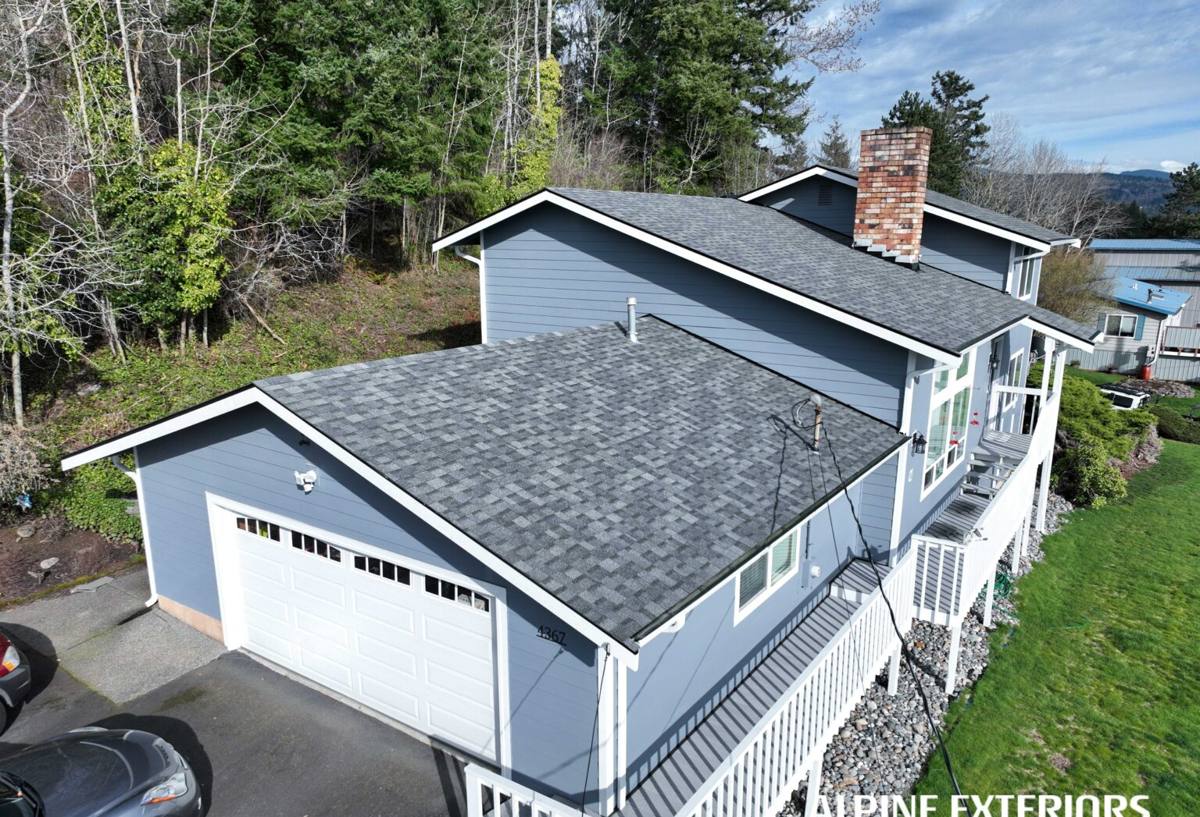
What Salt Air and Rain Actually Do to a Home
Salt Air
Homes closer to the water pick up airborne salt that settles on roofing, siding, gutters, and any exposed metal fasteners or flashing. Over time this accelerates corrosion on lower-grade metal components and can dull or streak certain painted and coated finishes faster than the manufacturer's typical wear estimates assume. It's rarely dramatic — it's a slow, cumulative effect that shows up as premature fastener rust, flashing that fails early, or gutters that pit and leak before their expected service life is up.
Driving Rain
Bellingham's rain isn't just frequent, it's often wind-driven, which pushes water sideways into laps, seams, and transitions that would stay dry in a straight-down rain. This is where installation detailing matters more than the material itself — flashing at windows, doors, decks, and roof penetrations has to be sequenced correctly so water is always directed out and down, never trapped behind a surface that looks watertight but isn't.
Moss and Sustained Moisture
Long wet seasons with mild temperatures are exactly what moss and algae need to establish on north-facing roof slopes, shaded siding, and anywhere airflow is limited. Left alone, moss holds moisture against roofing material, lifts shingle edges, and can work its way under siding laps. It's a maintenance issue more than an emergency, but it's one that gets expensive to ignore.
Roofing in Birchwood: What Holds Up
There's no single "best" roofing material for this area — it depends on the home, the roof's exposure, and the budget. What matters more than brand is how the roof is detailed: underlayment quality, ice-and-water protection at eaves and valleys, proper flashing at every penetration, and ventilation that keeps the attic from trapping moisture against the roof deck from underneath.
- Asphalt composition shingles remain the most common choice locally — reasonable cost, wide availability, and good performance when installed with attention to flashing and ventilation details.
- Metal roofing sheds moss and standing moisture better than most materials and holds up well to wind-driven rain, though it comes at a higher upfront cost and requires correct fastener and flashing choices to avoid the corrosion issues salt air can accelerate.
- Any steep or shaded roof section benefits from extra attention to underlayment and ventilation regardless of the finish material, since that's where moss and trapped moisture do the most damage.
We also pay close attention to gutters and downspouts as part of a roofing job, not as an afterthought — undersized or poorly sloped gutters are one of the more common causes of water finding its way behind fascia and siding in this climate.
Siding Considerations for This Neighborhood
Siding in Birchwood needs to manage two things well: shedding wind-driven rain at every seam and joint, and resisting the slow degradation that comes from salt air and sustained dampness. We generally steer homeowners away from siding systems that trap moisture behind the surface or require a lot of upkeep to stay watertight, not because any particular product is bad, but because our professional standard is to minimize long-term maintenance burden and moisture risk for the homeowner.
Fiber cement and quality engineered wood products tend to perform well here when installed with proper flashing, house wrap, and drainage gaps behind the cladding. Vinyl siding remains a budget-friendly option and performs adequately when installation details — especially around windows and corners — are done correctly, since most siding failures trace back to installation gaps rather than the material itself.
Windows: Sealing Out Rain, Keeping In Comfort
Older or poorly flashed windows are one of the most common sources of hidden water intrusion we find during exterior inspections in this area. Wind-driven rain finds any gap in window flashing and works its way into wall cavities, where it can sit unnoticed for a long time before showing up as interior staining, soft trim, or mold.
When we replace or install windows, correct flashing integration with the surrounding wall assembly matters as much as the window unit itself. A high-end window installed without proper flashing will leak; a modest window installed correctly will usually outperform it. We also look at overall energy performance, since well-sealed windows make a real difference in heating costs through Whatcom County's long, damp winters.
Decks: Built for a Wet Climate
Decks in this area take a beating from standing moisture, especially on ground-level or shaded builds where things don't dry out quickly between rain events. The details that matter most are proper spacing between boards for drainage and airflow, ledger board flashing where the deck meets the house (a common failure point if done wrong), and fasteners rated to resist corrosion from both moisture and salt air exposure.
Composite decking has become popular locally because it resists moisture damage and doesn't need the periodic sealing or staining that wood decking requires — a real advantage given how much of the year this climate stays damp. Wood decking is still a solid choice for homeowners who prefer the look and are willing to keep up with maintenance, but it does require more consistent upkeep here than it would in a drier region.
Why a Local Crew Matters
A crew that works this area regularly knows which roof slopes in Birchwood tend to hold moss longest, which exposures take the worst of the wind-driven rain off the bay, and how salt air affects material choices differently than it would twenty miles inland. That familiarity shows up in small decisions — flashing details, fastener selection, ventilation planning — that add years to the life of a roof, siding job, or deck.
It also means being reachable for follow-up. Exterior work isn't "install and forget" in this climate — gutters need checking, moss needs managing, and flashing needs the occasional look. A crew based in the area is in a better position to stand behind the work over time than an out-of-town outfit that isn't coming back through.
Cost Factors to Consider
Every home and project is different, so we don't quote prices without seeing the actual roof, siding, windows, or deck in question. In general terms, the factors below tend to move cost up or down more than anything else:
| Factor | Impact on Cost | Why It Matters Here |
|---|---|---|
| Roof/deck exposure and pitch | Moderate to significant | Steeper or harder-to-access areas take more labor and safety setup |
| Material choice | Significant | Metal roofing and fiber cement siding cost more upfront than asphalt or vinyl but often need less upkeep |
| Existing moisture or moss damage | Variable | Rot repair or deck substructure work adds cost beyond the visible surface job |
| Flashing and detail work | Modest but essential | Proper flashing costs less than the water damage it prevents |
| Ventilation upgrades | Modest | Often needed alongside roofing to control attic moisture long-term |
A Simple Maintenance Checklist for This Climate
Whether or not we did the original work, these are the basics we'd recommend for any Birchwood home given the local weather pattern:
- Clear gutters and downspouts at least twice a year, more often if surrounded by trees
- Have moss treated or removed from roof surfaces before it builds up thick enough to lift shingles
- Check window and door flashing for gaps or caulking failure, especially after a hard windstorm
- Inspect deck ledger flashing and fasteners annually for corrosion or separation
- Look at siding seams and corner trim yearly for cracking or gaps that could let rain behind the surface
- Confirm attic or roof ventilation isn't blocked, since trapped moisture accelerates deck and moss damage from underneath
Getting Started
If you're dealing with a roof that's holding moss, siding that's showing its age, windows that let in drafts, or a deck that never quite dries out, we're happy to take a look and give you an honest read on what's actually going on and what your options are. There's no pressure and no obligation — just a straightforward assessment from a crew that knows what this climate does to a house. Use the form below to request a free estimate.