 Bellingham Roofing
 Why Birch Bay Is Tougher on Windows Than Most of Whatcom County
Birch Bay sits right on the water, and that changes what a window has to deal with day to day. Salt-laden air corrodes hardware and finishes faster than it does a few miles inland. Wind off the bay drives rain sideways into wall assemblies during winter storms, testing every seal and flashing detail a window has. And the long stretch of gray, wet weather that defines a Whatcom County winter means any window that isn't sealed correctly gets months of steady moisture exposure before it ever dries out. A window that would perform fine in a drier, more sheltered part of Bellingham can fail years early out here if it wasn't installed with this specific exposure in mind.
This isn't a reason to over-spec or overspend on a house. It's a reason to get the installation details right the first time, because redoing a window job after water has gotten into the wall is a much bigger project than the original install.
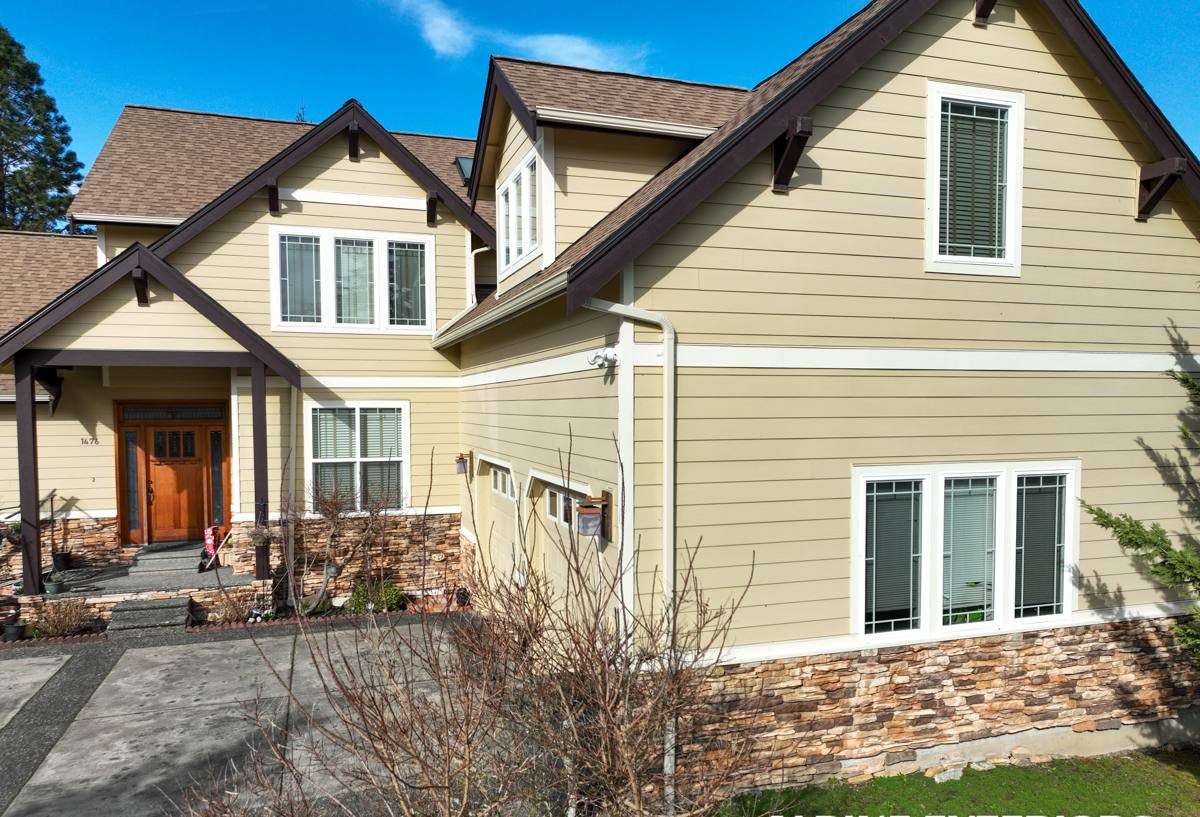
Signs Your Current Windows Are Losing the Fight
Homeowners usually call us for one of a handful of reasons, and most of them show up gradually before they become obvious:
- Fogging or a hazy film between the panes of a double-pane window — the seal has failed and the insulating gas or dry air has escaped
- Sashes that stick, drop, or won't stay up on their own, usually from swollen wood or worn balance hardware
- Corroded or pitted hardware — locks, cranks, hinges — especially on windows facing the water directly
- A cold draft you can feel standing next to the window even when it's latched
- Soft or discolored wood at the sill or the interior trim, a sign moisture has already gotten past the frame
- Visible daylight or gaps around the frame from the outside
Any one of these is worth a look. Several at once usually means the original installation, not just the window unit, has reached the end of its useful life.
What a Correct Window Installation Actually Involves
A window replacement is easy to do halfway — pull the old unit, drop in the new one, caulk the outside edge, and call it done. That approach can look fine for a year or two and then start leaking, because the parts nobody sees are the parts that actually keep water out.
Flashing and Weatherproofing Details
The window opening needs to be built as a system: a sloped sill pan so any water that gets past the glass drains back outside instead of pooling in the framing, flashing tape integrated with the house wrap in the correct shingle-lap order (so water sheds down and over, never into a seam), and backer rod and sealant sized correctly for the gap rather than just a bead of caulk smeared over whatever space is left. On a site exposed to driving, wind-blown rain the way Birch Bay properties often are, skipping any one of these steps is where future leaks start.
Fit, Shimming, and Insulation
The window has to be shimmed level, plumb, and square in the opening — not just close enough to screw in place — or it will operate poorly and stress the seals over time. The gap between the window frame and the rough opening needs to be insulated with a low-expansion foam or backer rod, never packed solid with can foam, which can bow the frame and cause the sashes to bind.
Choosing the Right Window Material for a Coastal, High-Moisture Climate
There's no single "best" window for every house, but on a saltwater site with heavy annual rainfall, some materials are a better match than others. We'll walk through the honest trade-offs rather than push one option.
| Frame Material | How It Handles Salt Air & Moisture | Maintenance |
|---|---|---|
| Vinyl | Won't rust or rot; performs well against salt exposure; can discolor or become brittle with age in direct sun | Low — occasional cleaning |
| Fiberglass | Very stable in temperature and moisture swings; strong resistance to corrosion and warping | Low |
| Aluminum | Durable but conducts cold and can corrode faster near saltwater without a quality coating | Moderate |
| Wood or wood-clad | Best look for many homeowners, but exterior wood is the most vulnerable material to a wet, salty climate if the cladding or finish is ever breached | Higher — finish upkeep and moisture watch |
We're straightforward with clients about wood-clad units in particular: they can look great and perform well for a long time, but they demand more diligence in a marine climate like this, and any failure in the cladding needs to be addressed quickly rather than left alone. For most fully exposed, water-facing walls in Birch Bay, vinyl or fiberglass tends to be the lower-maintenance choice — but plenty of homeowners still choose wood-clad for specific rooms and accept the trade-off knowingly. That's the client's call to make, not ours; our job is to make sure whatever's chosen is installed correctly.
How Our Installation Process Works
- On-site assessment of the existing windows, framing condition, and any signs of past water intrusion
- Accurate measurement of each opening — replacement windows are built to the exact opening, not a stock size
- Careful removal of the old unit with attention to what the framing looks like once it's exposed
- Repair of any rot or damaged sheathing found before the new window ever goes in — this step gets skipped by rushed installs and it's the one that causes repeat problems
- Installation of the sill pan, flashing, and new window per manufacturer specifications and best practice for a high-exposure site
- Shimming, leveling, insulating, and interior/exterior trim work
- Final operation check — every sash opens, closes, and locks the way it should before we consider the job finished
Common Mistakes We Find in Older Window Installations
When we're called out to fix a leak or a failed window, the underlying installation problem is usually one of a few things: no sill pan, so water that gets past the glass has nowhere to go but into the wall; flashing that was taped in the wrong order and channels water inward instead of out; expanding foam packed too tightly around the frame, warping it out of square; or a caulk-only seal on the exterior that was never backed by proper flashing underneath. None of these are visible from inside the house, which is exactly why they go unnoticed until there's damage. We flag and correct these issues as part of every replacement, not as an upsell.
What Affects the Cost of a Window Installation Project
Every home and project is different, so we won't quote a number without seeing the job, but these are the factors that typically move the price:
| Factor | Why It Matters |
|---|---|
| Number of windows | Per-window pricing usually improves somewhat with larger jobs |
| Frame material | Vinyl, fiberglass, and wood-clad units carry different material costs |
| Window size and type | Large picture windows, bays, or custom shapes take more labor and material than a standard slider or double-hung |
| Condition of the existing framing | Rot or water damage found during removal adds repair work before the new window can go in |
| Access and height | Second-story or hard-to-reach openings take longer and may require additional equipment |
| Trim and interior finish work | Matching existing trim or repainting/staining adds finish labor |
We'll break out these factors in any written estimate so it's clear where the money is going, not just a single lump-sum number.
Why a Crew That Actually Works Birch Bay Regularly Makes a Difference
A window installer who mostly works dry, sheltered neighborhoods and occasionally takes a coastal job doesn't always plan for what wind-driven rain off the water does to a wall assembly. Working regularly in Birch Bay and along the rest of the Bellingham-area coastline means we've seen what actually fails out here versus what's just cosmetic wear, which openings tend to take the brunt of the weather on a given lot, and how a long, wet Whatcom County winter tests a seal that looked fine on a dry install day. That local, repeat experience shapes how we flash, seal, and detail every opening — it's not a generic install adjusted after the fact for the coast.
Keeping New Windows Performing Once They're In
A correct installation does most of the work, but a little seasonal attention keeps windows performing for their full service life in this climate:
- Rinse salt residue off exterior frames and hardware a few times a year, especially after storms
- Check exterior caulking and sealant lines annually for cracking or separation and have any gaps addressed before winter rains set in
- Keep weep holes on vinyl and fiberglass frames clear of debris so water can drain as designed
- Operate every window through its full range a few times a year so hardware doesn't seize from disuse
- Have any soft trim, discoloration, or new drafts checked promptly rather than waiting for the next visible problem
If you're dealing with drafty, foggy, or failing windows in Birch Bay, or you're planning ahead for a remodel, we're happy to take a look and put together a straightforward, no-pressure estimate — just fill out the form below and we'll go from there.