 Bellingham Roofing
 Composite Decking Built for Birchwood's Weather
Birchwood homeowners deal with a specific combination of conditions that most decking material was never designed for: salt-tinged air drifting in off the water, long stretches of driving rain, and a shoulder season where moss and algae get a head start on anything that stays damp. A deck in this neighborhood isn't just an outdoor living space — it's a structure that has to shed water fast, resist organic growth, and hold up to fasteners and framing that spend half the year wet. Composite decking, installed correctly, handles that combination better than most alternatives. Installed poorly, it fails in the same ways wood does, just with a bigger price tag attached.
This page is specifically about composite decking for Birchwood properties — what the local climate demands, what a correct installation actually involves, and how we approach these projects when we already know the neighborhood.
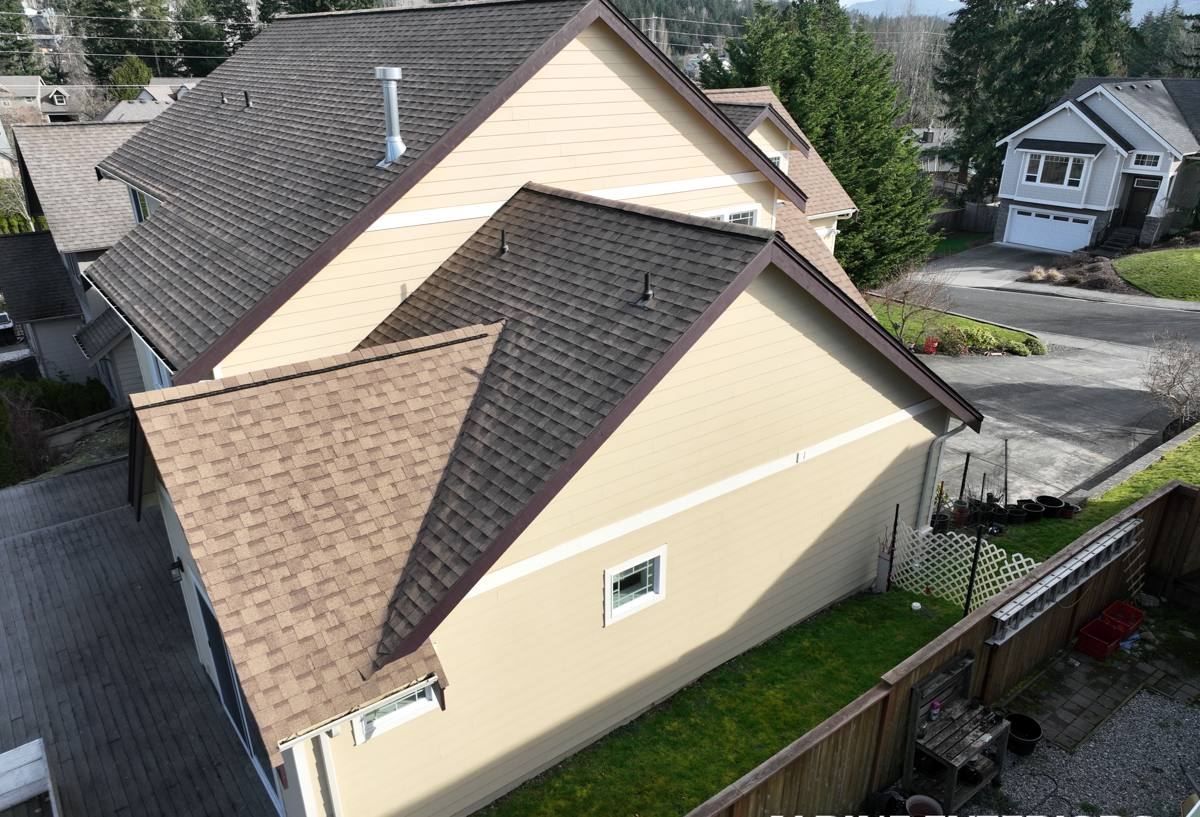
What Bellingham's Marine Climate Does to a Deck
Whatcom County's marine climate means most decks here are never fully dry for long. Rain is frequent and often comes in at an angle, driven by wind off the water, which pushes moisture into places a dry-climate deck design would never have to account for — end grain, fastener heads, the underside of ledger boards, and the framing tucked beneath the deck surface. Add in salt-laden air common to homes closer to the water, and you get accelerated corrosion on anything metal that isn't rated for it: screws, brackets, joist hangers, and flashing.
Then there's moss. Bellingham's moss season effectively runs from fall through spring, and it doesn't limit itself to roofs. Deck boards that hold moisture, sit low to the ground, or don't get enough airflow underneath will grow moss and algae on the surface and in the gaps between boards. That's a slip hazard as much as a cosmetic one, and it's the single most common complaint we hear from homeowners with older or poorly ventilated decks in this area.
What a Properly Installed Composite Deck Requires
Composite boards themselves resist rot, but the deck as a whole is only as good as the framing, fasteners, and airflow underneath it. This is where most of the difference between a deck that lasts and one that doesn't actually comes from.
Substructure and Ground Clearance
The framing under a composite deck needs proper ground clearance and slope so water moves away from the house instead of pooling under the joists. In yards with heavier clay soil or limited drainage — common around Bellingham — we pay close attention to grading and, where needed, add ventilation gaps or drainage paths so the underside of the deck can actually dry out between storms.
Fasteners, Flashing, and Hidden Framing
Every fastener, hanger, and piece of flashing on a deck we build is rated for the corrosion exposure this climate creates — not just the minimum a manufacturer's warranty requires. Ledger board flashing gets particular attention, since a poorly flashed ledger connection is one of the most common sources of hidden rot on older decks in this region, composite surface or not.
Board Selection for This Climate
Not all composite boards perform the same way in wet, low-light conditions. Boards with a fully capped surface (a protective polymer shell on all sides, not just the top) resist moisture absorption and surface mold far better than uncapped or partially capped boards. In a neighborhood with this much shade and moisture, that distinction matters more than color or grain pattern.
Composite, Wood, and PVC: How They Compare in Whatcom County
Homeowners in Birchwood usually narrow their decision down to three materials. Here's how they actually perform under our local conditions, not just in a manufacturer's brochure.
| Material | Moisture & Moss Resistance | Maintenance | Typical Lifespan Here |
|---|---|---|---|
| Pressure-treated wood | Absorbs water; needs sealing to resist moss and rot | Annual cleaning, periodic staining/sealing | 10–15 years before major repair |
| Capped composite | Strong; sheds water, resists algae staining | Periodic wash-down, no sealing or staining | 25+ years, backed by manufacturer warranty |
| Cellular PVC | Excellent moisture resistance | Low; can be more brittle in cold snaps | 25+ years, higher upfront cost |
We install capped composite for most Birchwood projects because it lands in the best spot for this climate: it doesn't need staining or sealing, it resists the moss and algae staining that plagues wood decks here, and it's more forgiving during installation and temperature swings than PVC. We'll talk through PVC as an option too if a homeowner wants it — the right call depends on budget, the deck's exposure to sun and shade, and how the homeowner wants to spend their maintenance time, not on any one product being universally "better."
Our Process for Birchwood Deck Projects
Site Visit and Assessment
We start by walking the actual site — slope, drainage, sun and shade exposure, existing framing condition if this is a replacement, and how the deck ties into the house. In Birchwood specifically, we're checking for the telltale signs of past moisture problems: soft spots near the ledger, moss buildup on existing surfaces, and any framing that's been sitting too close to wet ground.
Install
Framing and ledger work come first, with attention to flashing and fastener corrosion resistance as described above. Board installation follows manufacturer spacing and fastening specs, adjusted where needed for proper drainage and airflow given the deck's specific exposure.
Walkthrough and Care Guidance
Before we consider a job finished, we walk the homeowner through what routine care actually looks like for their specific board choice and site conditions — not a generic care sheet, but what applies to that deck given its sun exposure, tree cover, and proximity to the water.
Moss, Mildew, and Salt Air: What Upkeep Actually Looks Like
Composite decking cuts maintenance dramatically compared to wood, but "low maintenance" doesn't mean "no maintenance" — especially in a climate like this one. A realistic annual routine looks like:
- Rinse or sweep debris (leaves, needles, seed pods) out of board gaps regularly through fall, since trapped organic matter is what feeds moss growth
- Wash the deck surface once or twice a year with a soft-bristle brush and a cleaner rated for composite — pressure washers can be used but only at a safe distance and pressure to avoid damaging the board surface
- Check fastener heads and any exposed hardware for corrosion, particularly on decks closer to the water
- Keep gutters and downspouts near the deck clear so runoff isn't dumping extra water onto the deck surface or framing below
- Trim back overhanging vegetation to cut down on shade and moisture retention where moss tends to take hold first
What Affects the Cost of a Birchwood Composite Deck
Every project is different, but the same handful of factors drive most of the cost variation we see on composite deck jobs in this area:
- Board tier — entry-level capped composite versus premium composite or PVC changes material cost significantly
- Substructure condition — a full tear-out and reframe costs more than resurfacing sound existing framing
- Site drainage and access — sloped yards, limited equipment access, or poor existing drainage add labor time
- Railing and fastener systems — hidden fastener systems and corrosion-rated hardware cost more than exposed-fastener basics but hold up better here
- Deck size and complexity — multiple levels, stairs, or built-in features add both material and labor
We give straightforward, itemized numbers up front rather than a vague range, because a Birchwood deck built to actually handle this climate isn't a one-size-fits-all price.
Why Hiring a Crew That Already Works in Birchwood Matters
A lot of deck problems we get called to fix started with a crew that builds decks the same way everywhere, without adjusting for what this specific climate does to a structure over time. Framing decisions, fastener grade, and flashing details that are optional in a drier part of the country aren't optional here. Working regularly in Bellingham and Whatcom County neighborhoods like Birchwood means we've already seen how moss, salt air, and sustained rain expose shortcuts — and we build accordingly the first time, rather than treating it as a lesson learned on someone else's deck.
If you're weighing a new composite deck or a replacement for an aging one in Birchwood, we're happy to walk the site, look at what your current setup is doing right or wrong, and put together a clear, no-pressure estimate. There's a form below to get that started.