 Bellingham Roofing
 Why Blaine's Coastal Climate Is Hard on Windows
Blaine sits right up against the water at the top of Whatcom County, and that location shapes what a window has to survive here. It isn't just rain — it's rain pushed sideways by wind, salt carried in off the water, and long stretches of gray, damp weather that never really lets a house dry out. Windows that would hold up fine in a drier inland climate start showing problems years earlier in a location like this. Frames swell, hardware corrodes, seals fail, and moisture finds its way into places it was never supposed to reach.
Salt Air and Metal Components
Salt-laden air is hard on anything metal. Window hardware, screen frames, and some cladding materials are exposed to airborne salt continuously, not just during storms. Over time this accelerates corrosion on hinges, cranks, locks, and fasteners, and it can pit or discolor lower-grade metal finishes. This is one of the biggest reasons material choice matters more here than it would fifty miles inland — a window built for a dry suburb isn't necessarily built for a shoreline town.
Wind-Driven Rain and Water Intrusion
Rain that falls straight down is one problem. Rain that gets pushed horizontally into a wall by wind off the water is a different, more serious problem. Wind-driven rain finds gaps that vertical rain never would — around trim, at the sill, along poorly sealed flanges. A window that isn't installed with the right flashing and sealing details can look fine for a season or two and then start leaking during the first real windstorm.
Moss Season and Persistent Moisture
The long moss season in this part of Whatcom County is really a symptom of something bigger: extended periods where surfaces stay damp and shaded. That same moisture that grows moss on a roof or a north-facing wall also sits against window trim, sills, and lower corners longer than it would in a sunnier climate. Wood trim and lower-quality composite materials can absorb that moisture over repeated cycles, leading to soft spots, paint failure, or rot around the opening if the original installation wasn't sealed correctly.
What "Custom" Actually Means for a Window Job
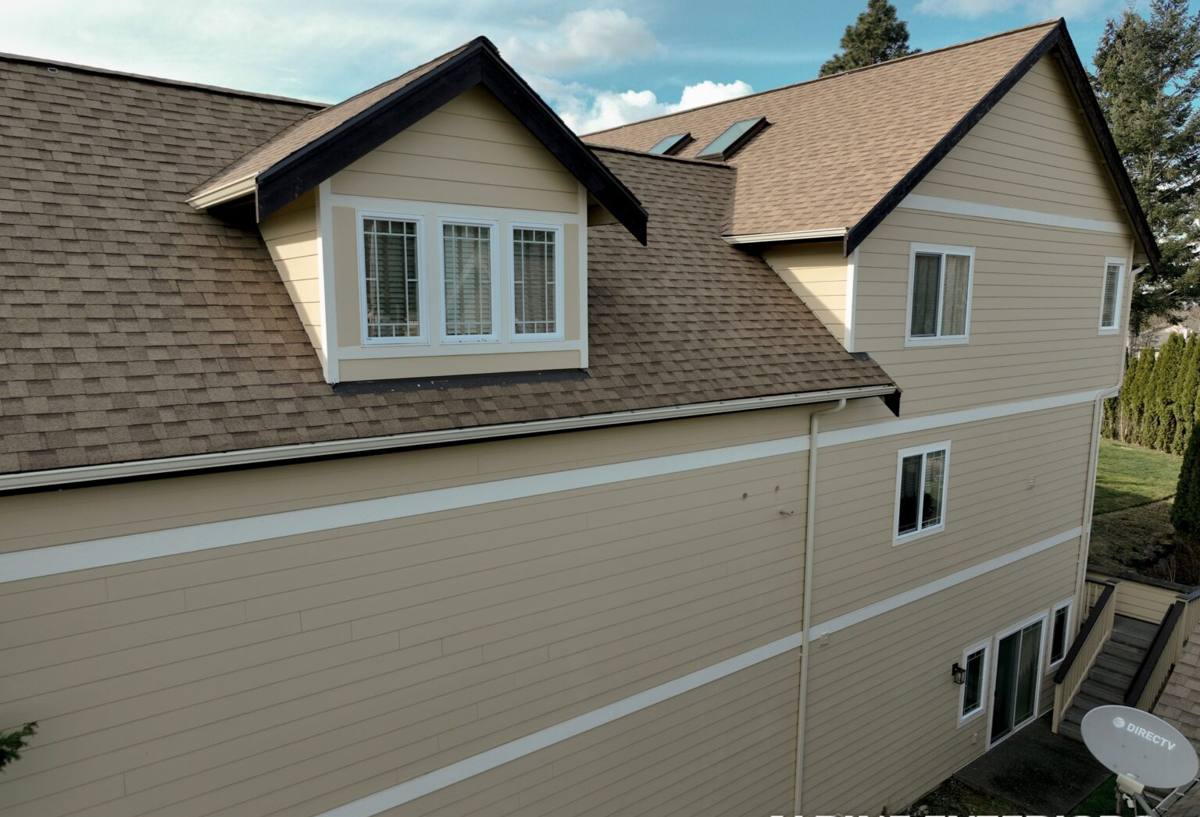
Custom windows aren't a marketing term — they're a practical necessity in a lot of Blaine homes, especially older ones or homes that have been added onto or remodeled over the years. Openings settle, framing shifts slightly, and older construction often used dimensions that don't match today's standard manufactured sizes.
Why Stock Sizes Don't Work Everywhere
When a window is even a little undersized for its opening, installers are sometimes tempted to pack the gap with extra shim material and heavy caulking to make it fit. That approach might close up visually, but it rarely performs well long term — it creates uneven support, inconsistent sealing, and spots where water can track in behind the trim. A properly custom-sized window is built to fill the actual opening correctly, so it can be flashed, insulated, and sealed the way it's supposed to be.
Matching Existing Openings and Trim
Custom work also means paying attention to how a new window ties into existing siding, trim, and interior finishes. On a lot of Blaine homes, that means working around existing exterior trim profiles, matching interior casing, and making sure the finished look doesn't read as an obvious patch job. Getting these details right is part craftsmanship and part just taking accurate measurements before anything is ordered.
Choosing the Right Frame Material for This Climate
There's no single "best" window frame material for every home — it depends on budget, how exposed the home is to wind and salt spray, and how much upkeep the homeowner wants to do. What we can offer is a straightforward comparison based on how each material actually performs in a wet, coastal, salt-air environment like Blaine's.
| Frame Material | Moisture & Salt Air Resistance | Maintenance | Typical Installed Cost Range* |
|---|---|---|---|
| Vinyl | Good — won't rot or corrode; UV exposure can affect color over many years | Low — occasional cleaning | Lower end of the range |
| Fiberglass | Very good — dimensionally stable, holds up well to moisture and temperature swings | Low | Mid to upper range |
| Aluminum-clad wood | Good exterior protection, but any breach in the cladding exposes wood beneath to moisture | Moderate — cladding seals should be checked periodically | Upper range |
| Bare aluminum | Prone to condensation and can corrode faster in salt air without proper finishing | Moderate to high | Varies widely by grade |
*Actual pricing depends on size, glass package, and site conditions — this table is meant to show relative positioning, not a quote.
For most homes this close to the water, we lean toward vinyl or fiberglass for the frame itself, simply because they don't give salt air or moisture a foothold the way exposed wood or lower-grade aluminum can. That's a professional judgment based on long-term performance and maintenance burden, not a knock on every product in the other categories — there are legitimate reasons a homeowner might choose differently, and we'll walk through those trade-offs honestly during an estimate.
Glass and Performance Options Worth Considering
The frame gets most of the attention, but the glass package matters just as much for comfort and energy performance in a marine climate like this one.
Low-E Coatings and Gas Fills
Low-emissivity coatings help control heat transfer without darkening the glass noticeably, which is useful in a climate that swings between damp, chilly winters and mild summers. Argon or krypton gas fills between panes add a layer of insulation and can help reduce interior condensation on cold, wet days — a common complaint in older single-pane or poorly sealed double-pane windows.
Double-Pane vs. Triple-Pane
Double-pane windows with a good low-E coating are the standard choice for most homes here and perform well for the climate. Triple-pane adds another layer of insulation and sound dampening, which can be worth it for a home closer to road noise or with particularly exposed north- or west-facing walls, but it also adds weight and cost. We'll help you weigh whether that upgrade makes sense for your specific home rather than upselling it across the board.
Tempered Glass Where It's Required
Building code requires tempered safety glass in certain locations — near doors, close to the floor, in bathrooms, and in a few other specific situations. We identify where tempered glass is required as part of the estimate so there are no surprises or code issues once the windows are ordered.
How We Handle Installation in a Wet, Salty Climate
The window itself is only half the equation — how it's installed determines whether all those material and glass advantages actually hold up over time.
Flashing and Water Management
Correct flashing is the single most important detail in a climate that gets driving rain. That means a sloped sill pan to direct any water that gets past the window back outside, properly lapped flashing tape integrated with the home's weather-resistant barrier, and head flashing that sheds water away from the top of the opening rather than trapping it. Skipping or rushing this step is the most common cause of hidden leaks that don't show up until months or years later.
Sealing and Insulation Details
Around the frame, we use appropriate low-expansion insulation and exterior-grade sealant rated for continuous moisture exposure, not just standard interior caulk. Fasteners and hardware are chosen with corrosion resistance in mind given the salt air. None of this is visible once the job is finished, which is exactly why it's worth asking a contractor directly how they handle it before hiring.
Our Process, From Estimate to Final Walkthrough
We keep the process straightforward so there aren't surprises partway through.
On-Site Assessment
We start with an in-person look at each opening — checking for settling, rot, existing flashing condition, and how exposed each side of the home is to wind and rain. This is also when we measure for true custom sizing rather than relying on rough estimates.
Product Selection
We walk through frame material, glass package, and any code requirements based on what we found during the assessment, so the recommendation is specific to your home rather than a generic package.
Ordering and Lead Times
Custom windows are manufactured to order, so lead times are longer than off-the-shelf stock. We'll give you a realistic timeline up front so you can plan around it.
Install Day and Final Check
On install day, old windows are removed carefully to protect surrounding siding and trim, openings are inspected and repaired if any rot or damage is found, and new windows are set, flashed, insulated, and sealed. We finish with a walkthrough so you can see and test each window before we consider the job done.
Signs Your Current Windows Are Already Failing
A lot of homeowners live with failing windows longer than they need to simply because the signs are easy to miss or write off as normal. In a climate like Blaine's, these issues tend to show up earlier and progress faster than they would in a drier region.
- Visible fogging or moisture trapped between glass panes — a sign the seal has failed
- Soft, discolored, or bubbling trim or sill material around the window
- Drafts or noticeable temperature differences near the window even when it's closed
- Windows that are difficult to open, close, or lock due to swelling or corroded hardware
- Visible gaps between the frame and the siding or trim
- Musty smell or visible mold near the window frame, especially at the bottom corners
- Peeling paint or finish specifically concentrated around window openings
Any one of these on its own might not mean immediate replacement, but a few of them together — especially on a wall that takes the brunt of the weather — usually means the window's ability to manage water and air has broken down.
Maintenance That Protects the Investment
Even a well-installed, well-built window benefits from some basic upkeep in a marine climate. Rinsing salt residue off frames and hardware periodically, especially after storms, helps slow corrosion. Keeping weep holes at the bottom of the frame clear of debris and moss lets water drain the way it's designed to instead of pooling. Checking exterior sealant annually for cracking or gaps, particularly after the wetter fall and winter months, catches small issues before they become water intrusion problems. None of this is complicated, but it's easy to skip — and skipping it is how a good installation slowly turns into a problem one.
Why a Crew That Already Works in Blaine Matters
Installing windows correctly in a coastal Whatcom County climate isn't the same job as installing them in a dry inland region, even though the products often look similar in a showroom. A crew that regularly works this area already understands which walls take the worst of the wind and rain, why flashing details can't be shortcut here, and why certain frame and hardware choices hold up better against salt air over the long run. That local, repeated experience shows up in fewer callbacks and windows that are still performing well well after installation, not just on day one.
If you're noticing any of the warning signs above, dealing with an older home with outdated windows, or just planning ahead for a remodel, we're happy to take a look and talk through honest options for your specific home. Reach out for a free, no-pressure estimate using the form below — there's no obligation, just a straight answer about what your windows actually need.