 Bellingham Roofing
 Board & Batten Siding Built for Cordata's Climate
Board and batten has become one of the most requested siding profiles in north Bellingham, and it's easy to see why. The vertical lines read as clean and modern on newer builds, and as classic farmhouse on older ones, and it works on a full exterior or as an accent over an entry, gable, or garage face. But the look is only half the equation. In a neighborhood like Cordata, where homes sit under mature tree canopy, catch driving rain off the water, and deal with a moss season that can stretch from October into April, how that siding is built matters as much as how it looks.
We install board and batten siding for Cordata homeowners using James Hardie fiber cement exclusively — not cedar, not vinyl, not LP SmartSide. That's a deliberate standard, and this page explains why, along with what a correct board and batten installation actually involves in this climate.
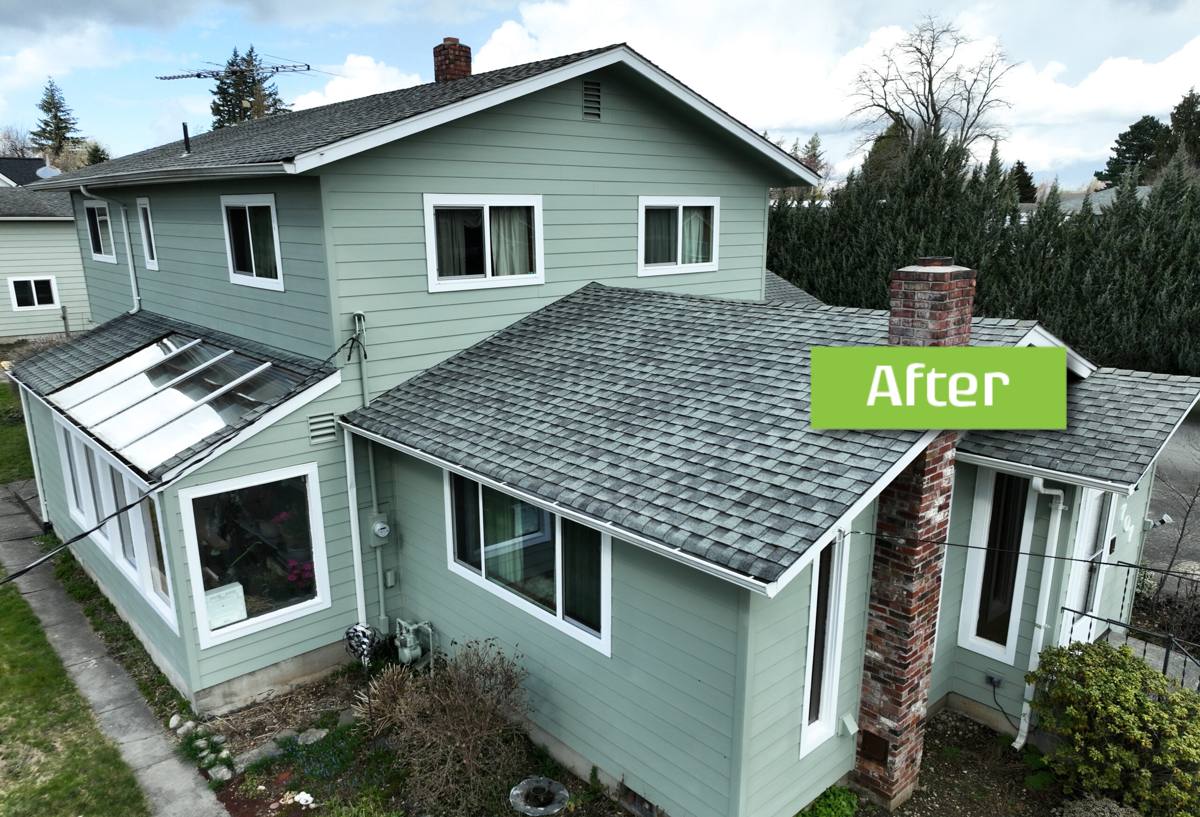
What Cordata Homes Deal With Every Year
Whatcom County's marine climate means Cordata properties absorb a specific combination of stress on their exterior walls:
- Salt air from the surrounding Puget Sound region accelerates corrosion on exposed fasteners, flashing, and trim — especially anything not rated for coastal exposure.
- Driving rain off winter windstorms pushes water sideways into wall assemblies, not just straight down, which punishes any siding system that relies on gravity alone to shed water.
- A long moss season means shaded, north-facing, and tree-covered walls stay damp for weeks at a time. Anywhere water can sit — a flat batten cap, a poorly lapped joint, a horizontal ledge — becomes a place moss and mildew take hold first.
None of this is unique to one street or one lot. It's the baseline condition for exterior work anywhere in this part of Bellingham, and it's why we treat siding installation here differently than we would in a drier inland climate.
Why Board & Batten Works Here — When It's Done Right
The Upside
Vertical board and batten actually has a real functional advantage in a wet climate: the batten strips are narrow, and water tends to run down the face of the panel rather than pooling on a horizontal reveal the way some lap profiles can if installed with too little slope. Fewer horizontal ledges means fewer spots for standing moisture, and fewer spots for moss to establish itself.
Where It Goes Wrong
That advantage disappears fast with a sloppy install. Board and batten has more vertical seams than a typical lap job, and every one of those seams — where two panels butt together, where a batten meets a window trim, where the siding meets the foundation or roofline — is a potential entry point for water if it isn't flashed, gapped, and fastened correctly. We've seen board and batten jobs in this climate fail in under five years, not because the material was wrong, but because the installer treated it like a decorative overlay instead of a weather-resistant assembly.
Why We Install Only James Hardie Board & Batten
Board and batten is traditionally a cedar profile, and cedar can look genuinely beautiful on a Cordata home. But cedar board and batten is high-maintenance in this climate: it needs regular refinishing, it's vulnerable to moisture wicking at end grain and fastener points, and in shaded, damp locations it's one of the first things to show moss growth and cupping. Vinyl board and batten panels solve the maintenance problem but bring their own trade-off — they're a thin, flexible material that can warp or rattle loose over time, and they don't hold paint if a homeowner wants a color change down the road. LP SmartSide is an engineered wood product, and engineered wood is still wood — it depends on an intact factory coating to keep moisture out, and any breach at a cut edge or fastener hole is a long-term liability in a climate this wet.
James Hardie fiber cement doesn't have those failure points. It's non-combustible, doesn't rot, doesn't provide a food source for moss or mildew the way wood-based products can, and carries a factory-applied ColorPlus finish that's baked on rather than sprayed on-site, which holds up better against UV and moisture cycling. Hardie also makes an HZ10 product line engineered specifically for high-moisture Pacific Northwest climates — which is the line we specify for Cordata installs. We standardized on Hardie because it's the one board and batten material that doesn't ask a homeowner to trade a good-looking exterior for a high-maintenance one.
What Correct Installation Actually Involves
Behind the Panel
Everything that matters most on a board and batten job is invisible once it's done. A correct install starts with a continuous weather-resistant barrier over the sheathing, properly lapped shingle-style so water sheds downward and outward. On most Cordata homes we also install a rainscreen gap — a thin furring layer between the barrier and the siding — so any moisture that does get past the outer layer has a path to drain and dry instead of sitting against the wall.
At the Panel
Hardie board and batten goes up with a manufacturer-specified fastening pattern, correct panel gaps to allow for expansion, and starter strips at the base so the first course sits square and drains properly. Battens are fastened into structural framing wherever possible, not just into the panel face, so wind load and seasonal movement don't work fasteners loose over time.
Where Boards Meet
Every horizontal butt joint gets back-flashed, not just caulked — caulk alone is a maintenance item that fails eventually, while flashing is permanent. Caulk is reserved for the joints designed to move (around trim, at penetrations), not used as a substitute for proper flashing at joints that shouldn't need it.
Board & Batten vs. Other Siding Options for Cordata Homes
| Siding Option | Look | Maintenance in This Climate | Moisture Risk |
|---|---|---|---|
| Cedar board & batten | Traditional, warm | High — refinishing every few years | Vulnerable at end grain, fasteners, and shaded walls |
| Vinyl board & batten panels | Uniform, can look flat | Low, but can't be repainted | Can warp; seams rely on overlap, not flashing |
| LP SmartSide board & batten | Wood-like | Moderate — coating must stay intact | Engineered wood; failure starts at breached edges |
| James Hardie board & batten (HZ10) | Crisp, factory-finished | Low — occasional wash, no refinishing | Non-combustible fiber cement, engineered for wet climates |
Cost follows a similar pattern: cedar typically has the highest lifetime cost once you account for refinishing labor, vinyl and LP tend to be cheaper up front but shorter-lived in this climate, and Hardie sits at a moderate install cost with the lowest long-term maintenance burden of the group.
Signs Your Cordata Home's Siding Needs Attention
- Green or black streaking concentrated on shaded or north-facing walls
- Soft spots or visible cupping where boards meet, especially near ground level
- Paint that's peeling in sheets rather than fading evenly
- Visible gaps or separation at batten joints
- A musty smell near exterior walls inside the home, which can indicate moisture getting past the siding
- Fasteners that are rusting or bleeding rust streaks down the panel face
Any one of these on its own isn't necessarily an emergency, but a home showing two or three at once is worth a proper inspection before the next wet season.
Our Process
- On-site assessment: we look at the existing siding, check for moisture intrusion at the sheathing, and evaluate sun and shade exposure on each wall.
- Plan and quote: we walk through panel layout, color, and where board and batten makes sense as an accent versus a full replacement.
- Tear-off and prep: old siding comes off, sheathing is inspected and repaired as needed, and a new weather-resistant barrier goes on correctly lapped.
- Rainscreen and install: furring strips create a drainage gap, then Hardie panels and battens go up to manufacturer specification.
- Finish work: flashing, trim, and touch-up are completed, and we walk the job with the homeowner before calling it done.
Why Hire a Crew That Already Works in Cordata
A siding crew that only occasionally works in Whatcom County can install a technically fine product the wrong way for this climate — skipping a rainscreen gap that doesn't matter in a drier region but matters a lot here, or under-flashing a joint that would be fine somewhere with less driving rain. A crew that regularly works Cordata and the surrounding Bellingham neighborhoods has already seen which walls hold moss, which orientations take the worst of the wind-driven rain, and where the salt air does the most damage to fasteners and trim. That local pattern recognition is part of what keeps a board and batten job looking right ten years in, not just on install day.
If you're considering board and batten siding for a Cordata home, we're happy to walk the property, look at what's there now, and put together a straightforward, no-pressure estimate — no obligation either way.