 Bellingham Roofing
 Ferndale's Climate Is Harder on Siding Than It Looks
Ferndale sits close to the water in Whatcom County, and that proximity shapes everything about how a house ages here. Salt-laden air moves inland off the Strait of Georgia and Puget Sound, driving rain comes in sideways during fall and winter storms, and the heavy tree cover across much of the area keeps siding shaded and damp for long stretches of the year. That combination is exactly what wears out the wrong siding material fastest — and it's why the correct installation matters as much as the product itself.
Homes in Ferndale don't fail because siding is a bad idea. They fail because a product or an installation wasn't matched to what this specific stretch of Whatcom County throws at a house year-round. A siding job that would hold up fine in a dry inland climate can start showing problems here in a fraction of the time.
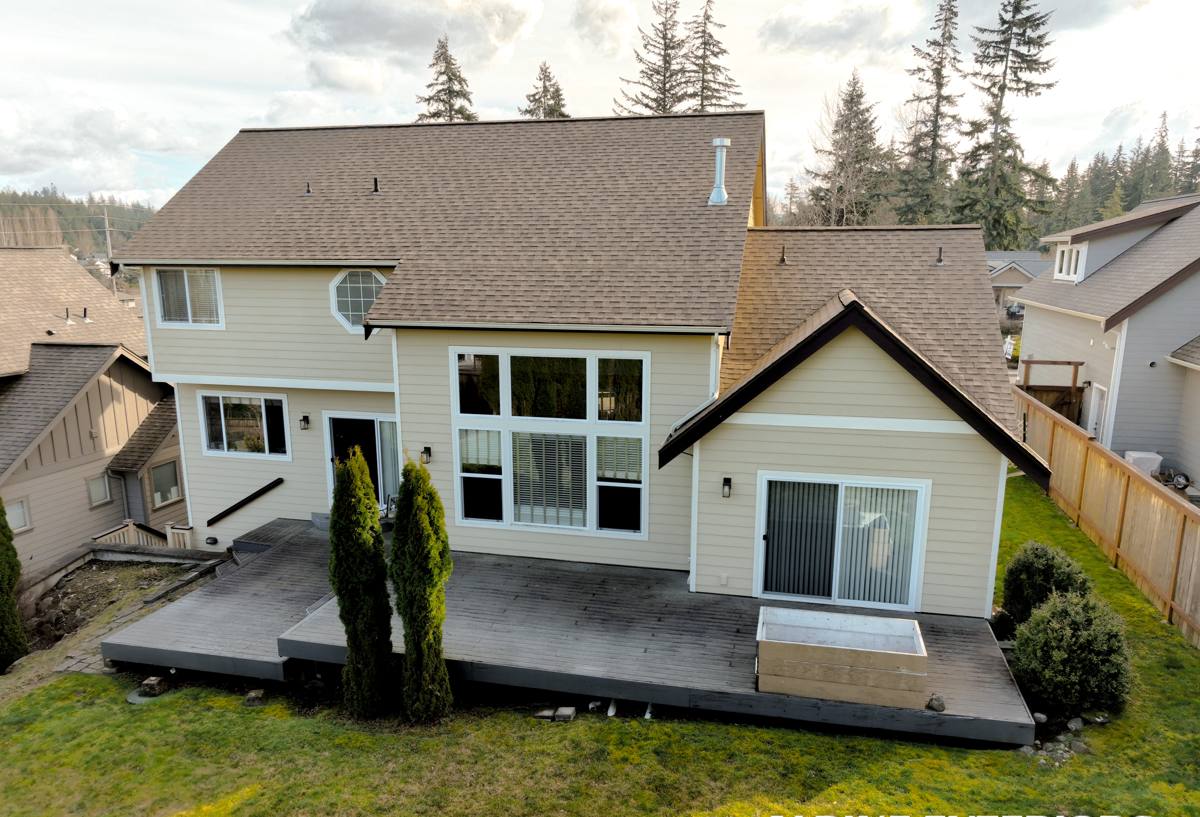
What Salt Air, Driving Rain, and Moss Season Actually Do
Salt Air
Airborne salt is corrosive to exposed metal fasteners, trim flashing, and hardware, and it accelerates the breakdown of lower-grade paints and coatings. Siding finishes that aren't engineered for coastal exposure tend to chalk, fade, and lose adhesion faster near the water than the same product would inland.
Driving Rain
Wind-driven rain doesn't just wet the face of a wall — it pushes moisture up under laps, into seams, and behind trim if the installation doesn't account for it. Over years, that's how water gets behind siding and into sheathing, framing, and insulation, often with no visible sign from the outside until the damage is advanced.
Moss Season
Whatcom County's wet season runs long, and shaded north-facing walls and tree-covered lots — common around Ferndale — stay damp for extended stretches. Moss and algae take hold on surfaces that hold moisture or organic debris, and on the wrong material that growth can trap water against the siding face and accelerate rot or coating failure underneath it.
What a Correct Siding Installation Actually Involves
Good siding starts underneath the siding, not with the panels themselves. A correct installation for a coastal Whatcom County home includes:
- A continuous, properly lapped weather-resistive barrier behind the siding, installed so every layer sheds water downward and outward
- Correctly installed flashing at every window, door, roofline intersection, and penetration — the single most common source of hidden water intrusion when it's skipped or done wrong
- Proper clearance between the bottom of the siding and the ground, roof lines, decks, and patios so splashback and standing moisture don't sit against the material
- Fastening pattern and fastener spacing that match manufacturer specifications, not just "close enough"
- Correctly sized gaps and sealed joints at butt seams and trim, following the manufacturer's installation instructions rather than generic carpentry habits
- Ventilation behind the siding assembly where the wall system calls for it, so incidental moisture can dry out instead of getting trapped
Every one of these steps is invisible once the job is finished. That's exactly why the installer's discipline matters more than the finished appearance on day one — problems from a rushed or generic install don't show up until years later, and by then they're expensive to fix.
Why We Install Only James Hardie Fiber Cement
We don't install vinyl, LP SmartSide, Cemplank, Allura, primed spruce, or cedar. That's not a marketing position — it's a standard we hold because of what we've seen these products need in a climate like this one, and because James Hardie's fiber cement system is engineered specifically for exposure like Ferndale's.
James Hardie's HZ5 product line is formulated for regions with wet, cold, and coastal conditions — including the Pacific Northwest. Fiber cement itself is non-combustible, doesn't absorb and swell with moisture the way wood-based products can, and doesn't develop the brittleness or fade issues that vinyl can show after years of sun and salt exposure. Hardie's ColorPlus finish is a factory-applied, baked-on coating designed to hold color and resist the chalking and fading that field-applied paint struggles with in this kind of environment, and it comes backed by a real transferable warranty.
We're not saying every other product is unusable everywhere. We're saying that for homes exposed to salt air, sustained rain, and long damp seasons — which describes most of Ferndale — we've standardized on the one system that consistently holds up without demanding constant homeowner maintenance to keep it that way.
How the Common Siding Materials Compare in This Climate
| Material | Moisture Behavior | Coastal/Salt Exposure | Maintenance Burden |
|---|---|---|---|
| James Hardie Fiber Cement | Doesn't absorb and swell; engineered HZ5 line for wet climates | Factory ColorPlus finish holds up well to salt and UV | Low — periodic washing, no repainting cycle needed with ColorPlus |
| Vinyl | Sheds water on the surface but can trap moisture behind it if installed loosely | Can fade, chalk, and become brittle faster near salt air and sun | Low upfront, but replacement rather than repair when damaged |
| LP SmartSide / Engineered Wood | Wood-based core is vulnerable if any moisture gets behind or under the coating | Coating and edge sealing are critical; failure points show at cut edges and seams | Moderate — coating and caulking need monitoring over time |
| Cedar | Natural wood; absorbs moisture and is a known substrate for moss and rot in shaded, damp settings | Requires consistent sealing/staining to resist salt and UV breakdown | High — regular refinishing and inspection required |
This isn't a claim that any of these products is defective. It's an honest look at maintenance burden and moisture sensitivity in exactly the conditions Ferndale sees — and why we settled on fiber cement as the standard we're willing to put our name on.
Our Process on a Ferndale Job
1. On-Site Assessment
We walk the property, check existing siding and trim condition, look at drainage, grading, roof lines, and any signs of past moisture intrusion — not just the surface, but what's likely happening behind it.
2. Tear-Off and Prep
Old siding comes off, and we inspect the sheathing underneath for rot, soft spots, or existing water damage before anything new goes on. Any compromised sheathing gets addressed before the weather barrier is installed — covering over a damaged wall just hides the problem.
3. Weather Barrier and Flashing
We install a continuous weather-resistive barrier and flash every window, door, and penetration point to manufacturer specification, prioritizing this step because it's the one that determines whether water stays out for the next several decades.
4. Hardie Installation to Spec
Panels, fasteners, clearances, and joints are installed following James Hardie's published installation guidelines — not generalized best practices, but the specific requirements that keep the product's warranty valid and its performance intact.
5. Final Inspection
We walk the finished job checking clearances, seams, caulking, and trim details before we call it done.
Why a Local Crew Matters for This Job
A crew that regularly works Whatcom County's coastal communities has already made the calls that matter here: how much clearance to leave at grade given local rainfall patterns, where flashing details need extra attention on a shaded, tree-covered lot, and how to sequence a job around this area's wet season instead of fighting it. That's experience you can't get from a crew that mostly works dry inland climates and treats every siding job the same way.
When you're vetting a contractor for a siding project in Ferndale, a few questions separate a serious crew from one that's guessing:
- Do they install to the manufacturer's written specifications, and can they explain what those specifications require?
- Do they inspect and address sheathing condition before installing new siding, or just cover what's there?
- Do they detail flashing at every window, door, and roofline intersection — and can they explain why?
- Are they licensed and insured to do exterior work in Washington, and can they provide proof?
- Do they have experience specifically with coastal or high-moisture sites, not just siding in general?
Maintenance After Installation
Correctly installed James Hardie siding is low-maintenance, not no-maintenance. In a climate like Ferndale's, a periodic rinse to clear salt residue, pollen, and organic debris, along with an occasional visual check of caulking and trim joints, is enough to keep the system performing the way it's designed to. Because ColorPlus is a factory finish, homeowners aren't on a repainting cycle the way they would be with field-painted wood siding — that alone removes one of the biggest recurring maintenance costs of exterior upkeep in a wet climate.
Ready to Talk About Your Home
If your Ferndale home's siding is showing its age, or you're planning ahead for a replacement, we're glad to take a look and walk you through what correct installation looks like for your specific property. Reach out for a free, no-pressure estimate — we'll assess your home's exposure, your existing wall condition, and give you a straight answer on what it would take to get it done right.