 Bellingham Roofing
 Fiber Cement Siding Built for Silver Beach's Conditions
Silver Beach homes sit in one of the more demanding pockets of Whatcom County when it comes to what the exterior of a house has to put up with year after year. Salt-tinged air drifting off Bellingham Bay, wind-driven rain that finds every gap in a wall system, and a moss season that stretches from fall through spring all combine to shorten the life of siding that isn't built or installed for this specific climate. We install James Hardie fiber cement siding exclusively, and we've spent enough time working on homes in this neighborhood to know exactly where the weak points usually show up first — and how to build them out before they ever become a problem.
This page is about one thing: what a correct fiber cement siding job looks like on a Silver Beach home, why the material and the installation both matter, and how our process is built around the realities of this specific stretch of Bellingham.
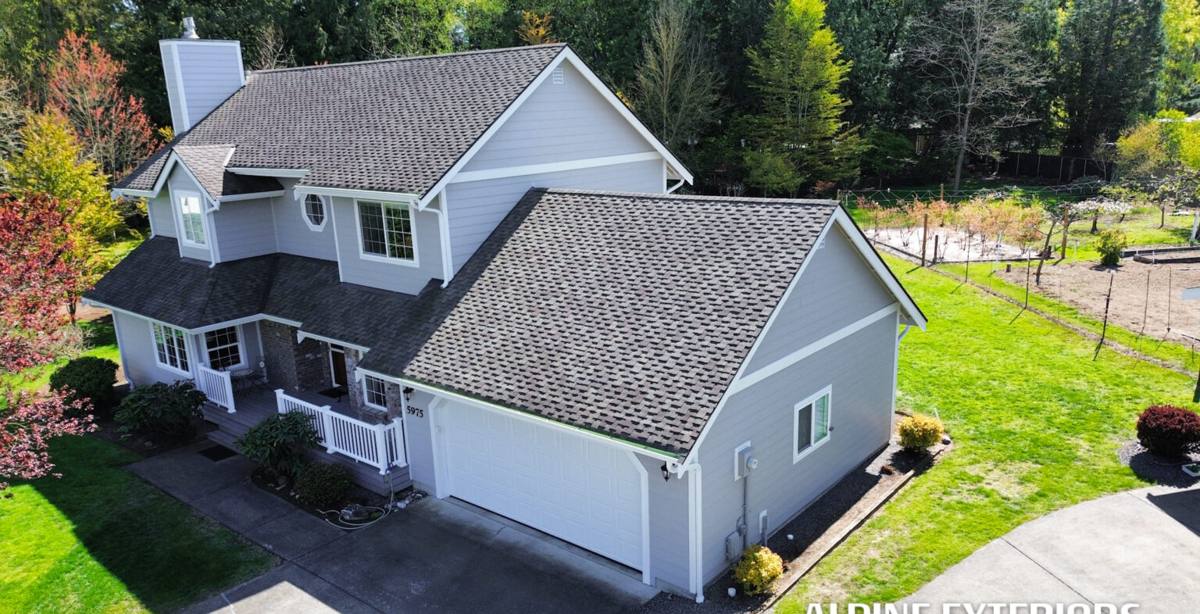
What Silver Beach Homes Are Actually Up Against
Every siding material is rated for general performance, but general ratings don't account for a specific microclimate. Silver Beach deals with a few conditions at once that most inland Whatcom County neighborhoods don't face in combination.
Salt Air
Homes near Bellingham Bay are exposed to airborne salt that settles on exterior surfaces and accelerates corrosion of fasteners, trim, and any metal flashing that isn't rated for coastal exposure. Over time this also degrades paint film on materials that aren't factory-finished for it, leading to chalking, fading, and premature peeling.
Driving Rain
Storms coming off the Sound rarely fall straight down here — wind pushes rain sideways into walls, which means siding, flashing, and caulking all have to work as a system rather than individually. A siding product that's technically "waterproof" on a spec sheet can still fail on a house if the water-resistive barrier, flashing details, and joint sealing behind it weren't installed correctly.
Moss and Prolonged Moisture
The Pacific Northwest's tree cover and extended damp season mean north- and west-facing walls in Silver Beach often stay shaded and moist for long stretches. Moss and algae growth on siding isn't just cosmetic — sustained moisture against a wall surface is what causes wood-based products to soften, delaminate, or rot from the inside out.
None of these conditions are unusual for Bellingham as a whole, but Silver Beach's closeness to open water intensifies the salt and wind-driven rain factors specifically, which is why the material choice and installation detailing matter more here than they would further inland.
Why We Install James Hardie Fiber Cement — and Nothing Else
We made a deliberate decision to install only James Hardie fiber cement siding, and we stand behind it on every job, including in Silver Beach. Fiber cement is made from cement, sand, and cellulose fiber, which makes it non-combustible, dimensionally stable, and resistant to the moisture-driven failure modes that affect wood and some composite products. James Hardie's HardieZone system also matters specifically for this region — their HZ5 product line is engineered for wetter, harsher climates like the Pacific Northwest, rather than a one-size-fits-all formulation.
The other piece is the factory finish. James Hardie's ColorPlus finish is baked on in a controlled factory environment, which gives it better adhesion and UV/salt resistance than field-applied paint. In a location like Silver Beach where salt exposure accelerates finish breakdown, that difference shows up in how the siding looks after five, ten, and fifteen years — not just on install day.
What This Means in Practice
| Factor | James Hardie Fiber Cement | Wood / Composite Alternatives |
|---|---|---|
| Moisture behavior | Non-combustible, doesn't absorb and swell like wood | Can absorb moisture, swell, or delaminate over time |
| Salt air exposure | Factory ColorPlus finish resists chalking and fade | Field-applied finishes break down faster near the bay |
| Pest resistance | Not a food source for insects or rot | Vulnerable to rot and insect damage if moisture gets in |
| Maintenance | Periodic washing; repainting cycle is much longer | More frequent repainting, caulking, and spot repair |
| Fire performance | Non-combustible material | Combustible depending on product |
What a Correct Fiber Cement Installation Involves
Fiber cement siding is only as good as the installation behind it. A large share of the siding problems we get called out to inspect on Bellingham homes trace back to installation shortcuts, not the material itself. On a Silver Beach home, we pay particular attention to the following.
Water-Resistive Barrier and Flashing
Every window, door, and penetration needs properly lapped flashing tied into the house wrap so that any water that gets behind the siding drains back out instead of pooling against the sheathing. Given how much wind-driven rain this neighborhood sees, this step is not optional — it's the difference between siding that sheds water and a wall assembly that slowly traps it.
Manufacturer-Spec Fastening
James Hardie publishes specific fastener types, spacing, and penetration requirements, and those specs change slightly depending on exposure category. We fasten to those specs rather than "close enough," because under-driven or over-driven fasteners are one of the most common causes of cracking and callback repairs.
Clearances and Joint Sealing
Fiber cement needs proper clearance from grade, roof lines, and decks to avoid wicking moisture, and butt joints need to be sealed or flashed per manufacturer instructions rather than just caulked over. In a salt-air environment, we also pay attention to which sealants and metal fasteners are rated for coastal exposure, since standard-grade hardware can corrode faster here than in inland parts of the county.
Ventilation Behind the Cladding
A rainscreen gap or proper ventilation path behind the siding lets any incidental moisture dry out instead of sitting against the wall assembly — important in a neighborhood where north and shaded walls stay damp longer through the year.
Our Process for Silver Beach Siding Projects
- On-site assessment — we walk the exterior, check for existing moisture damage, rot, or failed flashing, and evaluate wall orientation relative to prevailing wind and rain exposure.
- Tear-off and substrate check — old siding comes off and we inspect the sheathing underneath for hidden water damage before anything new goes up.
- Water-resistive barrier and flashing installation — house wrap, window and door flashing, and any penetrations are addressed before siding installation begins.
- James Hardie siding installation — installed to manufacturer specification for fastening, clearance, and joint treatment, using the HZ5 product line appropriate for this climate zone.
- Trim, caulking, and finish detail — corners, trim boards, and joints are sealed with attention to the coastal exposure this neighborhood sees.
- Final walkthrough — we go over the finished work and warranty coverage with the homeowner before calling the job complete.
Signs a Silver Beach Home May Need New Siding
Not every siding issue is obvious from the street. These are the signs we look for and that homeowners in this neighborhood should watch for as well:
- Persistent moss or algae staining on north- or west-facing walls that keeps returning after cleaning
- Soft, spongy, or visibly warped sections of siding, especially near the bottom courses
- Paint that's chalking, peeling, or fading faster than the rest of the house
- Visible gaps, cracks, or separation at butt joints and corner trim
- Rust streaks around fasteners or flashing, a common early sign of coastal corrosion
- Rising energy bills that may point to a wall assembly no longer sealing properly
- Soft spots around window and door trim, which often indicate flashing has failed
Cost Factors for a Silver Beach Siding Project
Every home is different, so we don't publish flat pricing, but a few factors consistently drive cost on projects in this area:
| Factor | Why It Matters |
|---|---|
| Extent of tear-off and substrate repair | Hidden rot or water damage found during tear-off adds repair scope before new siding can go on |
| Home size and wall complexity | More corners, dormers, and trim details mean more labor and material |
| Product line and profile | HardiePlank lap siding, HardiePanel vertical siding, and trim/accent pieces vary in material cost |
| Access and site conditions | Slopes, tree cover, and proximity to the water can affect staging and scheduling |
| Color and finish selection | Factory ColorPlus finishes come at different price points depending on the color line |
Why Hiring a Crew That Already Works in Silver Beach Matters
A siding installer who mostly works inland doesn't run into salt-air corrosion, wind-driven rain intrusion, or shaded-wall moss the same way a crew working Bellingham's waterfront-adjacent neighborhoods does. We've installed and inspected enough siding in this part of Whatcom County to know which walls need extra flashing attention, which fastener and sealant choices hold up to the salt exposure, and where moss growth tends to accelerate deterioration if it isn't addressed at the design stage rather than treated as a maintenance afterthought later.
That local familiarity also shows up in smaller ways — knowing how prevailing storms hit a given orientation, or recognizing early-stage moisture damage that a less experienced crew might miss during tear-off. It's the difference between siding that's simply installed and siding that's installed to actually last in this specific environment.
Get a Free, No-Pressure Estimate
If your Silver Beach home's siding is showing wear, or you're planning ahead for a replacement, we're happy to take a look and walk you through what we find — no pressure, no obligation. Fill out the form below to schedule a free estimate.