 Bellingham Roofing
 Board & Batten Siding in Happy Valley
Happy Valley sits close enough to Bellingham Bay and the surrounding hillside tree cover that its houses take a specific kind of weather beating: salt-laden air off the water, sideways rain that comes in on the wind rather than straight down, and long stretches of shade and dampness that keep moss and algae going most of the year. Board and batten is one of the most requested siding profiles in this neighborhood right now, and for good reason — the vertical lines read as clean and modern on newer builds, and they suit the craftsman and farmhouse-style homes that make up a lot of Happy Valley's older housing stock just as well. But the look only holds up if the material underneath it is built for what this specific stretch of Whatcom County throws at a house.
This page covers what board and batten siding actually needs to perform here, what a correctly installed job looks like, and how we approach the work when we're on a Happy Valley property.
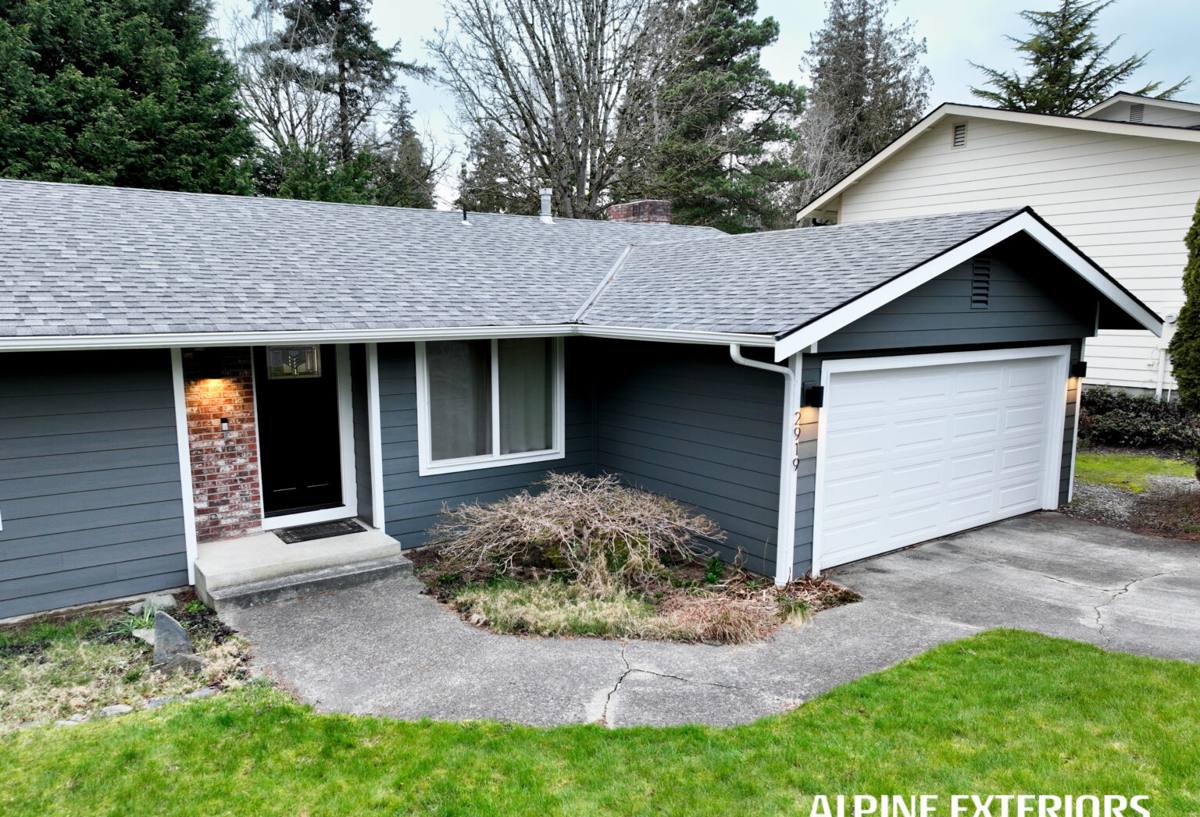
What Bellingham's Climate Demands From This Siding Style
Salt Air
Proximity to Bellingham Bay means a steady, low-level exposure to salt-carrying moisture in the air. It's not the same intensity as an oceanfront property, but it's constant, and it accelerates corrosion on fasteners, staining on painted surfaces, and general wear on anything that isn't dimensionally stable. Board and batten has more exposed vertical seams than a standard lap profile, which means more edges where salt-laden moisture can find a way in if the material or the installation isn't up to it.
Driving Rain
Wind-driven rain off the Sound doesn't just run down a wall — it gets pushed sideways and upward into laps, joints, and butt seams. Board and batten relies on vertical battens to shed water down the face of the wall, so the water-management details behind those battens (the drainage plane, the flashing, the gaps) matter more here than they would in a drier climate. Get those details wrong and driving rain will find the seams eventually.
Moss and Algae Season
Shaded lots, tree cover, and months of damp weather add up to a long moss and algae season in this part of Whatcom County — often eight months a year or more on north-facing or heavily shaded walls. Siding that absorbs moisture stays damp longer after every rain, which is exactly the environment moss, mildew, and algae need to establish themselves. Over years, that constant damp cycle is what breaks down siding that isn't engineered to resist it.
Why We Install Board & Batten Only in James Hardie Fiber Cement
Board and batten shows up in a few different materials — cedar, engineered wood (like LP SmartSide), vinyl, and fiber cement. We install James Hardie fiber cement exclusively, and it's worth explaining why, specifically in the context of this profile and this climate.
Real wood board and batten looks great going up, but wood is organic material sitting in a climate that stays damp for most of the year. It needs regular refinishing, and the batten joints — the exact seams that make this style what it is — are where wood siding tends to show rot first once maintenance slips. Engineered wood products use wood fiber with a resin binder, which improves on solid wood but still relies on an intact factory coating to keep moisture out; once that coating is compromised at a cut edge or fastener point, the substrate underneath is still wood fiber. Vinyl board and batten sheds water fine, but it's a thin plastic panel that expands and contracts with temperature swings, can warp or crack in wind and impact, and doesn't hold the crisp shadow lines that make this profile look sharp — the panels also can't be painted to refresh a home's look down the road.
James Hardie fiber cement is cement, sand, and cellulose fiber — it doesn't rot, it isn't a food source for moss or mildew, and it holds up to damp cycling without swelling or delaminating. The ColorPlus factory finish is baked on under controlled conditions, which gives it more consistent, longer-lasting color than field-applied paint on wood or engineered wood siding. That combination is why it's the only material we put on a house, board and batten or otherwise.
What Correct Board & Batten Installation Involves
Board and batten looks simple from the street — vertical boards or panels with battens covering the seams — but the installation has more failure points than a standard horizontal lap job if it's done wrong. A correct installation includes:
- A drainage plane (weather-resistive barrier) installed and lapped correctly behind the siding, so any moisture that does get past the surface has somewhere to go
- Furring strips or a rainscreen gap behind vertical panels, so water can drain and air can circulate instead of sitting against the wall sheathing
- Proper fastener spacing and placement per the manufacturer's installation guide — not just "close enough," since fastener location affects how the panel handles expansion and moisture
- Correctly flashed window and door openings, so water is directed out and away rather than behind the siding
- Battens installed with the right gap and fastening pattern to cover seams without trapping moisture underneath
- Factory-cut and factory-primed edges used wherever possible, with any field cuts properly sealed per Hardie's specifications
Skipping any one of these doesn't usually show up as a problem in year one. It shows up in year five or eight, as staining, soft spots, or moisture damage behind the wall that costs far more to fix than it would have cost to install correctly the first time.
Our Process on a Happy Valley Job
1. Site and Wall Assessment
We start by looking at the existing wall assembly — what's behind the current siding, whether there's existing moisture damage, and how the lot's exposure (shade, tree cover, wind direction) should factor into detailing decisions.
2. Tear-Off or Overlay Decision
Board and batten generally goes on as a full tear-off to the sheathing, since it needs a proper drainage plane and furring behind it to perform. We'll walk you through what we find once the old siding is off and flag anything unexpected before moving forward.
3. Water Management First
Weather-resistive barrier, flashing at every penetration and opening, and the rainscreen gap all go in before a single piece of visible siding is installed. This is the part of the job that doesn't show in the finished photos but determines how the house performs in year ten.
4. Panel and Batten Installation
Hardie panels and battens go up per manufacturer spec — correct fastener type, spacing, and clearances at grade, trim, and roof lines.
5. Final Walkthrough
We walk the finished job with you, cover care and maintenance, and make sure everything meets the standard we'd want on our own house.
Cost Factors for Board & Batten in This Area
| Factor | Why It Affects Cost |
|---|---|
| Tear-off vs. new construction | Removing and disposing of existing siding, plus any sheathing repair, adds labor beyond a bare-wall install |
| Wall condition underneath | Rot or moisture damage found once old siding is off requires repair before new siding can go on |
| Home height and access | Multi-story walls, steep lots, or limited access add equipment and labor time |
| Trim and detail complexity | Dormers, multiple gable ends, and window/door counts all add cutting, flashing, and batten work |
| Panel size vs. individual boards | Larger Hardie panels with applied battens install faster than true individual board-and-batten runs |
| Color selection | Standard ColorPlus finishes vs. custom field-painted finishes affect material and labor cost differently |
Signs Your Current Siding Needs Attention
- Soft spots or flex when you press on the siding, especially near the bottom of walls or below windows
- Persistent moss, algae, or dark staining that comes back soon after cleaning
- Peeling, bubbling, or chalky paint on wood or engineered wood siding
- Visible gaps, warping, or separation at seams and corners
- Musty smell or discoloration on interior walls that share an exterior wall with damaged siding
- Siding that's more than 15-20 years old and hasn't been inspected recently
Why Hiring a Crew That Already Works Happy Valley Matters
Board and batten performs differently depending on a lot's specific exposure — a shaded, tree-covered property behaves differently than one with open sun and more wind. A crew that's already worked this neighborhood has a feel for how the local mix of salt air, driving rain, and shade plays out on the houses here, and knows what to look for once the old siding comes off. That local familiarity, combined with fiber cement installed to spec, is what keeps board and batten siding looking sharp instead of becoming a maintenance project a few years down the road.
If you're considering board and batten siding for a home in Happy Valley, we're happy to take a look and give you a straightforward, no-pressure estimate — just fill out the form below.