 Bellingham Roofing
 Happy Valley's Siding Problem Isn't Like a Dry-Climate Town's
Happy Valley is one of Bellingham's older, close-in neighborhoods, with a mix of vintage craftsman homes, mid-century houses, and newer infill sitting close enough to Bellingham Bay to catch salt-laden air on windy days. That combination — age, proximity to the water, and Western Washington's wet weather pattern — puts more stress on exterior siding here than most homeowners realize until they're dealing with soft trim boards, peeling paint, or streaks of green algae that come back every year no matter how many times they're power-washed.
Whatcom County's climate isn't dramatic. It's persistent. Long stretches of low-intensity rain, wind-driven moisture off the bay, and short winter days that keep shaded siding damp for weeks at a time all add up over a decade or two. Siding that was installed correctly and matched to this climate holds up fine. Siding that was installed as an afterthought, or made from a material that wasn't built for constant moisture exposure, starts showing problems years before it should.
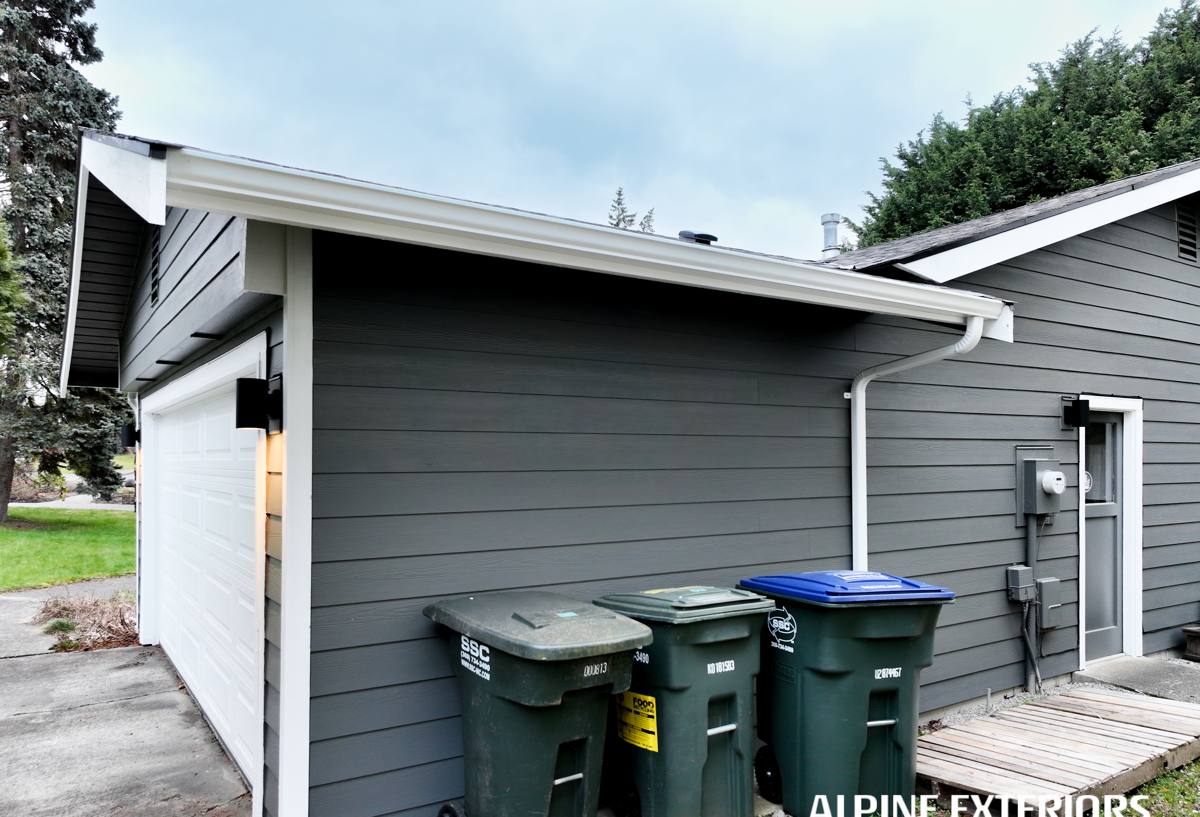
Signs a Happy Valley Home Needs Replacement, Not Just Repair
Not every siding problem calls for a full tear-off. But in a neighborhood with this much housing-stock age variety, it's common to find damage that's been patched around for years instead of addressed. Here's how to tell which situation you're in.
Repair Might Be Enough If:
- Damage is limited to one or two boards, usually from an isolated impact or a single failed caulk joint
- The siding material itself is still sound — the problem is a fastener, a seam, or a trim detail
- There's no soft or spongy sheathing behind the affected area
Replacement Is the Honest Answer If:
- Moss or algae keeps returning to the same shaded, north-facing, or bay-adjacent walls every year
- Paint is peeling or bubbling across multiple sections rather than one spot
- Boards feel soft, delaminated, or show visible cupping and warping
- You can see daylight, gaps, or separation at seams and corners
- The siding is original to an older Happy Valley home and has never been replaced
What a Correct Siding Replacement Involves
A siding replacement is really a moisture-management project with siding on top of it. The visible material matters, but most long-term failures we see trace back to what happened — or didn't happen — underneath it. Done right, the job includes:
- Full tear-off of the old siding rather than covering over it, so hidden damage doesn't get sealed in
- Sheathing inspection and repair — any rotted or water-damaged wall sheathing gets replaced before anything new goes up
- A continuous weather-resistant barrier installed over the sheathing, properly lapped so water sheds outward instead of behind the wall
- Correct flashing at every window, door, and roofline intersection — this is where the majority of hidden leaks originate
- Manufacturer-specified fastening and clearances, including the gap between siding and grade, roof lines, and decks
- Factory-finished siding installed to spec, with field-cut edges sealed per the manufacturer's requirements
Skipping any one of these steps doesn't usually cause an immediate problem — it causes a problem in year six or seven, when it's harder and more expensive to trace.
Why We Install Only James Hardie Fiber Cement
We don't install vinyl, LP SmartSide, Cemplank, Allura, or raw cedar and primed spruce siding. That's a deliberate standard, not a sales preference, and it's worth explaining honestly rather than just asserting.
Vinyl is inexpensive and low-maintenance, but it expands and contracts significantly with temperature swings, can warp or crack in impact, and doesn't hold paint if a homeowner ever wants to change color. Wood-based composites like LP SmartSide use engineered wood strand with a resin binder — a real improvement over old wood siding, but still an organic wood product that depends entirely on caulking and edge-sealing staying intact to keep moisture out over time. Raw cedar and primed spruce need ongoing refinishing to hold up in a climate this wet, and any lapse in that maintenance schedule shows up fast as rot or cupping.
James Hardie fiber cement is cement, sand, and cellulose fiber — it doesn't absorb and swell with moisture the way wood-based products can, it's non-combustible, and it holds a factory-applied ColorPlus finish that's baked on and warranted separately from the substrate, so it doesn't chalk or fade the way field-applied paint does. Hardie also engineers its HZ5 product line specifically for climates like ours — regions defined by sustained moisture and moderate temperatures rather than deep freeze-thaw cycles. For a Happy Valley home sitting in salt air and long wet winters, that's the product built for the actual conditions on the wall, not just conditions in a showroom.
We're not saying every other product is unusable everywhere. We're saying that after years of tear-offs and repair calls in this exact climate, Hardie is what we're willing to put our name behind and warranty.
Our Siding Replacement Process, Start to Finish
1. On-Site Assessment
We walk the exterior, check for soft spots, look at flashing details around windows and rooflines, and identify any areas where moisture has already gotten behind the current siding. This tells us whether we're looking at a straightforward re-side or one that needs sheathing repair first.
2. Scope and Written Estimate
You get a clear breakdown of tear-off, repair, materials, and labor — no vague allowances buried in the total.
3. Tear-Off and Sheathing Repair
Old siding comes off in full. Any compromised sheathing is cut out and replaced before the weather barrier goes on.
4. Weather Barrier and Flashing
This is the step that determines whether the siding lasts 10 years or 40. We install and lap the barrier correctly and flash every penetration and transition point per code and manufacturer requirements.
5. Hardie Installation
Siding goes up to James Hardie's fastening, clearance, and joint-treatment specifications — not a shortcut version of them.
6. Final Walkthrough
We inspect trim, caulking, and finish details with you before calling the job complete, and clean up the site fully.
What Affects Siding Replacement Cost in Happy Valley
Every home is different, but the same handful of factors drive most of the cost variation we see on jobs in this neighborhood:
| Cost Factor | Why It Matters |
|---|---|
| Home size and number of stories | More wall area and scaffolding/lift needs for taller sections |
| Extent of sheathing damage found at tear-off | Older homes with hidden moisture issues need more structural repair before new siding goes up |
| Trim and architectural detail | Craftsman-style trim, multiple gables, and dormers take more time than a simple rectangular wall |
| Siding profile chosen | Lap siding, shingle-style panels, and board-and-batten each have different material and labor costs |
| Access and site conditions | Tight lots, mature landscaping, and steep grades common in older in-town lots can add setup time |
We don't quote a number without seeing the home — anyone who does is guessing, and on an older Happy Valley property, guessing usually means a change order later.
Why a Crew That Already Works Happy Valley Matters
Siding replacement in an established Bellingham neighborhood isn't quite the same job as new construction in an open subdivision. Homes here were often built in different decades under different codes, additions don't always match original framing, and lots can be tight with mature trees and landscaping close to the walls. A crew that's already worked this area knows what to expect before pulling the first board — how City of Bellingham permitting works for exterior projects, what kind of hidden moisture damage tends to show up in homes of a certain age, and how to work around tight side-yards without tearing up a garden that took years to establish.
That local familiarity doesn't replace a proper inspection of your specific home, but it does mean fewer surprises, more accurate estimates up front, and a crew that isn't learning the neighborhood's quirks on your dime.
Siding Replacement Checklist Before You Hire
- Get a written estimate that separates tear-off, repair, and installation costs
- Ask what happens if hidden sheathing damage is found once old siding comes off
- Confirm what weather barrier and flashing details will be used, not just what siding brand
- Ask whether the crew is manufacturer-trained or certified on the specific product being installed
- Get the warranty terms in writing — both the material warranty and the workmanship warranty
- Check that the estimate accounts for your home's specific layout, not a flat per-square-foot guess
If your Happy Valley home is showing peeling paint, recurring moss, soft trim, or siding that's simply original and aging out, we're happy to take a look. The estimate is free, there's no pressure, and you'll get a straight answer about whether you're looking at a repair or a full replacement — just fill out the form below to get started.