 Bellingham Roofing
 Edgemoor's Waterfront Setting Is Hard on Exterior Siding
Edgemoor sits along the water on the south side of Bellingham, with a mature tree canopy, wooded lots, and homes that face Bellingham Bay and Chuckanut Bay directly into the weather coming off the water. That combination — salt-laden air, driving wind-driven rain, and deep shade from big conifers — is about as demanding an environment as siding sees anywhere in Whatcom County. Salt air accelerates corrosion on fasteners and trim metal. Wind-driven rain finds every gap in a wall assembly that a calmer climate would never expose. And a long moss season, stretching from fall through spring, keeps north-facing and shaded walls damp for months at a time.
None of this means Edgemoor homes need something exotic. It means the siding material and the installation both need to be matched to the actual conditions on the lot, not to a generic Pacific Northwest average. A home tucked under fir and cedar trees two blocks off the water behaves differently than one with open bay exposure, and a good siding job accounts for that before the first piece goes up.
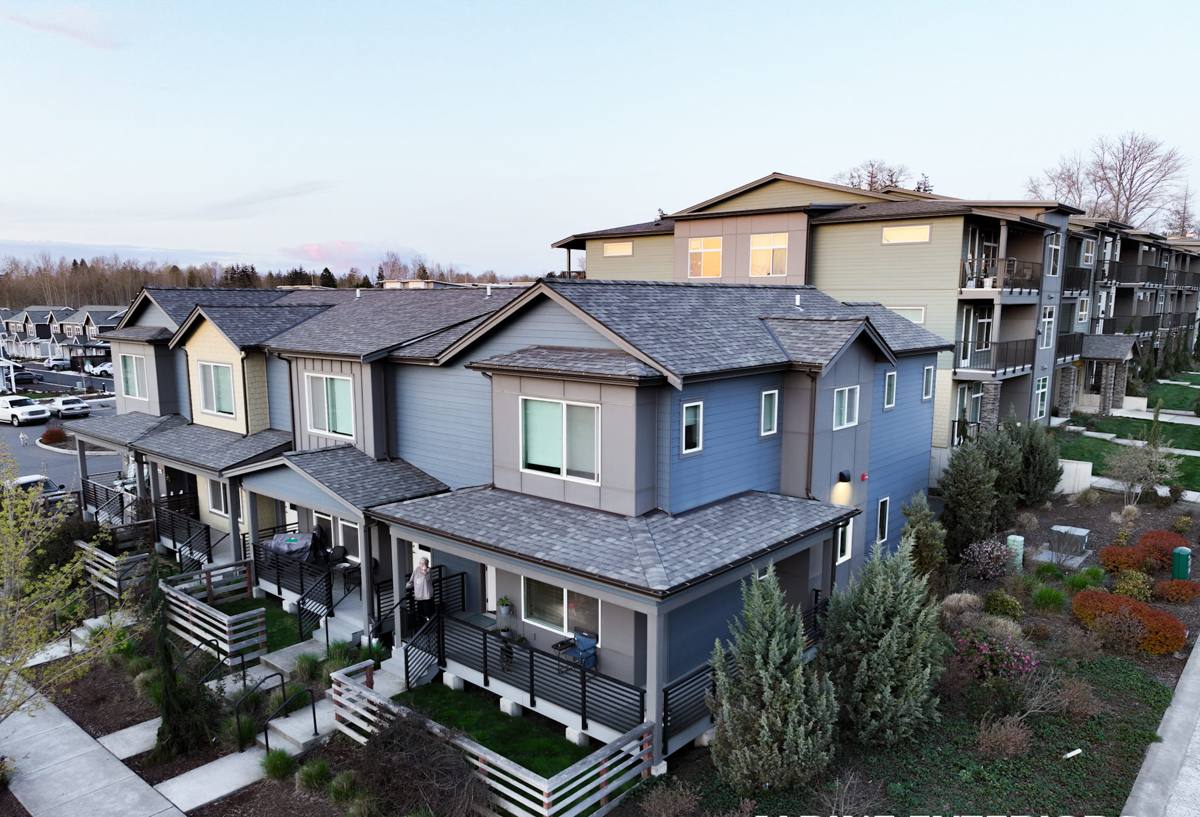
Why We Only Install James Hardie in This Climate
We install James Hardie fiber cement siding exclusively — we don't offer vinyl, LP SmartSide, Cemplank, Allura, primed spruce, or cedar. That's not a marketing position, it's a standard we settled on after weighing how each of those materials actually performs in a coastal, moss-prone climate over decades, not just the first few years.
Fiber cement is non-combustible and dimensionally stable, so it doesn't expand and contract with moisture the way wood-based products do, and it doesn't soften or delaminate the way some engineered wood sidings can when a seam or cut edge stays wet for an extended period. James Hardie's ColorPlus factory finish is baked on and warranted separately from the substrate, which matters in a spot like Edgemoor where a lot of homes are shaded most of the day — shade means slower drying, and slower drying is exactly the condition that punishes a lower-grade finish over time. We're not going to tell you every other product on the market is worthless; we're telling you why, for this climate and for the standard we want to stand behind, we stopped installing anything else.
What "Climate-Engineered" Actually Means
James Hardie makes different formulations for different regions — HZ5 for colder, wetter climates like the Pacific Northwest, and HZ10 for warmer, more humid ones. The HZ5 formulation is engineered for freeze-thaw cycling and sustained moisture exposure, which is the actual stress Edgemoor siding is under most of the year. It's a small distinction on paper but it's the difference between a product tested for your conditions and one that just happens to be sold in your area.
The James Hardie Product Lines We Use
Not every Hardie product fits every house. Part of our job is matching the plank profile and texture to the home's style and its exposure, not just picking whatever's fastest to install.
| Product | Best Fit | Notes for Edgemoor |
|---|---|---|
| HardiePlank lap siding | Most Edgemoor homes, traditional and craftsman styles | Available in smooth or cedarmill texture; the most common choice for wind-and-rain exposure |
| HardiePanel vertical siding | Board-and-batten or modern facades | Fewer horizontal laps means fewer joints for wind-driven rain to work against |
| HardieShingle siding | Gable accents, Craftsman and Cape Cod details | Good for architectural detail without the moisture retention of real wood shingles |
| HardieTrim boards | Corners, fascia, window and door trim | Matched ColorPlus finish so trim doesn't fade at a different rate than the field siding |
What a Correct Installation Involves
Fiber cement siding fails from the water management behind it far more often than from the panel itself. Most of the problems we get called to look at on other contractors' work trace back to installation shortcuts, not the material.
Water Management Comes First
Before any siding goes up, the wall needs a continuous weather-resistant barrier, properly lapped and taped, with flashing at every window, door, and horizontal transition. In a home exposed to bay wind, that flashing detail at heads and sills is what actually keeps water out — the siding is the second line of defense, not the first.
Gaps, Fasteners, and Clearances
James Hardie's install specs call for specific gaps at butt joints and trim, correct fastener placement and depth, and a minimum clearance above grade, decks, and roof lines. Edgemoor's salt air makes fastener choice a real decision, not an afterthought — we use corrosion-resistant fasteners rated for the exposure, because a fastener that starts bleeding rust through a ColorPlus finish is a problem that shows up in a couple of years, not immediately.
Caulking and Sealant Discipline
Hardie's warranty and install guide specify where caulk is appropriate and where it isn't — over-caulking a joint that's supposed to breathe traps moisture behind it, which defeats the point of a rainscreen approach. Correct installation follows the manufacturer's detail, not habit.
Our Process for an Edgemoor Job
- On-site assessment — we look at sun exposure, tree cover, wind direction relative to the water, and the condition of the existing wall assembly before recommending anything.
- Moisture and sheathing check — especially important on older Edgemoor homes, where original sheathing may have taken on moisture over the years under a failing siding system.
- Tear-off and prep — old siding and trim removed, sheathing repaired where needed, weather-resistant barrier and flashing installed correctly the first time.
- Installation to manufacturer spec — correct fastener schedule, gaps, and clearances, with trim and accessories matched to the ColorPlus color.
- Final inspection — we walk the whole exterior before calling the job done, checking every penetration, corner, and transition.
Cost Factors for an Edgemoor Siding Project
Every home is different, so we won't quote a number without seeing the house, but these are the variables that actually move the price on a project like this.
| Factor | Why It Matters |
|---|---|
| Wall condition underneath | Rot or moisture damage found during tear-off adds repair work before new siding can go on |
| Home height and access | Multi-story or steep-lot homes near the water often need more scaffolding or lift work |
| Product line and profile | Lap siding, vertical panel, and shingle accents carry different material and labor costs |
| Trim and detail work | Craftsman and custom homes with more corners, gables, and trim take more labor than a simple rectangular wall |
| Color and finish | Factory ColorPlus finishes vary slightly in cost by color line versus field-painted primed panel |
Living With Fiber Cement in a Salt-Air, Moss-Prone Climate
James Hardie siding is low-maintenance compared to wood, but "low-maintenance" doesn't mean "no maintenance," especially two blocks from the bay under a tree canopy. A little seasonal attention keeps a correctly installed system looking right for decades.
- Rinse the siding once or twice a year to clear salt residue and organic buildup, especially on walls facing the water or sitting under trees
- Keep gutters and downspouts clear so overflow doesn't run down the wall face
- Trim back branches and shrubs that keep a wall shaded and damp longer than it needs to be
- Check caulking at trim and penetrations annually — sealant is the one component that wears out before the siding does
- Address any moss or algae growth promptly on the most shaded, north-facing walls rather than letting it establish
- Watch for any fastener staining or corner damage after storms and have it looked at before it becomes a water path
Why Hiring a Crew That Already Works in Edgemoor Matters
Edgemoor isn't a generic subdivision — it's a mix of older homes, custom builds, and waterfront lots with real variation in exposure from one street to the next. A crew that's worked the neighborhood knows which walls take the brunt of the wind off the bay, which lots stay shaded and damp longer into the season, and how to sequence a job around the tree cover and access constraints that come with wooded, sloped lots. That local familiarity shows up in the small decisions — where to add extra flashing attention, which walls need a heavier hand on fastener corrosion resistance — that a crew unfamiliar with the area might not think to make.
It also matters for accountability. We stand behind our own installation work in addition to James Hardie's material warranty, and that's easier to make good on when we're a short drive away and already familiar with your home and its specific exposure.
If you're planning a siding project in Edgemoor, we're happy to take a look at your home, walk you through what James Hardie siding involves for your specific exposure, and put together a straightforward estimate — no pressure, no hard sell. Use the form below to get started.