 Bellingham Roofing
 Building a Deck That's Made for Lynden, Not Just Any Backyard
Lynden sits inland from Bellingham Bay along the Nooksack River valley, and while it doesn't get the direct ocean spray that hits waterfront neighborhoods, it still sits inside the same marine-influenced weather system that defines Whatcom County. Moisture-laden air moves in off the Strait of Georgia and Bellingham Bay and settles into the valley, bringing long stretches of driving rain, heavy dew, and low winter sun angles that leave shaded sections of a yard damp for days at a time. A deck built here has to shed water fast, dry out between storms, and resist the moss and algae growth that thrives in exactly those conditions. A deck built to a generic national spec, without those local realities in mind, will show problems within a few seasons — soft spots, slick boards, rusting hardware, and rot creeping in from the parts you can't see.
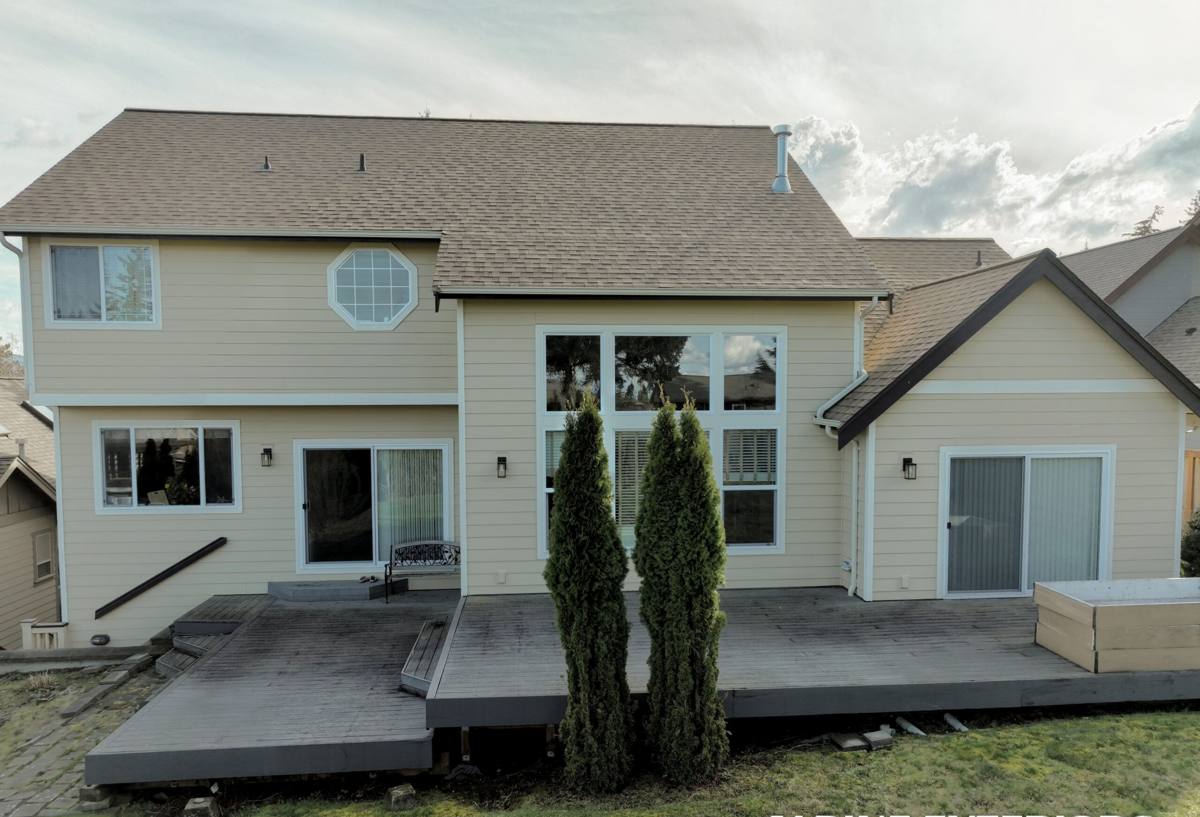
What Lynden's Climate Actually Does to a Deck
Most deck failures we get called out to inspect in this area aren't dramatic. They're slow. Understanding how the climate works against a deck helps explain why certain build details matter more here than they would in a drier part of the country.
Driving Rain and Standing Moisture
Wind-driven rain doesn't just fall straight down — it gets pushed sideways into ledger boards, railing posts, and stair stringers. Any gap in flashing or any spot where water can collect against wood instead of running off it becomes a slow-motion rot problem, often hidden under decking that still looks fine from the top.
A Long Moss and Algae Season
Whatcom County's moss season runs long — shaded, north-facing, and low-airflow deck areas can stay damp from October well into spring. Moss and algae don't just look bad; they hold moisture against the board surface and make walking surfaces genuinely slippery, which is a real safety issue on stairs and landings.
Freeze-Thaw Cycling
Whatcom County does get cold snaps and occasional hard frost, especially in the valley away from the moderating effect of the bay. Footings that aren't poured to the correct depth and undisturbed soil can heave slightly over repeated freeze-thaw cycles, which is how you end up with a deck that develops a bounce or a lean over a few years.
UV and Wood Movement
Summers here are milder than most of the country, but the wood and composite decking on the market is engineered for national conditions — meaning expansion gaps, fastening patterns, and spacing all need to be adjusted for our wetter-than-average moisture cycle rather than a drier climate's assumptions.
Choosing the Right Decking Material for This Area
There's no single "best" decking material — there's the right material for your budget, your maintenance appetite, and how much shade and moisture your specific yard gets. Here's how the common options actually perform in Whatcom County conditions.
| Material | How It Handles Our Climate | Maintenance | Typical Lifespan Here |
|---|---|---|---|
| Pressure-treated wood | Affordable and strong, but end grain and fastener holes need real attention to shed water | Annual cleaning, re-sealing every 1-2 years | 10-15 years with upkeep |
| Cedar | Naturally rot-resistant and handles moisture well, but softer surface shows wear faster in shaded, damp spots | Cleaning plus oil or stain every 1-2 years | 15-20 years with upkeep |
| Composite decking | Doesn't absorb water or rot, resists moss better than wood, but can still develop surface algae film if never cleaned | Periodic washing, no staining or sealing | 25-30+ years |
| PVC/capped polymer | Fully sealed surface, best moisture and mold resistance of the group | Occasional washing | 25-30+ years |
Composite and PVC products cost more up front, which is a legitimate trade-off for anyone on a tighter budget — pressure-treated wood, built and sealed correctly, is still a sound choice. What matters more than the material label is whether the structure underneath is built to actually let that material perform the way it's supposed to.
The Structure Underneath: Where Deck Problems Really Start
The decking surface is what you see. The framing, footings, and flashing are what determine whether that surface lasts. This is where a build done with our climate in mind looks different from a generic build.
- Footings poured below the local frost line, sized for the actual load, not just "what's always been done"
- Ledger board flashed with a proper drip cap and water-resistant barrier where the deck meets the house, not just caulk
- Joist tape or equivalent protection over cut lumber and joist tops to stop water from wicking into end grain
- Fasteners and structural hardware rated for wet, coastal-adjacent conditions — stainless steel or high-grade hot-dip galvanized, not standard coated screws that corrode and stain the wood around them
- Proper airflow and clearance underneath the deck so the ground and joists can actually dry out between rain events
- Board spacing set to account for our moisture cycle, so boards aren't fighting each other as they swell and contract
None of this is visible once the project is finished, which is exactly why it matters who builds it. A deck that looks identical on day one can perform very differently five years in, depending entirely on what's underneath the boards.
Permits, Guardrails, and Code Basics in Whatcom County
Most new decks and significant deck rebuilds in the Lynden area require a building permit, particularly once you're above a certain height off grade or attaching a structure to the house. Requirements can include engineered footing details, guardrail height and baluster spacing (built to keep a 4-inch sphere from passing through, for safety), stair rise and run limits, and handrail requirements on stairs with a certain number of risers. Setback rules from property lines can also come into play depending on the lot. We handle the permit process as part of the job rather than leaving it to the homeowner to sort out, and we build to code as a baseline — not as an upsell.
How We Approach a Deck Build in Lynden
- On-site visit and consultation. We look at your yard's sun and shade pattern, drainage, soil, and how the deck will actually be used before talking materials.
- Design and material selection. We walk through the honest trade-offs between wood, composite, and PVC for your specific budget and maintenance preference — no pressure toward the most expensive option.
- Permitting and engineering. We pull the necessary permits and handle any engineering requirements for footings or structural spans.
- Footings and framing. This is the phase that determines the deck's lifespan — done to the correct depth, with the right hardware and flashing details for this climate.
- Decking, railing, and stairs. Installed with attention to spacing, fastening pattern, and drainage, not just a clean visual finish.
- Final walkthrough and inspection sign-off. We go over the finished deck with you and make sure any required inspections are closed out.
Keeping Moss and Rot from Winning: Maintenance That Actually Matters
A well-built deck in this climate still needs some seasonal attention. This isn't a long list, but it's the difference between a deck that lasts decades and one that needs early repairs.
- Sweep leaves and debris off the surface and out from between boards regularly through fall
- Wash the deck surface at least once a year to remove the algae film before it becomes established moss
- Check that gaps between boards near the house and around posts haven't filled with debris that traps water
- Look underneath the deck once a year for standing water, soft framing, or signs of pests
- Re-seal or re-stain wood decking on the schedule appropriate to that product — don't wait until it's visibly gray and dry
- Keep gutters and downspouts near the deck clear so runoff isn't dumping directly onto or under it
What a Deck Costs Here — and What Actually Drives the Price
Every yard is different, so exact numbers depend on size, height off grade, and material, but these are the factors that move the price the most.
| Cost Factor | Why It Matters |
|---|---|
| Height off grade | Taller decks need deeper footings, more structural framing, and guardrails, which adds material and labor |
| Decking material | Composite and PVC cost more than pressure-treated wood up front but reduce long-term maintenance costs |
| Ground and soil conditions | Poor drainage or difficult soil can require additional footing work |
| Stairs and railing complexity | Multiple stair runs, angled sections, or custom railing add labor time |
| Attachment to the house | Ledger flashing and tie-in work has to be done correctly regardless of deck size, which is a fixed cost floor |
| Permit and engineering requirements | Larger or taller decks may require stamped engineering, adding to project cost |
Why a Local Bellingham-Area Crew Matters for This Job
A deck builder who works this specific region regularly already knows how Lynden and Whatcom County soil behaves near the Nooksack valley, what frost depth the local jurisdiction actually enforces, and which framing and hardware choices hold up against our long wet season instead of just meeting a generic minimum. That local familiarity also means faster response if a warranty question comes up after the build, and a crew that isn't guessing at permit requirements for the first time on your project. We'd rather build it right the first time, using details suited to this climate, than have you calling us back in three years about a spongy step or a mossy, slick landing.
If you're planning a new deck or need to replace one that's showing its age, we're happy to come take a look and talk through honest options for your yard. Fill out the form below for a free, no-pressure estimate.