 Bellingham Roofing
 Storm Damage Roof Repair in Lynden: A Different Kind of Wear
Lynden sits inland in the Nooksack River valley in northern Whatcom County, and while it doesn't take the direct salt spray of a waterfront town, it's still inside the same marine-influenced weather system that runs the length of this corner of Washington. That means driving rain that comes in sideways during winter storms, salt-carrying air that reaches farther inland than most homeowners assume, and a moss season that can run most of the year on any roof plane that stays shaded or damp. Storm damage in Lynden usually isn't one dramatic event tearing a roof apart. It's more often a windstorm that lifts a handful of shingles, drives rain up under flashing, or knocks a branch loose over a valley — and the real damage is whatever that opening lets in before anyone notices.
Bellingham Roofing Companies repairs storm-damaged roofs across Whatcom County, and Lynden gets the same approach we use everywhere else in the valley: assume the visible damage is the smallest part of the problem, check what's underneath it, and fix the actual cause instead of just patching what's obvious from the ground.
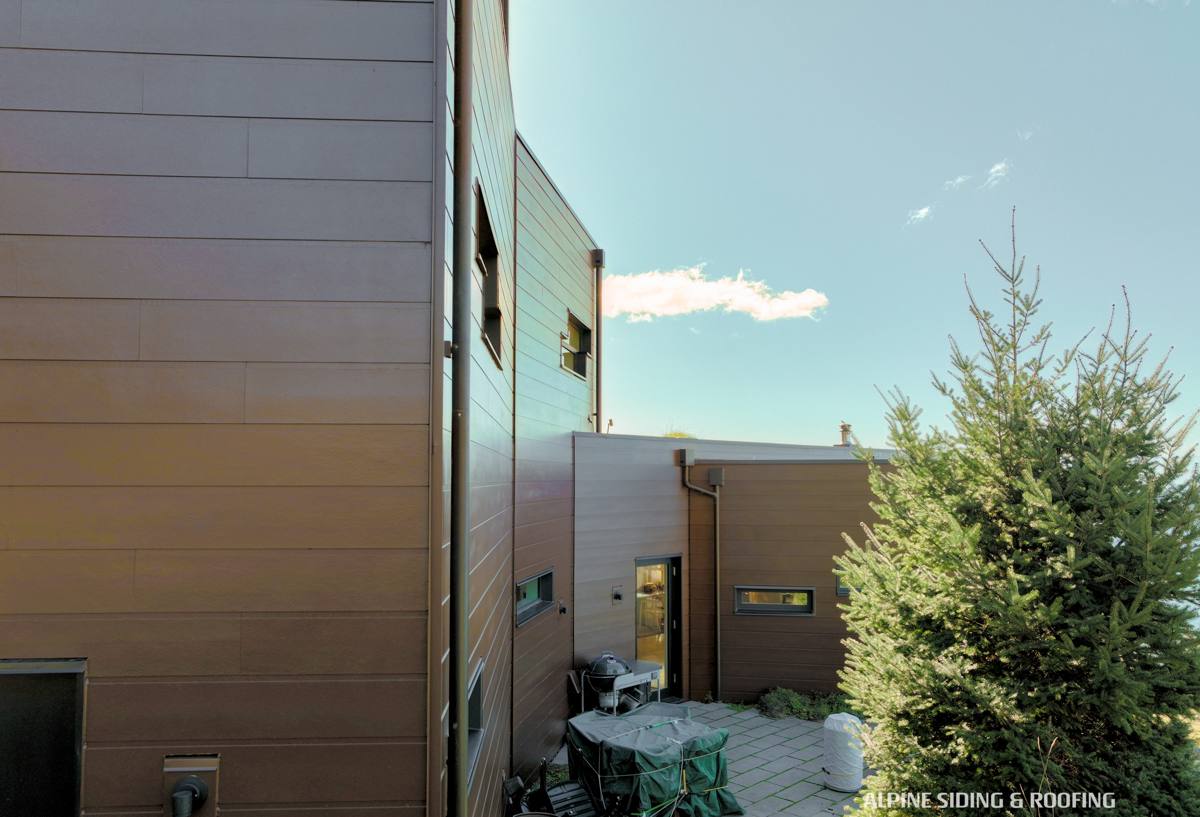
What Storm Damage Actually Looks Like Here
Wind Damage
Windstorms moving through the Nooksack valley don't always hit every roof the same way. A roof's exposure, pitch, and the direction it faces relative to the prevailing wind all change how much force it takes. Wind lifts shingle edges, breaks the seal strip that holds them flat, and in stronger gusts tears shingles off outright or peels back ridge caps. Once a shingle's seal is broken, it doesn't always blow off — it can sit there looking mostly fine while flapping loose underneath every time the wind picks up, which wears the surrounding shingles and opens a path for water long before anyone sees a gap from the driveway.
Wind-Driven Rain Intrusion
Rain in this valley rarely falls straight down during a real storm. It gets pushed sideways into roof valleys, around chimneys and vent pipes, and up under flashing and shingle edges that were never meant to face water from that angle. This is why storm damage often shows up as an interior leak days after the wind has died down — water worked its way in during the storm and took time to travel down through the decking and insulation before it reached a ceiling.
Moss-Softened Roofing Fails First
A roof that already carries moss or has gone a few seasons without maintenance is more vulnerable in a windstorm, not less. Moss holds moisture against the roofing material and works under shingle edges, which weakens the seal and the material underneath well before a storm ever arrives. When wind hits a roof in that condition, the moss-affected areas are usually the first to lift, tear, or leak, which is one reason storm damage sometimes looks worse on one slope of a roof than another.
Storm Damage vs. Normal Wear: Why the Distinction Matters
Not everything that looks bad after a storm is actually storm damage, and that distinction matters most when insurance is involved. Sudden damage from wind, a falling branch, or hail is generally treated differently than a roof that was already aging, undermaintained, or nearing the end of its service life before the storm hit. An honest inspection separates the two: what changed because of this specific weather event, and what was already a developing problem the storm just made visible. We'll tell you plainly which is which rather than characterizing ordinary wear as storm damage to make a claim easier to file.
Signs Worth a Storm Damage Inspection
- Missing, torn, or visibly lifted shingles after a windstorm
- Shingles that look intact from the ground but flap or feel loose when checked from a ladder
- Granules collecting in gutters or downspouts in noticeably higher amounts after a storm
- A new water stain on an interior ceiling or wall, especially near an exterior wall or chimney
- Flashing that's visibly bent, lifted, or separated around vents, chimneys, or roof-to-wall transitions
- A tree limb, debris, or visible impact point on the roof surface
- Sagging, soft spots, or a change in how the roofline looks from the street
Any one of these is worth a call. Roof damage from wind and rain doesn't always announce itself right away, and the gap between a storm and a visible leak is often the difference between a repair and a much larger interior repair bill.
What a Correct Storm Damage Repair Actually Involves
Stop the Water First
If a roof has an active leak or an open gap after a storm, the first job is emergency mitigation — a tarp or temporary cover over the affected area to stop water from getting further into the structure while a full repair is scoped. This isn't the fix, it's what keeps a bad situation from getting worse in the meantime, especially with more rain typically on the way in this climate.
Inspect Past the Obvious Damage
A storm damage repair that only addresses what's visible from the ground misses the point. That means checking the full roof surface, not just the area near the reported leak, looking under adjacent shingles for loosened seals, checking flashing at every valley and penetration nearby, and opening up the affected area enough to see whether the decking underneath took on moisture. Water that reached the decking needs to dry out and, if it's soft or delaminating, needs to be replaced — covering wet decking with new shingles just traps the problem.
Match Materials and Rebuild the Detail, Not Just the Surface
A proper repair reconstructs the flashing, underlayment, and shingle courses correctly rather than just nailing a patch shingle over the gap. Shingles are matched as closely as possible to the existing roof for color and profile, but the more important part is what's underneath — the underlayment and flashing have to be lapped and sealed the way they would be on a new install, because that's what actually keeps the next storm out.
How Our Storm Repair Process Works
- Contact and initial assessment — you describe what happened and what you're seeing, and we schedule a look as quickly as conditions allow.
- Emergency mitigation if needed — active leaks or open sections get tarped or temporarily sealed to stop further water intrusion.
- Full roof inspection — we check the whole roof, not just the reported damage area, and document what we find with photos.
- Honest scope and estimate — we explain what's storm-related, what's pre-existing wear, and what the repair actually requires, in plain terms.
- Repair or, if warranted, replacement — most storm damage is a targeted repair; a roof that was already near the end of its life may make more sense to replace outright, and we'll say so if that's the honest answer.
- Cleanup and final check — debris and old material are cleared, and the repair area is checked once more before we call the job done.
What Storm Repair Typically Costs — and Why It Varies
There's no single number for storm damage repair because the range of what "storm damage" covers is wide — from a handful of replaced shingles to a full section of decking and underlayment. The factors below are what actually move the price, in roughly the order they tend to matter.
| Cost Factor | Why It Matters |
|---|---|
| Extent of the damage | A localized area of lifted or missing shingles costs far less than damage spread across multiple roof planes |
| Decking condition underneath | Repairs that require replacing water-damaged plywood or sheathing add material and labor beyond the surface repair |
| Roof pitch and accessibility | Steep roofs, multiple stories, or limited equipment access add time and safety requirements to any repair |
| Age and material match of the existing roof | Older roofs may need a wider repair area to blend new material acceptably, or may not be worth patching at all |
| Flashing and detail work involved | Damage near chimneys, valleys, or multiple penetrations takes more skilled labor than a flat field repair |
We give a specific number after we've actually looked at the roof, not a phone estimate based on a description alone. That's the only way to give you a figure that holds up once the work starts.
Storm Damage and Insurance: What to Know Before You Call Your Carrier
If you think a storm caused real damage, document it with photos as soon as it's safe to get up and look, and before you start any repair conversation with your insurance carrier. Sudden storm or impact damage is often covered; age-related wear and deterioration typically isn't, and carriers know the difference even if it isn't always obvious from the ground. We'll give you a straightforward, honest read on which category your roof's damage actually falls into. If it looks storm-related, we can document our findings in a way that's useful for a claim; if it looks like ordinary wear that happened to become visible after a storm, we'll tell you that too rather than encouraging a claim that isn't likely to hold up.
Why It Matters That We Already Work in Lynden
A crew that works roofs across Whatcom County through every storm season sees how wind, driving rain, and moss actually behave on real houses over years — not just how a shingle performs on a spec sheet. That shows up in practical decisions on a storm repair: which roof orientations in a valley town like Lynden take the worst of a given wind direction, how far past the visible damage a proper inspection needs to go, and which flashing details are worth the extra time so you're not looking at the same leak again next winter. It also means that if a repair turns up something bigger than expected — decking damage, a wall-to-roof transition that needs attention, or siding nearby that's showing its own moisture issues — you're talking to a crew that can address it directly instead of sending you to find someone else.
Get a Free, No-Pressure Estimate
If a recent storm left your Lynden roof with missing shingles, a new leak, or damage you're not sure how to categorize, we're glad to take a look and give you a straightforward read on what actually happened and what it takes to fix it right. Reach out using the form below to schedule a free estimate — no pressure, no upsell script.