 Bellingham Roofing
 Why Metal Roofing Suits Edgemoor's Coastal, Moss-Prone Climate
Edgemoor sits close enough to Bellingham Bay that salt-laden air is a constant factor in how a roof ages, and the tree cover common through the neighborhood keeps roof slopes shaded and damp for long stretches of the year. Add in Whatcom County's wet season, which can run from fall through spring with only short breaks, and you get a roofing environment that punishes materials that trap moisture or corrode. Metal roofing, installed correctly, handles that combination better than most alternatives. It sheds water fast, gives moss less of a foothold than a shingle surface does, and — when specified with the right fasteners and finish — resists the salt-driven corrosion that shortens the life of lesser hardware near the water.
"Metal roofing" isn't one product, though. The panel type, fastener grade, and finish you choose all affect how well a roof actually performs in a bayside, tree-shaded setting like Edgemoor. This page covers what we look at when we spec and install a metal roof for a home in this part of Bellingham.
What Salt Air, Driving Rain, and Moss Actually Do to a Roof
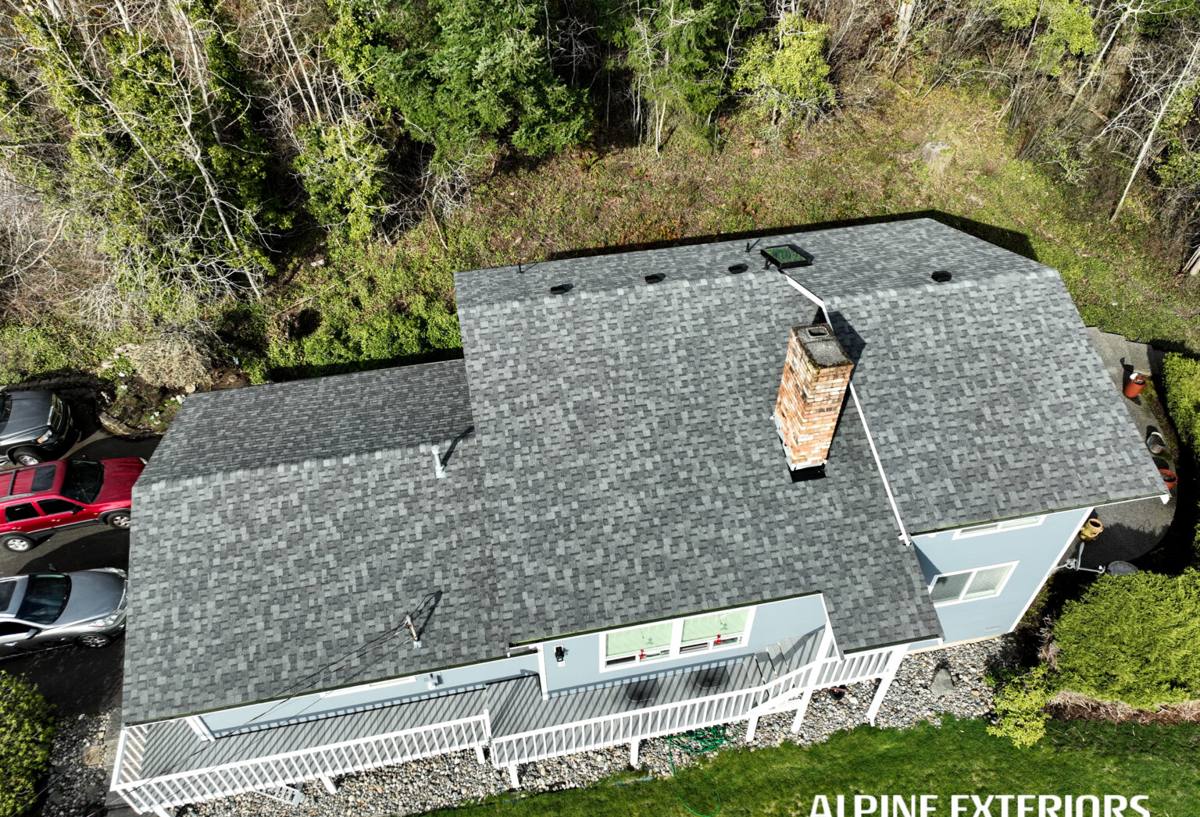
Salt air carries fine particulate that settles on any exposed metal — fasteners, flashing, cut panel edges — and it accelerates corrosion faster than it would a few miles further inland. Driving rain, especially when it comes in sideways on a windy front off the water, finds any weak lap joint, undersized flashing, or poorly sealed penetration and pushes water where gravity alone wouldn't carry it. Moss needs shade and consistent moisture to establish, and it thrives on the north-facing, tree-covered slopes that are common throughout Edgemoor.
On an asphalt shingle roof, moss roots into the granule surface and gradually lifts shingle edges, opening a path for water. Metal doesn't give moss the same surface to grab onto, but that doesn't make a metal roof moss-proof. Needles, leaves, and seed pods still collect in valleys and against roof-to-wall transitions, and if that debris is left to sit, moss and algae will grow on top of it anyway — holding moisture directly against seams and fastener points where you least want it.
Metal Panel Systems We Install
Most homes in this area end up choosing between two general categories of metal panel. Both can be a good fit for Edgemoor's climate — the right one depends on budget, roof shape, and how much maintenance you want to take on later.
Standing Seam Panels
Standing seam panels interlock along raised seams, and the fasteners are concealed under those seams rather than driven through the face of the panel. That matters near the water: there's no exposed screw head or washer sitting out in the weather to corrode, loosen, or need replacing. It's the system we recommend most often for full roof replacements in Edgemoor, particularly on homes with a clear view of or short distance to the bay.
Exposed-Fastener Panels
Corrugated and ribbed panel systems are installed with screws driven through the panel face into rubber-gasketed washers. They cost less upfront and go up faster, but those washers are the weak point — UV exposure and salt air both shorten their service life, and eventually they need to be checked and, in some cases, replaced before they fail and let water in. We still install these for garages, shops, and secondary structures where the lower cost makes sense, but we're upfront that they carry a maintenance obligation standing seam doesn't.
| Feature | Standing Seam | Exposed-Fastener Panel |
|---|---|---|
| Fastener exposure | Concealed under the seam | Exposed through the panel face |
| Typical service life | Commonly rated by manufacturers in the 40-60+ year range with proper coating | Generally shorter, largely tied to washer and fastener life |
| Upfront cost | Higher | Lower |
| Maintenance near salt air | Minimal — mainly debris clearing and periodic inspection | Periodic fastener and washer inspection, occasional re-torquing or replacement |
| Best use case | Main house roofs, especially closer to the bay | Garages, shops, outbuildings, budget-driven projects |
Getting the Installation Details Right
The panel you choose matters less than whether the details underneath it are done correctly. This is where a lot of roofs — metal or otherwise — actually fail in a climate like this one.
Underlayment and Water-Shedding at Vulnerable Points
We use a synthetic underlayment under the field of the roof and self-adhered, waterproof membrane at eaves, valleys, and around every penetration — pipe boots, skylights, chimneys. Those are the spots where driving rain is most likely to get pushed backward under a panel lap, and they're not places to save money by skipping a step.
Fasteners, Flashing, and Avoiding Metal-to-Metal Corrosion
Fastener and flashing metal has to be compatible with the panel metal, or you end up with galvanic corrosion where two dissimilar metals are in contact with moisture between them. That means matching fastener coatings to the panel, using appropriate flashing metal at transitions, and being deliberate about anything that touches the roof surface — including satellite mounts, gutter hardware, or anything a previous contractor bolted on without thinking about it.
Ventilation
A shaded, damp roof deck without adequate intake and exhaust airflow will hold condensation on the underside of the panels, which corrodes metal from the back where you can't see it happening. We check existing ventilation on every reroof and correct it when it's insufficient, rather than just installing new panels over an underlying problem.
Finishes and Coatings That Hold Up Near the Water
Factory paint finish is one of the biggest variables in how a metal roof ages in a coastal environment, and it's often the first place corners get cut. PVDF-based (sometimes called Kynar-type) paint systems hold their color and chalk resistance far longer under UV and salt exposure than standard polyester finishes, and that difference shows up most on roofs that face the weather Edgemoor gets. On the substrate side, we generally steer homeowners toward galvalume steel (an aluminum-zinc coating) over plain galvanized for anything close to the bay, because it holds up better against the kind of corrosion salt air causes — though cut edges on any coated steel panel still need to be treated or capped, since raw steel is exposed the moment a panel is trimmed.
We don't install unpainted or mill-finish steel on homes in this area. It's not that the material is defective — it's that bare or minimally coated steel puts more maintenance burden on the homeowner than a proper coated system does, and in a salt-air environment that burden shows up faster than most people expect. We'd rather spec it right the first time than have a homeowner dealing with rust bleed a few years in.
What Affects Cost and Timeline on a Metal Roof
Cost on a metal reroof depends more on the details than a lot of homeowners expect. Roof pitch and complexity — how many valleys, penetrations, and roof-to-wall transitions there are — affects labor more than square footage alone. Whether the old roofing needs to be torn off or can be built over, which isn't always an option and isn't something we recommend on every job, changes both cost and timeline. Panel type matters too: standing seam runs higher than exposed-fastener paneling, largely because of the labor and equipment involved in forming and installing concealed seams correctly. As a rough guide, metal roofing typically costs more upfront than asphalt shingles — generally somewhere in the range of two to three times per square foot — though that gap looks different once you factor in a shingle roof's shorter replacement cycle in a wet, moss-prone climate like this one. Timeline for a typical single-family home reroof usually runs from a few days to just over a week, weather permitting; steep or complex rooflines take longer.
Our Process for an Edgemoor Metal Roof
We start with an on-site look at the existing roof — deck condition, current ventilation, flashing details, and how exposed the site is to wind and salt air. From there we talk through panel and finish options with actual trade-offs, not just a single recommendation, so you understand what you're paying for and why. Once a scope is agreed on, we handle tear-off (or in some cases install over an existing deck if conditions allow), correct any underlying deck or ventilation issues we find, and install underlayment, flashing, and panels in that order of priority — the parts nobody sees are what determine whether the parts everybody sees hold up. We clean the site thoroughly, including magnetic sweeps for stray fasteners, and walk the finished roof with you before we consider the job done.
Living With a Metal Roof Through Whatcom County's Moss Season
A correctly installed metal roof in this climate needs less maintenance than shingles, but "less" isn't "none." A few habits go a long way:
- Clear needles, leaves, and debris out of valleys and roof-to-wall transitions each fall, before the wet season settles in
- Keep gutters and downspouts flowing freely so water isn't backing up under eave flashing
- Trim back branches that overhang the roof — less shade and debris means less moss pressure over time
- On exposed-fastener panels, have washers and fastener torque checked periodically rather than waiting for a leak to tell you something's wrong
- Rinse the roof gently rather than pressure-washing it, which can damage the finish and void coating warranties
- Touch up any scratches or chips in the finish promptly — that's where corrosion gets started on an otherwise sound panel
Why Local, Edgemoor-Familiar Experience Matters
A crew that already works in and around Edgemoor has a feel for how much shade a given lot gets, how exposed a roof is likely to be to wind off the bay, and what kind of debris load to expect from the tree cover typical of the neighborhood. That's not something you can fully substitute with a spec sheet. It also means familiarity with the permitting and inspection process for reroofing in the City of Bellingham, so the paperwork side of the job doesn't become a separate headache on top of the physical work.
If you're weighing metal roofing for a home in Edgemoor, we're happy to come take a look, walk the roof with you, and give you a straightforward estimate — no pressure, and no sales script. Reach out through the form below to get started.