 Bellingham Roofing
 Why Sunnyland's Weather Is Hard on a Roof
Sunnyland sits close enough to Bellingham Bay that salt-laden air is a constant, low-grade factor in how every roofing material ages here. Add Whatcom County's long wet season, wind-driven rain off the water, and the shade from mature trees that lines many of the neighborhood's older lots, and you get a roofing environment that punishes anything installed with shortcuts. Asphalt shingles granulate and curl faster under this combination. Wood shakes hold moisture and feed moss. Even a decent roof installed without attention to ventilation and flashing detail will show streaking, moss colonies, and soft spots within a handful of winters.
Metal roofing, installed correctly, handles this specific combination of stresses better than most alternatives available to homeowners in this price range. But "metal roofing" is not one product — it's a category with real differences in material, coating, fastening method, and long-term behavior, and getting those choices right for a Sunnyland lot specifically is the point of this page.
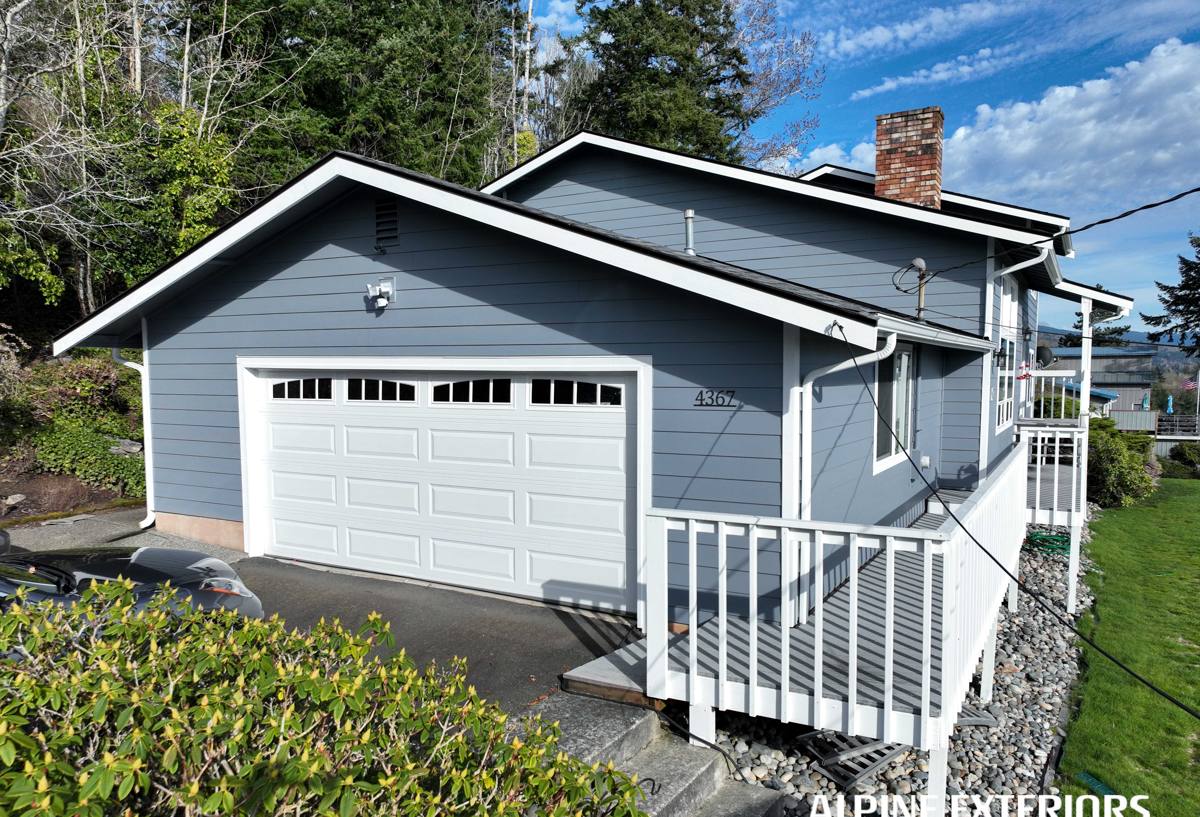
What Driving Rain and Salt Air Actually Do to a Roof
Two separate mechanisms are at work on a Sunnyland roof, and they call for different design responses.
Wind-driven rain
Storms moving in off the water don't just drop rain straight down — they push it sideways, up under laps, and into any gap in flashing or fastening. A roof that would shed water fine in a calm rain can leak in a Whatcom County southwester if the underlayment, seam laps, and flashing weren't detailed for lateral water pressure, not just gravity.
Salt air corrosion
Airborne salt accelerates corrosion on exposed fasteners, cut edges, and any point where two dissimilar metals touch. This is why fastener type and coating matter more here than they would on a roof 30 miles inland. It's also why we're careful about mixing metals — galvanic corrosion between incompatible metals in contact with each other is a slow but real failure mode near the coast.
Why Metal Roofing Fits This Climate
A properly installed metal roof gives Sunnyland homeowners a few specific advantages over other materials in this environment:
- Continuous water-shedding surface — standing seam panels in particular have far fewer horizontal laps than shingles, which means fewer places for wind-driven rain to find a way in.
- Steep runoff angle performs well against moss — moss needs standing moisture and organic debris to establish. A smooth metal surface with good pitch and clean valleys sheds both faster than a textured shingle or shake surface.
- Coating systems built for coastal exposure — quality metal roofing coatings are engineered specifically to resist the kind of salt and UV exposure common to Pacific Northwest coastal towns.
- Long service life reduces re-roofing frequency — fewer tear-offs over the life of the home means fewer chances for water intrusion during the vulnerable installation window.
None of that is automatic, though. A metal roof is only as good as its installation — the underlayment, the fastening pattern, the flashing at every penetration, and the ventilation behind it.
What a Correct Metal Roof Installation Involves
Underlayment
Given how much wind-driven rain Sunnyland sees, we don't treat underlayment as an afterthought. A high-temp synthetic or self-adhered membrane at eaves, valleys, and penetrations gives the roof a real second line of defense if wind ever forces water past the panel seams.
Fastening method
Standing seam panels use concealed clips, which means no exposed fastener heads for salt air to attack over time. Exposed-fastener panel systems are a legitimate, more affordable option, but the fasteners themselves become the weak point over a 15–20 year horizon in a coastal-adjacent neighborhood — we'll walk you through that trade-off honestly rather than upsell you past your budget.
Flashing at valleys, chimneys, and penetrations
Most metal roof leaks trace back to flashing, not the panels themselves. Valleys, chimney saddles, skylight curbs, and vent penetrations all need custom-formed flashing, not generic trim bent to fit. This is where installer experience shows up most.
Ventilation
A metal roof over a poorly ventilated attic can trap moisture underneath the deck, which defeats the point of a moisture-resistant surface. Ridge and soffit ventilation sized correctly for the home keeps the underside of the deck dry through Bellingham's long damp stretches.
Dissimilar metal separation
Anywhere copper, galvanized steel, or other metals could contact the roofing panels — flashing, gutters, vent stacks — we use compatible materials or isolation barriers to prevent galvanic corrosion, which is a bigger deal this close to the bay than it would be further inland.
Comparing Metal Roofing Systems for a Sunnyland Home
| System | Fastening | Best fit | Trade-off |
|---|---|---|---|
| Standing seam | Concealed clips | Full re-roofs, homes with strong wind/rain exposure | Higher upfront cost |
| Exposed-fastener panel | Screws through panel face | Budget-conscious full re-roofs, outbuildings | Fasteners need periodic inspection and eventual replacement |
| Metal shingle / shake profile | Concealed or interlocking | Homes wanting a traditional look with metal performance | More seams than standing seam, more installation labor |
For most Sunnyland homes we work on, standing seam is the system we recommend when the budget allows, specifically because of the reduced fastener exposure and superior performance against wind-driven rain. Exposed-fastener systems remain a sound, honest option for homeowners prioritizing cost — the key is knowing what maintenance that choice implies down the road, which we'll spell out plainly before you sign anything.
Moss and Debris: The Long-Term Maintenance Reality
Bellingham's moss season is long, and Sunnyland's tree cover means debris load is a real factor even on a metal roof. Metal resists moss far better than shingles or shakes, but it isn't moss-proof — organic buildup in valleys, around penetrations, or in areas that stay shaded most of the day can still give moss a foothold over years.
What keeps a metal roof performing well long-term in this environment:
- Keeping gutters and valleys clear of needles and leaf litter, especially heading into the wet months
- Trimming overhanging branches back from the roofline to reduce shade and debris drop
- A periodic visual check of flashing, fastener condition (on exposed-fastener systems), and sealant at penetrations
- Addressing any moss growth early with gentle methods rather than aggressive power-washing, which can damage coatings
We're glad to walk any homeowner through a simple maintenance routine specific to their roof's layout and tree exposure — it's a five-minute conversation that saves a lot of grief later.
Our Process for a Sunnyland Metal Roofing Project
- On-site assessment — we look at the existing roof, deck condition, ventilation, tree exposure, and drainage pattern specific to your lot.
- System recommendation — standing seam, exposed-fastener, or shingle-profile metal, matched to your budget and how much wind/rain exposure your roof actually sees.
- Written estimate — clear scope, materials, and pricing before any work starts. No vague allowances.
- Tear-off and deck inspection — we check the deck for rot or soft spots before anything new goes down, since covering a compromised deck with a premium roof just hides the problem.
- Underlayment and flashing detail work — the part of the job that determines whether the roof actually performs in a coastal storm.
- Panel installation — fastened and seamed to manufacturer specification, with attention to expansion allowance for temperature swings.
- Final walkthrough — we go over the finished roof and maintenance basics with you directly.
We also handle the permitting that Bellingham requires for a full re-roof, so that part isn't left on your plate.
Cost Factors for Metal Roofing in Sunnyland
| Factor | Why it moves the price |
|---|---|
| Panel system chosen | Standing seam costs more upfront than exposed-fastener panel due to material and labor |
| Roof complexity | More valleys, dormers, and penetrations mean more custom flashing labor |
| Deck condition | Rot or soft decking found at tear-off adds repair cost before the new roof goes on |
| Ventilation upgrades | Adding or correcting ridge/soffit ventilation is often worth bundling into a re-roof |
| Tear-off layers | Removing multiple existing roof layers adds disposal and labor cost |
We don't quote a metal roof off a phone call or a satellite photo — every estimate is based on an actual look at your roof, because the factors above vary a lot even between similar-looking Sunnyland homes.
Signs Your Current Roof Is Ready for a Metal Replacement
- Persistent moss or dark streaking that returns soon after cleaning
- Curling, cracked, or missing shingles, especially on slopes facing prevailing wind
- Soft spots or sagging visible from the ground or in the attic deck
- Water stains on interior ceilings after wind-driven rain events
- A roof already past or approaching the end of its rated service life
- Rising frequency of minor repairs that no longer feel worth chasing individually
Why Local Experience in Sunnyland Matters
A roofing crew that already knows this neighborhood's tree cover, prevailing wind direction, and typical roof pitch shows up with fewer surprises. We know which details actually matter for homes this close to Bellingham Bay versus roofs further inland in Whatcom County, and we don't apply a one-size-fits-all spec to every job. That local familiarity shortens the assessment, sharpens the estimate, and means the flashing and ventilation choices are based on how this specific area behaves in a storm — not a generic checklist.
If you're weighing a metal roof for your Sunnyland home, we're happy to take a look and walk you through what your roof specifically needs — no pressure, no hard sell, just a straight assessment and a free estimate.