 Bellingham Roofing
 James Hardie Siding Built for Puget Homes
Puget sits close enough to the water around Bellingham that its homes take on a specific kind of weather exposure — not the postcard version of Pacific Northwest rain, but the sideways, salt-tinged, doesn't-really-stop version that Whatcom County properties near the bay deal with for most of the year. That combination of marine air, wind-driven rain, and a moss season that barely takes a break is exactly the environment James Hardie fiber cement siding was engineered to handle, and it's why we install nothing else on the homes we work on in this area.
This page is specifically about James Hardie siding for Puget, not a generic rundown of siding options. If you're weighing a re-side or new construction siding package for a home in this part of Bellingham, here's what the climate actually asks of the material, what a correct installation involves, and how our process works from first walkthrough to final punch list.
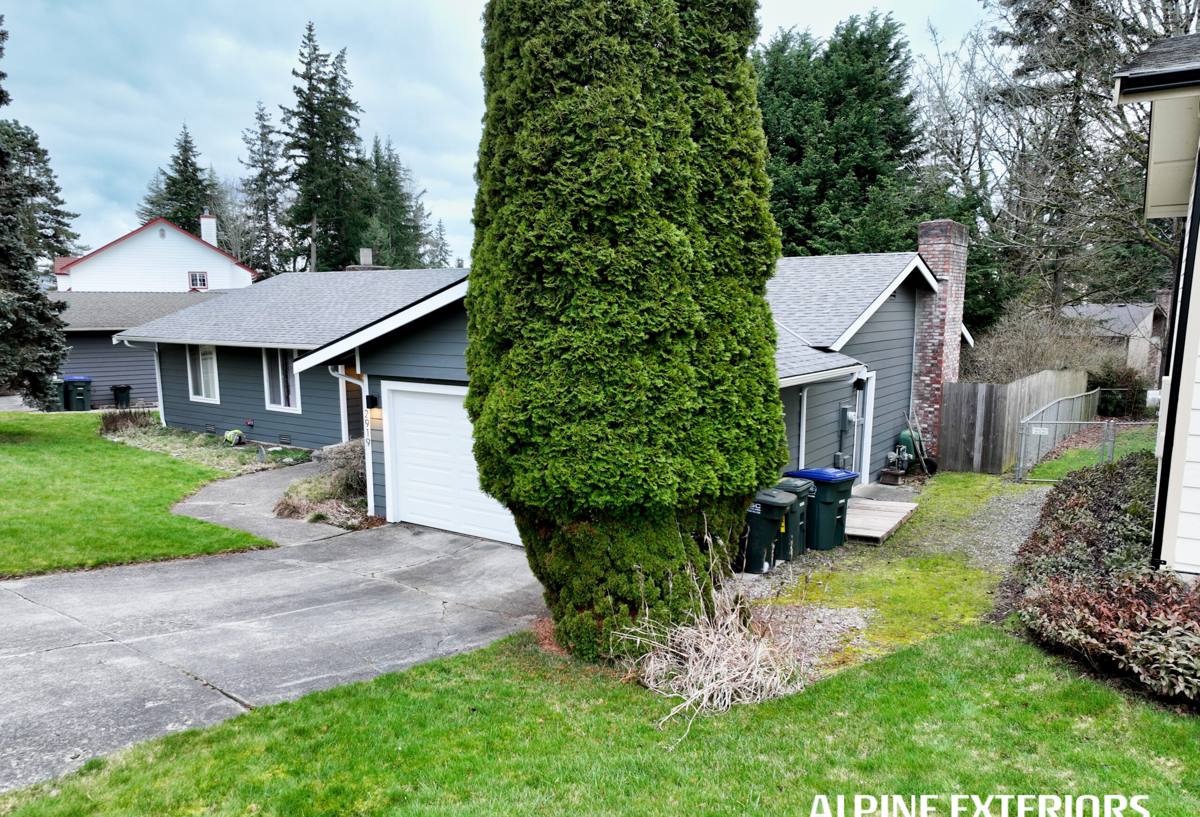
What Puget's Marine Climate Demands From Siding
None of the three conditions below is dramatic by itself. Together, over ten or twenty years, they're a harder test on an exterior wall than most siding is designed for, and they're the reason product choice and installation quality matter more here than in a drier, inland market.
Salt Air Off Bellingham Bay
Homes in Puget don't have to sit directly on the water to get regular exposure to salt-laden air moving in off Bellingham Bay. That exposure accelerates the breakdown of field-applied paint finishes and speeds up corrosion on fasteners and trim hardware. A coating system that holds up fine in a drier region doesn't automatically get the same service life this close to the water, and that gap tends to show up slowly — a few years of fading, then chalking, then a repaint schedule that starts arriving faster than the homeowner expected.
Wind-Driven Rain
Rain in this part of Whatcom County rarely falls straight down for long. Wind pushes it sideways into lap joints, under trim boards, and into any seam where the water management detailing isn't right. That's a much tougher test for caulked joints and painted surfaces than an annual rainfall total suggests, and it's where a lot of siding problems actually start — not on the open face of a wall, but at the edges and seams.
A Moss Season That Runs Most of the Year
Mild temperatures and steady moisture keep moss and mildew active across most of the calendar on shaded, tree-lined lots, which describes a good share of Puget properties. Organic growth on a siding surface traps moisture against the wall behind it, and that trapped moisture is where slow, hidden damage tends to build — long before it's visible from the street.
The James Hardie System We Install
We install James Hardie fiber cement exclusively — not LP SmartSide, not vinyl, not Cemplank, Allura, primed spruce, or cedar. That's a professional standard we hold across every home we work on, not just an upsell on this page. Fiber cement's inorganic core doesn't absorb water and swell the way wood-based products can, doesn't soften or warp under heat the way vinyl can, and carries a non-combustible rating that wood and vinyl products don't. Within fiber cement, we standardized on James Hardie specifically for its climate-engineered product lines and its factory-applied ColorPlus finish.
| Hardie Product Line | Typical Use | Why It Fits Puget Homes |
|---|---|---|
| HardiePlank lap siding | Traditional horizontal profile, most common re-side choice | Dimensionally stable lap joints that shed wind-driven rain without swelling or cupping |
| HardiePanel vertical siding | Modern or farmhouse-style vertical looks, often with battens | Rigid panel doesn't expand/contract at seams the way wood-based panels can |
| HardieShingle siding | Cottage or shingle-style architectural accents | Consistent factory finish holds up better than individually painted wood shingles in damp shade |
| HardieTrim boards | Window, door, and corner trim | Matches the siding's moisture and finish performance at every transition point |
All four are engineered under Hardie's HZ5 climate designation, built for regions with sustained moisture and freeze-thaw cycles rather than hot, dry conditions — a better match for Whatcom County winters than a product line engineered primarily for the Southwest or Southeast. The ColorPlus finish is baked on in multiple coats at the factory before the boards ever reach a Puget job site, which is a meaningfully different starting point than a board that depends on field-applied paint holding up against salt air and constant moisture for the next decade.
What a Correct Installation Actually Involves
Fiber cement's real-world performance depends heavily on installation quality — a rushed or out-of-spec install can undercut even the best material. On every Puget project, that means:
- House wrap or a weather-resistive barrier installed and correctly lapped before any siding goes up
- A drainage gap or rainscreen behind the siding, so moisture that does get past the surface can dry out instead of sitting against the sheathing
- Manufacturer-specified clearances at grade, roofline, and deck ledgers to keep splash-back and standing water away from board edges
- Corrosion-resistant fasteners at the correct type, size, and spacing for this exposure
- Properly flashed and lapped transitions at every window, door, and penetration, directing wind-driven rain away from seams instead of trapping it
- Factory-cut edges used wherever possible, with any field cuts primed and sealed per Hardie's spec to protect the exposed edge
Skip any one of these and the wall can look fine for a season or two. The problems that show up when corners get cut — staining at seams, soft spots near grade, premature finish failure — take a few wet Puget winters to appear, which is exactly why they're easy for a rushed install to get away with until the homeowner is the one dealing with it years later.
Our Process for a Puget Siding Project
Walkthrough and Assessment
We start by looking at the actual walls involved — which face the water and take the brunt of wind-driven rain directly, which are shaded and slower to dry, and whether the existing wall assembly already has moisture issues that need addressing before new siding goes on. Re-siding over hidden rot or inadequate drainage just buries the same problem under new material.
Product and Color Selection
We walk you through the relevant HardiePlank, HardiePanel, or HardieShingle profiles and ColorPlus color options for your home, factoring in how a given color and sheen tends to hold up under this area's UV and salt exposure over time, not just how it looks on a sample chip.
Installation to Manufacturer Spec
Every fastener, clearance, and flashing lap follows James Hardie's published installation requirements for this climate zone. That's what keeps the manufacturer's warranty intact, and it's what determines whether the wall performs the way it's supposed to for decades rather than years.
Final Walkthrough and Warranty Paperwork
We walk the finished job with you, register the applicable Hardie warranty coverage, and cover what little ongoing maintenance the material actually needs so you know what you're looking at if you ever want to check the wall yourself.
Why a Crew That Already Works Puget Matters
Fiber cement rewards site-specific judgment in a way a generic install guide can't fully capture. A crew that's worked this part of Bellingham through multiple wet seasons already knows which wall orientations need extra attention because of shade and tree cover, how much clearance actually matters in a climate this consistently damp versus what a national spec sheet assumes, and where a rainscreen gap earns its keep versus where it's optional. That judgment is the difference between a wall that still looks and performs the same in fifteen years and one that's showing seam staining or finish failure by year five.
Cost Factors for James Hardie Siding in Puget
A full James Hardie re-side on a typical single-family home in this area commonly falls in a broad range of roughly $15,000 to $35,000, and the specifics of your home move that number more than any single line item. A few of the biggest factors:
| Factor | Why It Matters |
|---|---|
| Existing wall condition | Rot or moisture damage found at tear-off needs repair before new siding goes up |
| Wall height and complexity | More corners, dormers, and transitions mean more cuts and flashing details |
| Product line and profile | HardiePanel with battens and HardieShingle typically add labor over standard HardiePlank lap |
| Trim and window count | More openings mean more flashing and finish work around each one |
| Site access | Steep lots, tight setbacks, or limited staging area can add labor time |
We'll walk your specific home and give you real numbers rather than a rough per-square-foot estimate — two houses of similar size can land in very different places depending on how many of these factors are actually in play.
Maintenance: What Puget Homeowners Actually Need to Do
One of the practical advantages of James Hardie's factory finish is how little upkeep it asks for compared to a painted wood-based product, but "low maintenance" isn't the same as "no maintenance" in a climate this consistently damp. A simple annual routine covers most of it:
- Rinse the siding once or twice a year to clear pollen, road film, and early moss growth before it takes hold, especially on shaded north-facing walls
- Check caulking at window and door trim yearly and re-caulk any joints that have cracked or pulled away
- Keep gutters clear so overflow doesn't run down the wall face repeatedly during heavy rain
- Trim back vegetation and tree cover that keeps a wall section shaded and slow to dry
- Watch for any soft spots, staining, or finish changes near grade level, which is where moisture problems tend to surface first
None of that is a heavy lift, but skipping it for years at a time is how a low-maintenance material ends up with an avoidable problem.
If you're planning a siding project for a home in Puget or elsewhere around Bellingham, we're glad to walk the property, look at what's on the walls now, and give you a straight answer about what we'd recommend and why. There's a form below — reach out for a free, no-pressure estimate.