 Bellingham Roofing
 Why Roofs in Columbia Wear Differently Than Roofs Inland
Columbia sits close enough to Bellingham Bay that homes here take on a different kind of weather load than a roof ten miles inland in Whatcom County. Salt-laden air off the water accelerates the breakdown of exposed metal fasteners, flashing, and lower-grade shingle granules. Add in Bellingham's long stretch of driving rain each fall and winter, plus a moss season that can run eight months or more on north-facing and shaded slopes, and you get a roof that's working harder than the manufacturer's warranty paperwork assumes. None of this means a Columbia roof is doomed to fail early. It means the replacement has to be specified and installed with this specific combination of salt, rain, and shade in mind, not treated like a generic reroof.
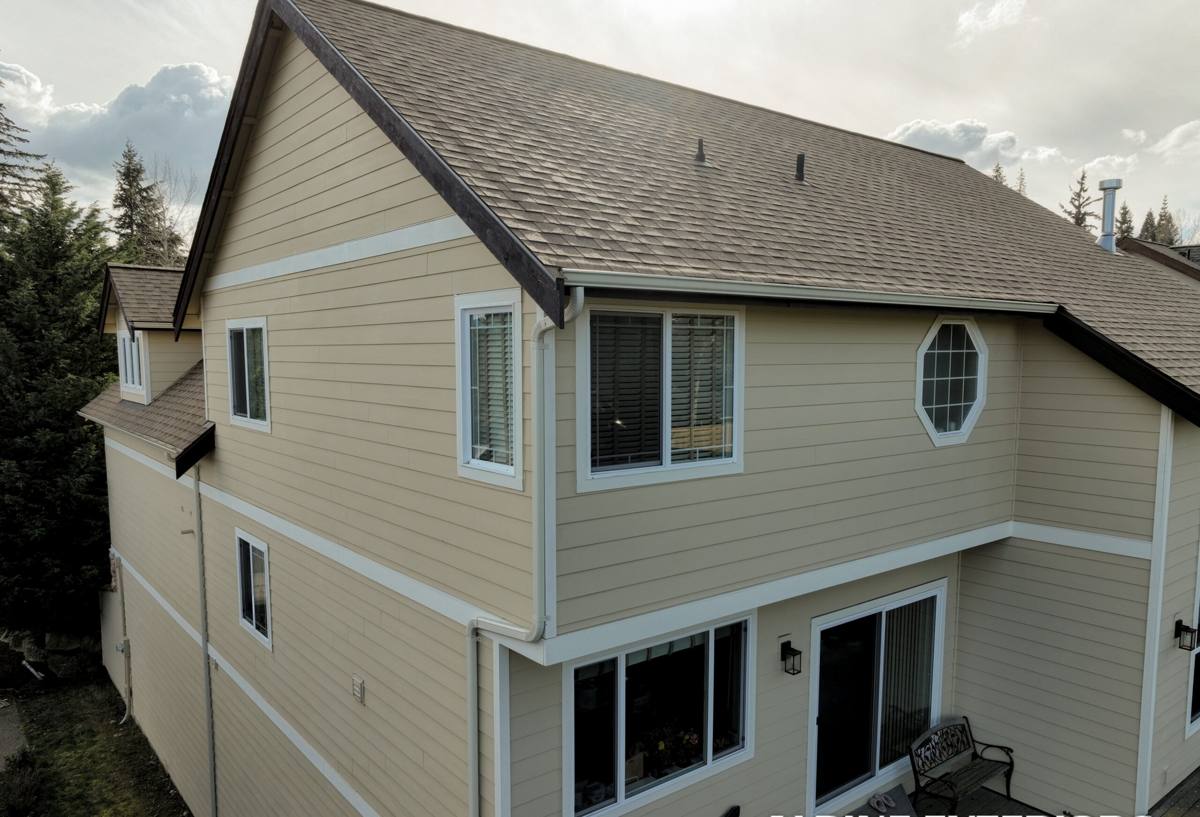
Repair or Replace? Reading the Signs Correctly
Not every roof problem in Columbia calls for a full tear-off. But there's a point where patching becomes false economy, and it's worth knowing where that line sits before you spend money either way.
Signs a repair is still reasonable
Isolated flashing leaks, a handful of cracked or lifted shingles from wind, or a single damaged section after a storm are usually repair territory, especially if the roof is under 12-15 years old and the decking underneath is still sound.
Signs you're past the repair stage
Granule loss across large areas, shingles that are curling or brittle throughout (not just in one spot), soft or spongy decking when walked on, daylight visible through the attic sheathing, or moss that has worked its way under the shingle tabs rather than just sitting on the surface — these all point to a roof that's failing as a system, not in one place. Multiple past repairs in the same areas is another signal that the underlying material or ventilation is the real problem.
What a Correct Roof Replacement Actually Involves
A roof replacement done right is more than swapping old shingles for new ones. Each step protects the next one, and skipping any of them is where premature failures come from.
Full tear-off, not overlay
We remove the existing roofing down to the deck rather than layering new shingles over old. Overlaying traps moisture, hides rot, and voids most manufacturer warranties. It also means we can't check the one thing that matters most on a coastal-influenced roof: the condition of the decking underneath.
Decking inspection and repair
Once the old roofing is off, we check every sheet of decking for soft spots, delamination, or water staining. Any section that's compromised gets replaced before anything new goes down. Skipping this step and roofing over weak decking is one of the most common shortcuts in the trade, and it's the one that causes the most expensive problems later.
Underlayment built for wet, wind-driven weather
Given how much driving rain Bellingham sees, we use synthetic underlayment rated for high wind and moisture exposure, with self-adhering ice-and-water shield at eaves, valleys, and around every penetration — the spots where wind-driven rain actually gets in.
Flashing that matches the climate, not just the code minimum
Flashing around chimneys, skylights, and wall intersections is where most leaks start, especially with the wind patterns off Bellingham Bay. We use corrosion-resistant flashing materials and proper step-and-counter-flashing details rather than relying on sealant alone, since sealant is the first thing salt air and UV break down.
Ventilation, addressed as part of the job
A new roof installed over poor attic ventilation will fail the same way the old one did. We evaluate intake and exhaust airflow as a standard part of every replacement, not as an upsell.
Choosing a Roofing Material for a Marine Climate
Every roofing material has trade-offs. For a Columbia home, the honest comparison usually comes down to three options.
| Material | How it handles salt air & moisture | Maintenance burden | Typical lifespan |
|---|---|---|---|
| Architectural asphalt shingle | Good, with corrosion-resistant fasteners and proper flashing | Low to moderate; needs periodic moss treatment | 25-30 years |
| Standing seam metal | Very good when finished and fastened correctly; sheds moss and debris well | Low | 40-50+ years |
| Cedar shake | Attractive but moisture-sensitive; needs consistent airflow underneath to avoid rot | High; regular treatment and inspection required | 20-25 years with upkeep |
We install all three, but we're upfront about the trade-offs. Cedar looks great on the right home, but in a shaded, moisture-heavy setting it demands more upkeep than most homeowners want to sign up for, and we'll say so before you commit rather than after. Metal costs more up front but asks the least of you over time. A well-specified architectural shingle remains the most common, cost-effective choice for Columbia homes when it's installed with the right fasteners and flashing for this climate.
Ventilation and Moss: The Two Things Homeowners Underestimate
Moss on a Columbia roof isn't just cosmetic. It holds moisture against the shingle surface long after the rain has stopped, and over a long moss season that constant dampness breaks down granule adhesion and shortens the life of the roofing underneath it. Moss growth is heaviest on north-facing slopes and areas shaded by trees, which describes a lot of roof area on lots with mature landscaping.
Ventilation is the other half of the equation, and it's less visible so it gets ignored more often. An attic that can't breathe traps warm, moist air against the underside of the deck, which promotes rot from the inside while moss works on it from the outside. Balanced intake (soffit vents) and exhaust (ridge vents) airflow is what keeps that from happening, and it should be checked and corrected during any full replacement, not treated as a separate project.
Our Replacement Process, Start to Finish
- On-site inspection. We walk the roof and attic, check decking condition from what's visible, and note flashing and ventilation issues before quoting anything.
- Written estimate. Material options, scope, and price are laid out clearly, with any decking or ventilation work called out as a line item rather than a surprise later.
- Scheduling around weather. Bellingham's rain patterns mean timing matters. We schedule tear-off in windows where we can get the deck covered and dried in before weather moves back through.
- Tear-off and deck inspection. Old roofing comes off, decking is inspected and repaired as needed.
- Underlayment, flashing, and ventilation installed. This is the stage that determines how the roof performs over the next 20-30 years, and it's where we spend the most care.
- New roofing installed to manufacturer specification. Correct nailing patterns, exposure, and fastener types for a coastal-influenced climate.
- Site cleanup and magnetic sweep. Debris, old materials, and stray fasteners are cleared from the property before we consider the job done.
- Final walkthrough. We go over the finished roof with you and explain what maintenance, if any, it'll need going forward.
What Affects the Cost of a Roof Replacement
Two roofs of the same square footage can cost noticeably different amounts once you account for the condition underneath and the shape of the roof itself.
| Factor | Why it moves the price |
|---|---|
| Decking condition | Rotten or delaminated sheets found during tear-off need to be replaced before roofing can go down |
| Roof complexity | Valleys, dormers, and multiple roof planes take more time and flashing detail than a simple gable |
| Material choice | Architectural shingle, metal, and cedar sit at very different price points and labor requirements |
| Existing layers | Removing multiple old layers of roofing takes more labor and disposal than a single-layer tear-off |
| Ventilation corrections | Adding or upgrading intake and exhaust venting is worth doing during a replacement, and adds modest cost versus doing it separately later |
| Access and site conditions | Steep pitches, limited driveway access, or tight lot lines affect staging and labor time |
We won't quote a number without seeing the roof, because the honest range for any given home depends heavily on what we find once the old material comes off.
Why Hire a Crew That Already Works in Columbia
A roof replacement is only as good as the details that don't show up in a photo: how the flashing is stepped, what fastener grade went into the decking, whether the ventilation was actually balanced or just eyeballed. A crew that regularly works this part of Bellingham has already seen how salt air and shaded, moss-prone slopes affect roofs here over time, and adjusts material choices and installation details accordingly rather than defaulting to whatever spec sheet came with the shingle. That local experience also means we're familiar with the permitting and inspection expectations for Whatcom County, so there are no surprises mid-project.
Keeping a New Roof Performing for Its Full Lifespan
A properly installed roof still benefits from a bit of ongoing attention, especially in a climate that grows moss on a long timeline and pushes rain sideways in a storm.
- Have moss treated or removed before it works its way under shingle tabs, not after
- Keep gutters clear so water isn't backing up under the roof edge during heavy rain
- Trim back overhanging branches to reduce shade and debris buildup on north-facing slopes
- Check attic ventilation isn't blocked by insulation or storage over time
- Have flashing around chimneys, skylights, and vents visually checked every couple of years
- Address any small leak or lifted shingle promptly rather than waiting for it to spread
If your Columbia home is due for a new roof, or you're not sure whether what you're seeing is a repair or a replacement situation, we're happy to take a look and give you a straightforward, no-pressure estimate using the form below.