 Bellingham Roofing
 Why Siding Wears Differently in Barkley
Barkley sits close enough to Bellingham Bay that homes here deal with a steady mix of salt-tinged air, wind-driven rain, and long stretches of overcast, damp weather that can stretch from October well into spring. None of that is unusual for Whatcom County, but it adds up differently depending on how a house is sited, how much tree cover shades the north and west walls, and how the original siding was installed. A wall that gets slapped by driving rain every winter needs siding, flashing, and caulk joints that are doing their job — not just siding that looks fine from the street.
We also see a lot of moss and algae growth on siding in this area, especially on shaded elevations and under eaves with limited airflow. Moss itself doesn't eat through fiber cement or wood, but it holds moisture against the surface for weeks at a time, and that constant dampness is what eventually causes problems underneath — softened trim, failed caulk, or rot in wood-based products. Understanding that distinction is the difference between a repair that actually fixes the issue and one that just covers it up for a season.
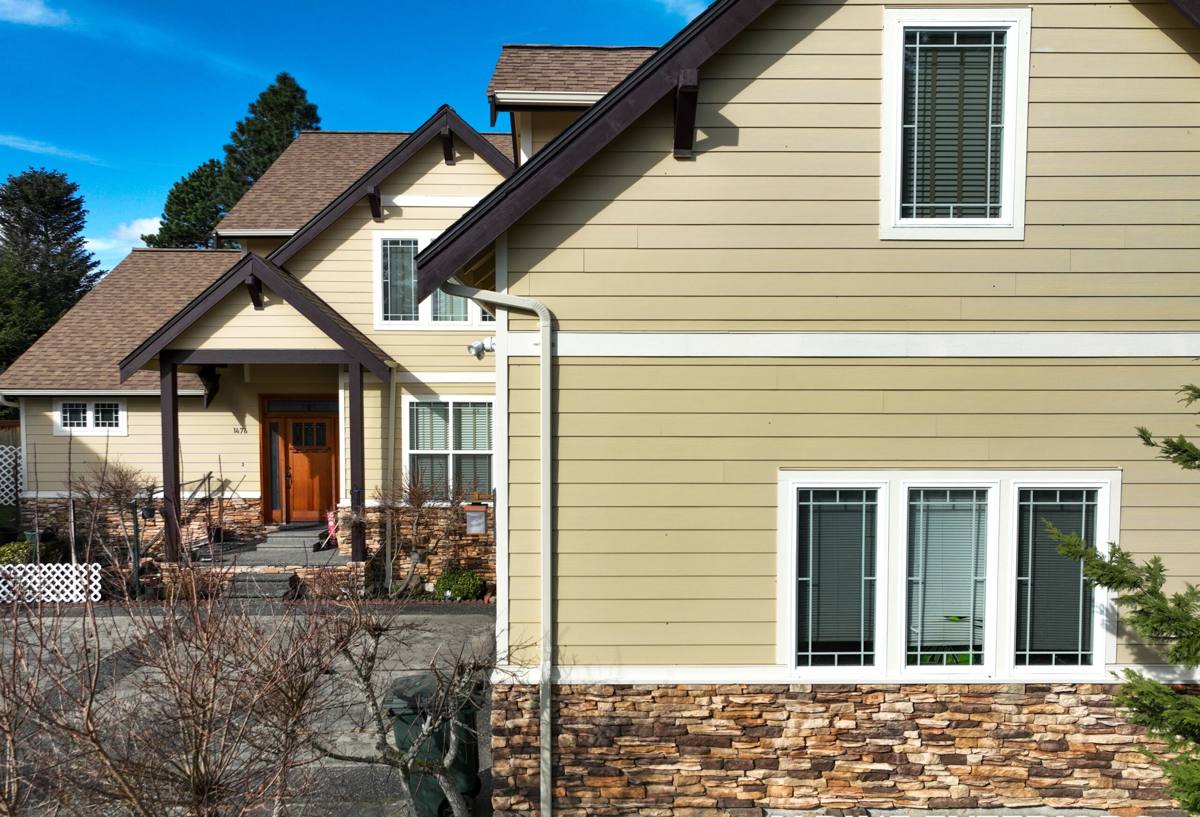
Common Siding Problems We Find in Barkley Homes
Every neighborhood has its own pattern of failure points based on age of housing stock, common siding materials, and microclimate. In Barkley, the repair calls we get most often fall into a few categories:
- Caulk and sealant failure around windows, doors, and trim joints, letting wind-driven rain track behind the siding
- Soft or delaminating trim boards, especially at corners and near ground level where splashback keeps wood damp longer
- Nail pops and loose panels on older lap siding, often from original installation that didn't account for seasonal wood movement
- Moss and algae staining on north- and west-facing walls that sit in shade for much of the day
- Hairline cracking or checking on non-fiber-cement products that have reached the end of their expected service life
- Gaps at siding-to-trim transitions where a missing or degraded weather barrier lets moisture get behind the cladding
Most of these start small. The problem is that siding damage is rarely just cosmetic — once water gets behind the cladding, it's working on your sheathing and framing, not just the visible surface.
What a Correct Siding Repair Actually Involves
A proper repair isn't just pulling off a damaged board and nailing up a new one. It starts with figuring out why the original section failed, because if the underlying cause isn't addressed, the same spot will fail again in a year or two. That means checking the flashing above windows and doors, confirming the water-resistive barrier behind the siding is intact, and looking at how water is actually moving across that wall during a storm.
Diagnosis Before Repair
We start by removing enough siding to see what's underneath — not just patching over the visible damage. In homes around Barkley, this often means checking whether moisture has tracked down behind a window head flashing, or whether a gap at an outside corner has been letting rain in for longer than the surface damage suggests.
Matching Materials and Profiles
If the existing siding is fiber cement, we can typically match the profile and color closely. If it's an older wood, vinyl, or composite product, matching becomes harder — colors fade unevenly, discontinued profiles can be tough to source, and mixing materials on one wall rarely looks right. This is one of the practical reasons repair decisions on non-Hardie siding sometimes tip toward a larger replacement scope rather than a patch.
Sealing and Flashing, Not Just Fastening
The visible board is the easy part. Getting the flashing detail and sealant joints right at every seam is what actually keeps water out through another decade of Pacific Northwest winters. We treat these details as the actual repair — the new siding piece is just the finish layer on top of it.
Repair or Replace? How We Help You Decide
Not every siding problem needs a full re-side, and not every isolated repair is money well spent. The right call depends on the extent of damage, the age and condition of the rest of the siding, and what's driving the failure in the first place.
| Factor | Leans Toward Repair | Leans Toward Replacement |
|---|---|---|
| Extent of damage | Isolated to one or two areas | Spread across multiple walls or elevations |
| Siding material | Fiber cement in otherwise good condition | Aging wood, vinyl, or composite nearing end of service life |
| Underlying cause | One-time event (impact damage, a single flashing gap) | Systemic issue (original install quality, widespread moisture intrusion) |
| Age of siding | Under 10-15 years old | Original siding is decades old or already patched multiple times |
| Color/profile match | Product still available or closely matchable | Discontinued product, visible mismatch likely |
We'll always tell you honestly which side of that table your house falls on. If a targeted repair will genuinely solve the problem, that's what we recommend — a full re-side isn't the right answer just because it's more work.
Our Siding Repair Process
The process is straightforward, and we try to keep disruption to your home minimal, especially since most repairs are a matter of days, not weeks.
- Inspection and diagnosis — We look at the damaged area and the surrounding wall, checking for signs the problem extends beyond what's visible.
- Moisture check — Where there's any question of water intrusion, we open up the area enough to check the sheathing and framing condition before closing anything back up.
- Repair plan and quote — You get a clear explanation of what we found, what needs to happen, and a straightforward cost estimate before any work begins.
- Repair execution — Damaged material comes out, any compromised sheathing or barrier is addressed, and new siding, flashing, and sealant go in to spec.
- Cleanup and walkthrough — We clear debris and walk the repair with you so you know exactly what was done and why.
Why We Only Install James Hardie Fiber Cement
When a repair grows into a partial or full re-side, we install James Hardie fiber cement siding exclusively. That's a deliberate standard, not a default. Fiber cement holds up to the specific stresses this climate creates — it doesn't absorb and swell with moisture the way wood-based products can, it resists the freeze-thaw and constant-damp cycle that drives rot, and it takes a factory-applied ColorPlus finish that holds color far better than field-applied paint on wood trim. It's also non-combustible, which matters more each year as wildfire smoke and dry-season risk become a bigger part of Pacific Northwest summers.
For repair work specifically, this matters in a practical way: Hardie's product lines are engineered for regional climate conditions, well documented, and consistently available, which means a repair today will actually match what's on the wall years from now. That's not something we can promise with every siding material on the market.
Preventing Repeat Repairs: A Maintenance Checklist
A repair only pays off if the underlying causes are managed going forward. For homes in Barkley and similar Bellingham neighborhoods, a short annual routine goes a long way:
- Walk the exterior once a year, ideally before the fall rains start, and look for cracked caulk or gaps at trim joints
- Keep gutters and downspouts clear so water isn't overflowing onto walls below
- Trim back vegetation and tree limbs that keep siding shaded and damp longer than necessary
- Gently rinse moss and algae buildup off shaded walls rather than letting it accumulate season after season
- Check that soil and mulch beds aren't holding splashback against the bottom courses of siding
- Address small cracks or loose panels promptly — they're a lot cheaper to fix before winter than after
Why Hiring a Crew That Already Works in Barkley Matters
Siding repair is one of those jobs where local experience actually changes the outcome. A crew that regularly works in Barkley and the surrounding Bellingham neighborhoods has already seen how homes here weather — which elevations take the worst of the driving rain, where moss tends to build up fastest, and what original installation shortcuts show up most often in homes of a certain age. That background means a faster, more accurate diagnosis instead of guesswork.
It also means practical familiarity with the neighborhood itself — typical lot layouts, common HOA expectations around exterior appearance, and how to schedule work around Whatcom County's wetter months so a repair isn't left exposed longer than it needs to be. None of that replaces a careful inspection, but it does mean fewer surprises once we're into the wall.
Get a Straightforward Assessment
If you're seeing soft trim, cracked caulk, moss buildup, or damage from a storm on your Barkley home, it's worth having someone take an honest look before the next wet season sets in. We'll give you a clear read on what's actually going on and a no-pressure estimate for fixing it right — whether that's a targeted repair or a larger conversation about replacement.