 Bellingham Roofing
 Why Roofs on South Hill Wear the Way They Do
South Hill is one of Bellingham's older, established neighborhoods, and that shows up on its rooflines as much as anywhere in Whatcom County. Mature tree canopy, hillside exposure, and a housing stock that spans many decades of construction all combine to put unusual demands on a roof system here. A replacement done right has to account for all three, not just swap old shingles for new ones.
Salt Air Off Bellingham Bay
Homes on South Hill sit close enough to the water that airborne salt is a real factor in how metal components age. Flashing, fasteners, vent stacks, and any exposed metal trim take longer-term corrosion stress than they would further inland. It doesn't mean metal can't be used well here — it means the metal you choose and how it's fastened and sealed matters more than it would in a landlocked town.
Moss, Shade, and a Long Wet Season
Between the tree cover common on South Hill's older lots and Whatcom County's damp, mild climate, moss has a long growing window — realistically fall through spring most years. Moss isn't just cosmetic. It holds moisture against the roofing material, works its way under shingle tabs, and can lift edges enough to let water find a path underneath. A roof that isn't detailed and maintained with that in mind will show moss-related wear well before its material should be failing.
Wind-Driven Rain on a Hillside
Elevation and exposure mean South Hill catches wind off the water and off passing fronts in a way flatter, more sheltered parts of Bellingham don't always get. Rain doesn't just fall here — it's pushed sideways into laps, valleys, and wall-to-roof transitions. That changes how underlayment, flashing, and even fastening patterns need to be handled compared to a calm-weather installation.
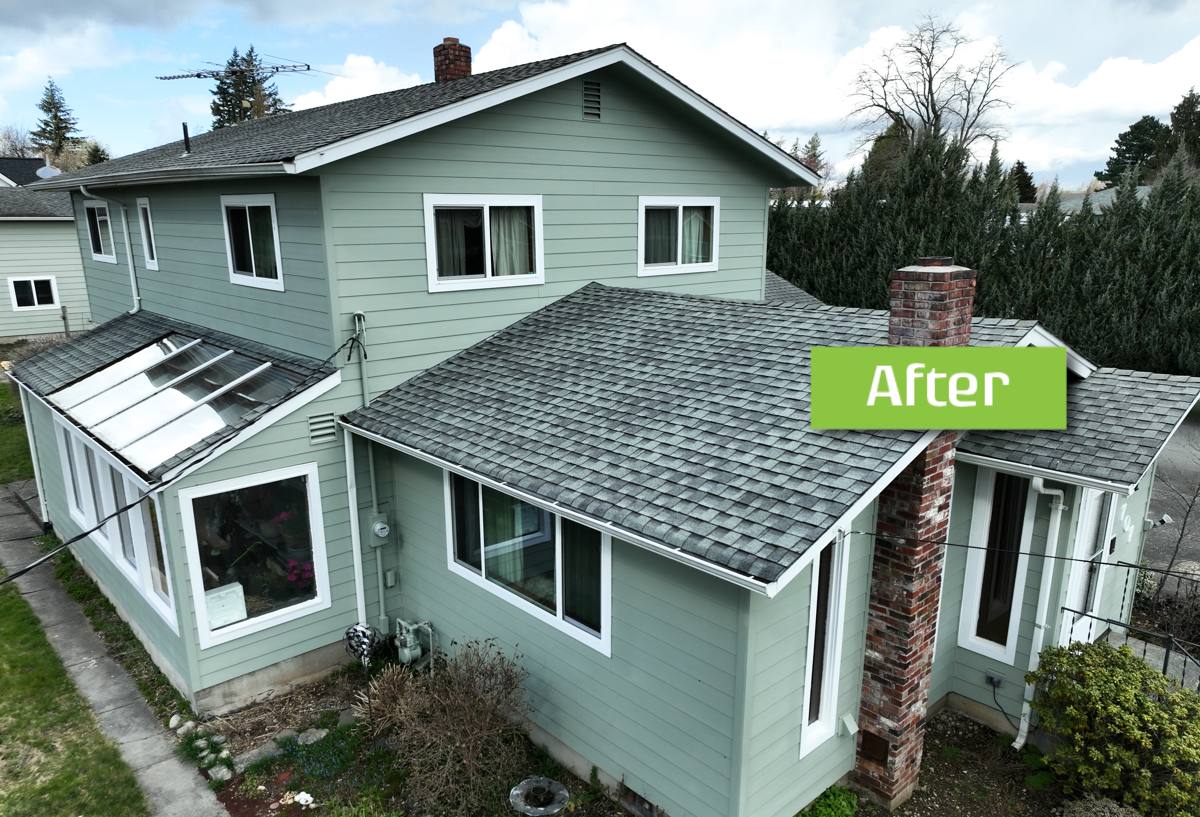
Signs Your South Hill Roof Needs Replacement, Not Another Patch
Repairs make sense for isolated damage. Replacement makes sense when the roof's underlying material and structure are past the point where a patch buys meaningful time. Some signs we look for when we assess a South Hill home:
- Granule loss heavy enough that you're finding grit in gutters and downspouts every season
- Shingles that are curling, cupping, or losing their seal along multiple slopes, not just one problem area
- Moss growth that keeps returning within a year or two of cleaning, especially on north-facing or shaded slopes
- Soft spots, sagging, or visible daylight in the attic where decking has taken on moisture damage
- Repeated leaks in different spots after storms, rather than the same spot failing again
- A roof that's simply reached the end of its rated service life, even if it "looks okay" from the ground
If only one or two of these apply and the roof is otherwise sound, a repair may genuinely be the right call — we'll tell you that instead of pushing a full tear-off you don't need.
What a Correct Replacement Looks Like Here
Tear-Off and Deck Inspection
A proper replacement starts with a full tear-off down to the decking, not an overlay. That's the only way to actually see the condition of the roof deck — soft, delaminated, or water-stained sheathing is common on older South Hill homes where a roof has been leaking slowly for years without an obvious interior sign. Any compromised decking gets replaced before anything new goes down; skipping this step is the single most common shortcut that leads to early failure.
Underlayment and Flashing for Driving Rain
Given how much wind-driven rain this hillside sees, underlayment choice and installation detail matter more here than in calmer parts of the region. We use synthetic or ice-and-water underlayment at eaves, valleys, and any low-slope transitions where wind-blown water is most likely to work its way backward under the shingle laps. Step flashing at walls and chimneys, and properly lapped valley metal, get the same attention — these are the details that separate a roof that handles a real Pacific Northwest storm from one that just handles gentle rain.
Ventilation
A roof deck that can't breathe traps moisture from below, which speeds up decking rot and can encourage moss and algae growth from the underside out. We check intake and exhaust ventilation as part of every replacement and correct it where it's inadequate — this is a step that's easy to skip because it doesn't show up in a curbside photo, but it directly affects how long the new roof lasts.
Material Choice
Not every roofing product performs the same way under a heavy moss season and salt-tinged air. We steer homeowners toward materials and algae-resistant shingle formulations suited to shaded, damp lots, and we're upfront when a product a homeowner is considering carries a higher maintenance burden in this specific climate — that's a professional judgment call, not a knock on any manufacturer.
Comparing Roofing Materials for a South Hill Home
Every material below can work on South Hill. The differences are in maintenance burden, how they handle moss and moisture, and upfront cost. This is a general guide — your roof's pitch, shade, and structure will factor into what we actually recommend.
| Material | Moss & Moisture Behavior | Maintenance | Relative Cost |
|---|---|---|---|
| Architectural (dimensional) asphalt shingle | Good with algae-resistant granules; needs periodic cleaning on shaded slopes | Low to moderate | $ |
| Standard 3-tab asphalt shingle | More prone to moss lifting tabs over time on shaded roofs | Moderate | $ |
| Standing seam metal | Sheds moisture fast, resists moss well; fastener and coating quality matter near salt air | Low | $$$ |
| Cedar shake | Attractive but absorbs and holds moisture; highest moss and rot risk in a shaded, wet climate | High | $$$ |
Actual pricing depends on roof size, pitch, tear-off complexity, and access — we'll walk you through real numbers for your home during a free estimate rather than quoting off a generic table.
Our Replacement Process, Start to Finish
Assessment and Estimate
We start with an on-site inspection of the current roof, attic ventilation, and any trouble spots you've noticed. You get a written estimate that explains what we found and why we're recommending what we're recommending — not just a number.
Permits
Roof replacement in Bellingham and Whatcom County typically requires a building permit, and we handle that process as part of the job so you're not left tracking down paperwork or inspection scheduling yourself.
Installation Day(s)
Tear-off, deck repair as needed, underlayment, flashing, and the new roofing material go on in sequence. On a hillside property, we plan material staging and debris containment around driveway and yard access so the job doesn't turn into a mess on your property.
Final Walkthrough
Before we consider the job done, we walk the property with you, check gutters and downspouts for debris from the tear-off, and confirm everything above and around the roofline is clean and correct.
What to Ask Before You Hire Anyone
South Hill homeowners get plenty of storm-season door-knockers and out-of-town crews chasing work after a windstorm. A few questions separate a real local contractor from someone passing through:
- Are you licensed and insured to work in Washington, and can you provide proof?
- Will you pull the required Bellingham/Whatcom County permit yourself?
- Does your estimate include full tear-off and deck inspection, not just a shingle swap?
- What underlayment and flashing details do you use at valleys and eaves for wind-driven rain?
- What's your plan for ventilation, and will you check it before installing new roofing?
- What warranty covers labor specifically, separate from the manufacturer's material warranty?
- Do you have a local address and references from work in this area, not just a phone number?
Why It Matters That We Already Work This Neighborhood
South Hill's older housing stock, hillside grades, and tree-lined lots come with practical wrinkles that a crew unfamiliar with the neighborhood tends to learn the hard way — on your roof. Narrow or steep driveway access affects how we stage material and equipment. Mature trees near the roofline often mean coordinating trim-back timing with a homeowner or arborist before tear-off. Older homes can have decking or framing quirks from past renovations that a crew expecting a modern, uniform build might not anticipate. None of this is exotic, but it's the kind of thing that goes smoothly when a crew has already done it a dozen times on this same hill, and can turn into delays or surprise costs when they haven't.
After the Install: Keeping a South Hill Roof Healthy
A correctly installed roof still benefits from basic upkeep in this climate, especially under tree cover. Keep gutters and downspouts clear of needles and leaf debris so water isn't backing up at the eaves. Have moss addressed at the first sign of regrowth rather than letting it establish for a season, and keep an eye on flashing around chimneys and walls after major windstorms. A quick seasonal look, or a call to us if anything looks off, goes a lot further than waiting until there's a stain on the ceiling.
If your South Hill roof is showing its age or you just want an honest read on whether repair or replacement makes sense, we're happy to take a look. Use the form below to request a free, no-pressure estimate — there's no obligation, just a straight answer.