 Bellingham Roofing
 Edgemoor's Roofs Take a Different Kind of Beating
Edgemoor sits close to the water, under a heavy canopy of mature conifers and big-leaf maples, which sounds pleasant until you're the one dealing with what that combination does to a roof. Homes here catch wind gusts funneling off Bellingham Bay, salt-laden air that accelerates corrosion on fasteners and flashing, and near-constant shade that keeps roof decks damp long after a storm has passed. Add in Whatcom County's long, wet moss season, and you've got a recipe for roof damage that isn't always obvious from the driveway.
When a storm rolls through, the damage on an Edgemoor roof often shows up differently than it would on a roof out in the open. Tree limbs and windthrow debris are a bigger factor here than wind alone. Moss and organic buildup that's already loosening granules or holding moisture against a roof edge can turn a minor storm event into a real leak. We've built our storm response around what actually happens to roofs in this specific setting, not a generic checklist.
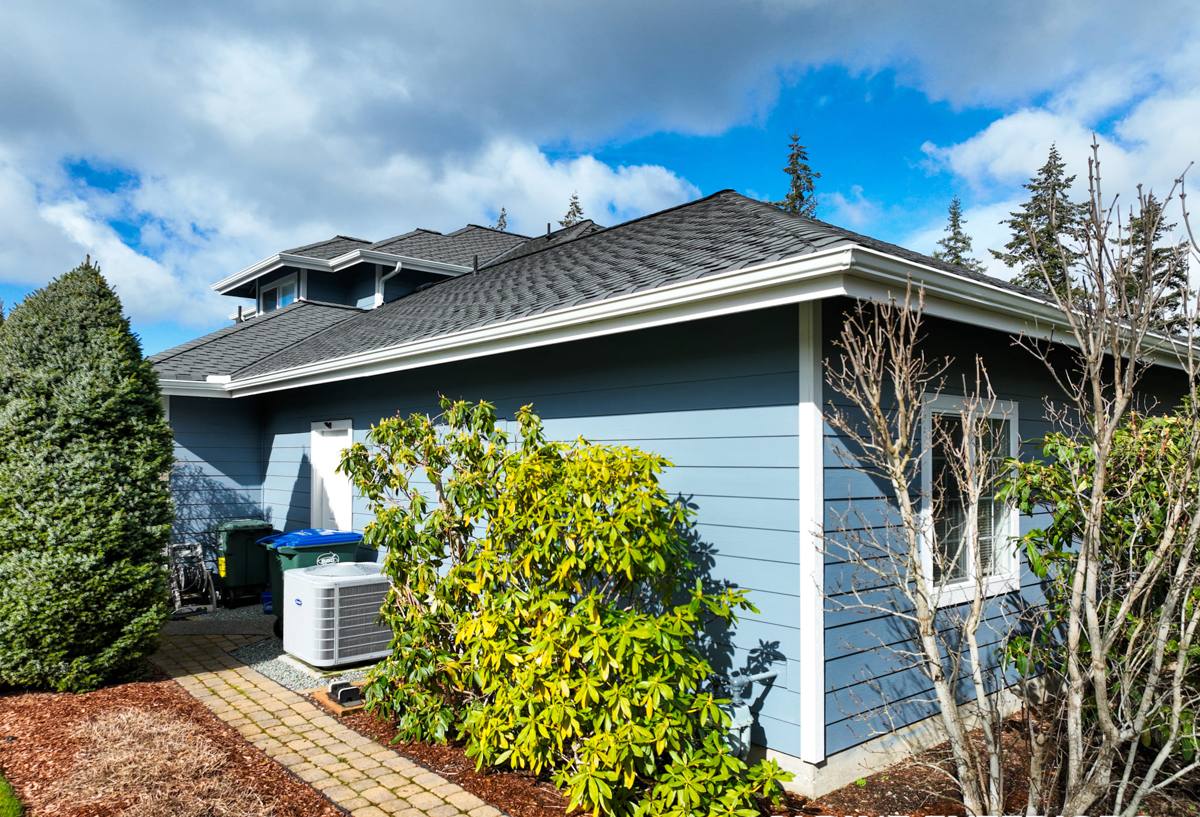
What Storm Damage Actually Looks Like Here
Storm damage isn't always a hole in the roof. In Edgemoor, it's more often one of these:
- Shingles or shakes lifted or creased by wind, especially near ridges, hips, and roof edges where uplift is strongest
- Impact damage from falling limbs or cones, which can bruise or fracture roofing material without fully penetrating it
- Flashing pulled loose or bent around chimneys, skylights, and valleys, letting driving rain track sideways under the roof covering
- Gutter and downspout damage that backs water up under the roof edge instead of carrying it away
- Accelerated wear on sections already compromised by moss and moisture retention from heavy tree shade
That last point matters more here than in most Bellingham neighborhoods. A roof with existing moss growth or soft, moisture-holding debris in the valleys is far more likely to leak after a storm, even a moderate one, because the storm exploits a weakness that was already there.
Why a Fast, Correct Response Matters
The days right after a storm are when small problems turn into big ones. A few displaced shingles or a bent piece of flashing might not leak the first time it rains, but under Bellingham's pattern of repeated soaking rain, water finds the gap eventually. Left through a full wet season, minor storm damage can lead to sheathing rot, insulation damage, and interior repairs that cost far more than the original roof fix would have.
That's the case for getting storm damage assessed promptly, even when nothing is visibly leaking yet. It's also why we prioritize tarping and temporary protection on the same visit when damage is found, rather than leaving a compromised section exposed until a full repair can be scheduled.
Our Process for Storm Damage Repair
- On-site inspection. We walk the roof (not just look from the ground) to check for lifted or missing material, flashing separation, and soft spots, along with a look at gutters, valleys, and any tree contact points.
- Documentation. We photograph and note the damage clearly, which is useful whether you're filing an insurance claim or just want a written record of what was found and why we recommend a given fix.
- Temporary protection if needed. If there's active exposure, we get it covered and secured before we leave, so you're not waiting on paperwork with an open roof.
- Honest repair plan. We tell you what actually needs fixing versus what's cosmetic, and we explain the reasoning so you're not guessing.
- Repair, matched to what's there. Where possible we match existing materials and installation details rather than creating a patchwork that stands out or performs inconsistently with the rest of the roof.
Repair or Replace? An Honest Look at the Factors
Not every storm-damaged roof needs to come off. But sometimes storm damage reveals that a roof was already near the end of its useful life, and a patch just delays a bigger job. Here's how we think through it:
| Factor | Leans Toward Repair | Leans Toward Replacement |
|---|---|---|
| Age of roof | Under roughly two-thirds of its expected service life | Already near or past its expected lifespan |
| Extent of damage | Isolated to one section, slope, or feature | Spread across multiple slopes or recurring in several spots |
| Underlying condition | Deck and structure are sound where exposed | Soft decking, rot, or widespread moss undermining the surface |
| Material availability | Matching material is available or a close match is acceptable | Material is discontinued or a patch would be visibly mismatched |
| History of prior repairs | First significant repair on this roof | Multiple prior patches already in place |
We'll walk you through where your roof lands on that list before recommending anything. If a repair is the right call, that's what we'll propose. If the damage exposes a roof that was already failing, we'll say so and explain why, rather than patching something that's going to need redoing within a year or two.
Materials and Methods That Hold Up in Edgemoor's Conditions
Given the shade, moisture, and salt air common in this part of Bellingham, a few details matter more here than they would on a roof in a drier, more open part of Whatcom County:
Fasteners and Flashing
We use corrosion-resistant fasteners and flashing appropriate to coastal exposure. Salt air speeds up rust on standard hardware, and a roof repair is only as good as the fasteners holding it down. Cutting corners here shows up as loosened material within a few seasons, not decades.
Moisture Management at Repairs
Any time we open up a section of roof for repair, we check the underlayment and decking underneath, not just the surface layer. Shaded, moss-prone roofs often hold moisture at the deck level even when the roofing material above looks fine. Repairing the visible damage without addressing what's underneath is a short-term fix at best.
Moss and Debris Clearing
Where moss or organic debris contributed to the damage, we clear it as part of the repair rather than working around it. Repairing a section and leaving moss actively growing against the new material just sets up the same failure again.
Insurance Claims for Storm Damage
Many storm repairs in this area are covered, in part or in full, under homeowners insurance, depending on your policy and the cause of damage. We're not a public adjuster and we don't promise claim outcomes, but we can provide clear documentation, photos, and a written scope of the damage and repair that you can submit with a claim. If an adjuster wants to walk the roof with us, we're glad to be there to point out what we found.
Why Local, Edgemoor-Familiar Crews Matter
A crew that regularly works this neighborhood already understands its quirks: the wind patterns coming off the bay, how much moss buildup is normal versus a red flag, and how tree cover affects drying time and material choice. That familiarity shortens the inspection, sharpens the diagnosis, and means fewer surprises once work starts. It also means faster response when a storm hits and several neighbors need eyes on their roofs at once, which does happen after a significant windstorm moves through this part of Bellingham.
Working locally in Whatcom County also means we're not guessing at permitting or code requirements that apply here, and we're accountable in a community where our work is visible to the neighbors we'll be back to see.
What to Do (and Avoid) After a Storm
- Do walk the yard and check for debris, granules in gutters, or visible material on the ground before assuming the roof is fine
- Do note interior signs like new water stains, damp insulation smells, or drips, even minor ones
- Do call for an inspection promptly rather than waiting to see if a leak develops
- Avoid climbing onto the roof yourself, especially on wet, moss-covered, or steep sections
- Avoid patching visible damage yourself with sealant or tarps as a permanent fix; temporary cover is fine, but it's not a repair
- Avoid waiting through a full wet season on damage you already know about
Getting an Estimate
If a recent storm has left you with lifted shingles, a downed limb near the roofline, or just a nagging feeling something's not right up there, we're happy to take a look. We offer a free, no-pressure estimate: a straightforward inspection, a clear explanation of what we find, and an honest recommendation on repair versus replacement, no matter which one that turns out to be. Use the form below to get a visit scheduled.