 Bellingham Roofing
 Why York Homes Need Siding Built for This Climate
York is one of Bellingham's older, established neighborhoods, and a lot of the housing stock reflects that — homes that have been through decades of Pacific Northwest weather, sometimes with siding that's been patched, repainted, or replaced piecemeal over the years. Whatcom County sits right on Bellingham Bay, and that proximity to salt water shapes what actually holds up on a house here versus what fails early.
Salt Air and Marine Exposure
Homes closer to the bay deal with a fine mist of salt-laden air that settles on exterior surfaces year-round. Salt air accelerates corrosion on fasteners, trim, and any siding material that isn't formulated to resist it. It also breaks down paint film faster than it would inland, which is part of why so many older wood and composite sidings in this area show chalking, peeling, or soft spots well before their expected lifespan is up.
Driving Rain and Wind-Driven Moisture
Bellingham doesn't get the heaviest rainfall totals in the state, but storms here often come with real wind behind them, pushing rain sideways into wall assemblies instead of letting it run straight down. That matters more than total rainfall does. Siding that isn't installed with proper flashing, laps, and gaps will let wind-driven rain track behind the panels, where it can sit against sheathing and framing for months before anyone notices a problem.
Moss, Shade, and the Long Wet Season
York has plenty of mature tree cover, which is part of the neighborhood's character but also means shaded, slow-drying wall sections on many homes. Combined with a wet season that can stretch from fall through spring, that shade creates ideal conditions for moss and algae growth on siding, trim, and fascia. Moss holds moisture against the surface longer than open air would, and on the wrong material that constant dampness is what eventually causes rot, delamination, or paint failure.
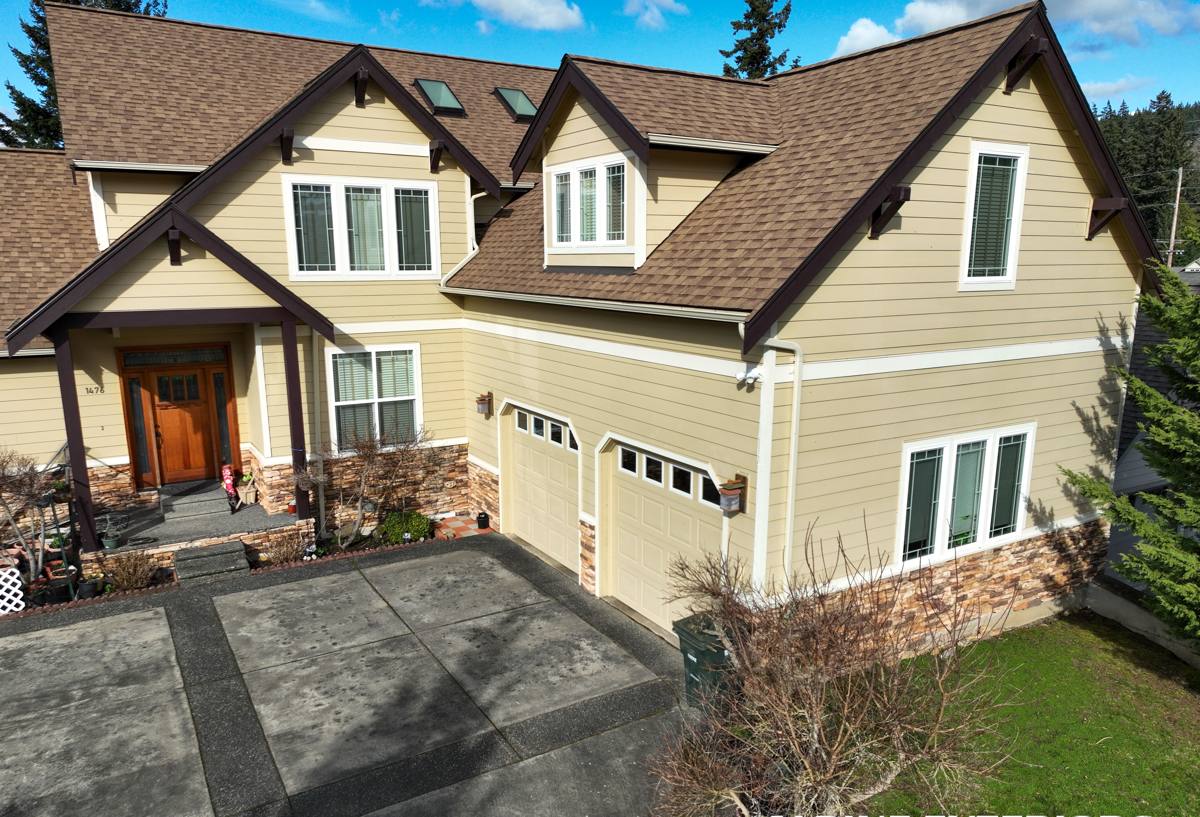
What a Correct Fiber Cement Installation Actually Involves
Fiber cement siding has a strong track record in wet climates, but the material only performs as well as the installation behind it. A lot of the failures we get called out to inspect aren't product failures — they're installation shortcuts that let water get where it shouldn't.
Water Management Behind the Siding
Correct installation starts with a drainable water-resistive barrier, properly lapped house wrap, and flashing at every window, door, and horizontal trim transition. Butt joints get flashed or sealed per manufacturer spec, not just caulked and hoped for. This is the layer nobody sees once the job is done, and it's the layer that determines whether the wall assembly stays dry for the next 30-plus years.
Fastening and Gaps
Fiber cement needs to be fastened at the correct spacing and depth — over-driven nails crack the material's edge and create entry points for moisture, while under-driven fasteners leave panels loose and prone to rattling or working themselves out over time. Manufacturer-specified gaps at butt joints, corners, and around penetrations allow the material to expand and contract with temperature and moisture changes without buckling.
Finish and Caulking
Factory-finished ColorPlus panels arrive with the color and sealer baked on, which removes a lot of the field-painting variability that causes early fading or peeling on site-painted siding. Cut edges still need to be primed and sealed correctly, and caulking should only go where the manufacturer specifies it — over-caulking joints that are supposed to stay open for drainage traps water instead of letting it escape.
Why This Crew Installs Only James Hardie
We don't install LP SmartSide, vinyl, primed spruce or cedar lap siding, or other fiber cement brands like Cemplank or Allura. That's a standard we've set for our own crew, not a claim that every one of those products is unusable everywhere. Each of them has situations where they perform reasonably well.
What we've settled on is James Hardie fiber cement because it's non-combustible, holds its factory ColorPlus finish for years without the repainting cycle wood siding demands, and is engineered in different HZ formulations matched to specific climate zones — including the wet, moderate-freeze conditions typical of the Pacific Northwest. It also carries a strong transferable warranty, which matters to homeowners who may sell before they'd otherwise get a chance to see a siding system through its full lifespan. When we stand behind an installation, we want the material behind it to have that same track record.
How Fiber Cement Compares for a York Home
Every siding material involves trade-offs. Here's a general comparison based on how these materials typically behave in a wet, marine-influenced climate like Bellingham's — actual performance always depends on installation quality and maintenance.
| Material | Moisture Resistance | Maintenance Burden | Typical Lifespan |
|---|---|---|---|
| James Hardie Fiber Cement | High — non-combustible, engineered for climate zone | Low — factory finish, occasional wash | 30+ years |
| LP SmartSide (engineered wood) | Moderate — treated, but wood-based core | Moderate — edge sealing, repainting over time | 20-30 years |
| Vinyl | Moderate — doesn't rot, but can warp and trap moisture behind it | Low, but repairs mean full-panel replacement | 20-30 years |
| Cedar / Primed Spruce | Lower — natural wood, prone to moisture absorption | High — regular painting/staining and moss treatment | 15-25 years with upkeep |
Our Process for a York or Bellingham Siding Project
Estimate and Inspection
We start by walking the exterior with you, looking at the current siding's condition, checking for hidden moisture damage at trim and penetrations, and talking through what's actually needed versus what's optional. On older York homes especially, we'll flag any sheathing or framing concerns we can see before tear-off, so there aren't surprise costs mid-project.
Prep and Tear-Off
Old siding comes off, and we inspect the wall assembly underneath before anything new goes up. Any soft or damaged sheathing gets replaced, not covered over — that's one of the most common corners cut in siding work, and it's the one that causes the biggest problems five or ten years down the road.
Water Barrier and Install
House wrap, flashing, and the drainage plane go in first, then the Hardie panels or lap siding, fastened and gapped to spec. Trim, corners, and butt joints are detailed to shed water rather than trap it.
Final Walkthrough
We walk the finished job with you, point out what was done and why, and cover basic care so the siding holds up the way it's designed to.
What Affects the Cost of a Siding Project in This Area
Every home is different, so we don't publish flat pricing — but a few factors consistently drive cost up or down on projects in the York and greater Bellingham area:
| Factor | Why It Matters |
|---|---|
| Home size and number of stories | More surface area and more staging/access work for multi-story walls |
| Tear-off vs. overlay | Full removal takes longer but lets us inspect and repair the wall assembly underneath |
| Existing moisture or rot damage | Sheathing and framing repairs add material and labor beyond the siding itself |
| Trim and architectural detail | Homes with more corners, dormers, or trim work take more time to detail correctly |
| Siding profile and finish | Lap, panel, and shingle-style Hardie products vary in material and install time |
Questions to Ask Before You Hire Anyone for This Job
Whether you go with us or another crew, these are worth asking before you sign anything for a siding project in this climate:
- Will you inspect and repair the wall sheathing before installing new siding, not just cover over it?
- What's your fastening and gapping spec, and does it match the manufacturer's installation guidelines?
- How do you flash windows, doors, and horizontal trim transitions?
- Is your crew factory-trained or certified on the specific siding product being installed?
- What does the warranty actually cover — material, labor, or both — and is it transferable if you sell the home?
- Can you walk me through how water is managed behind the siding, not just what it looks like from the street?
Keeping Your Siding Looking Right Through Bellingham's Wet Season
Fiber cement with a factory ColorPlus finish needs very little upkeep, but "very little" isn't "none," especially with York's tree cover and the region's long stretch of damp months. A yearly rinse-down with a garden hose or low-pressure wash keeps moss and algae from getting a foothold, particularly on shaded north-facing walls. Keep gutters clear so overflow doesn't run down the siding face, and trim back vegetation that's holding moisture against the wall. None of this is heavy maintenance — it's the kind of upkeep that protects the investment you already made in siding that shouldn't need repainting for many years.
Get a Straight Answer on What Your Home Needs
If you're in York or elsewhere around Bellingham and dealing with siding that's showing its age — moss buildup, peeling paint, soft spots near trim — we're happy to take a look and give you a straightforward assessment of what's actually going on and what it would take to fix it right. No pressure, no inflated scope. Reach out for a free estimate and we'll walk the exterior with you and answer whatever questions you've got.