 Bellingham Roofing
 Roofing Built for Columbia's Salt Air, Rain, and Moss
Homes in the Columbia neighborhood sit close enough to Bellingham Bay that salt-laden air is a real factor in how long a roof lasts, not just a talking point. Add Whatcom County's long wet season, frequent wind-driven rain off the water, and the shaded, moisture-heavy lots that let moss take hold on north-facing slopes, and you have a roofing environment that is genuinely tougher on shingles than most inland climates. A roof that would hold up fine in a dry region can wear out early here if it wasn't installed with this specific mix of conditions in mind.
That's the lens we use for every asphalt shingle roof we install in Columbia. It's not about upselling extras — it's about choosing the right underlayment, flashing details, and ventilation setup so the roof actually performs against salt, rain, and moss instead of just looking good on installation day.
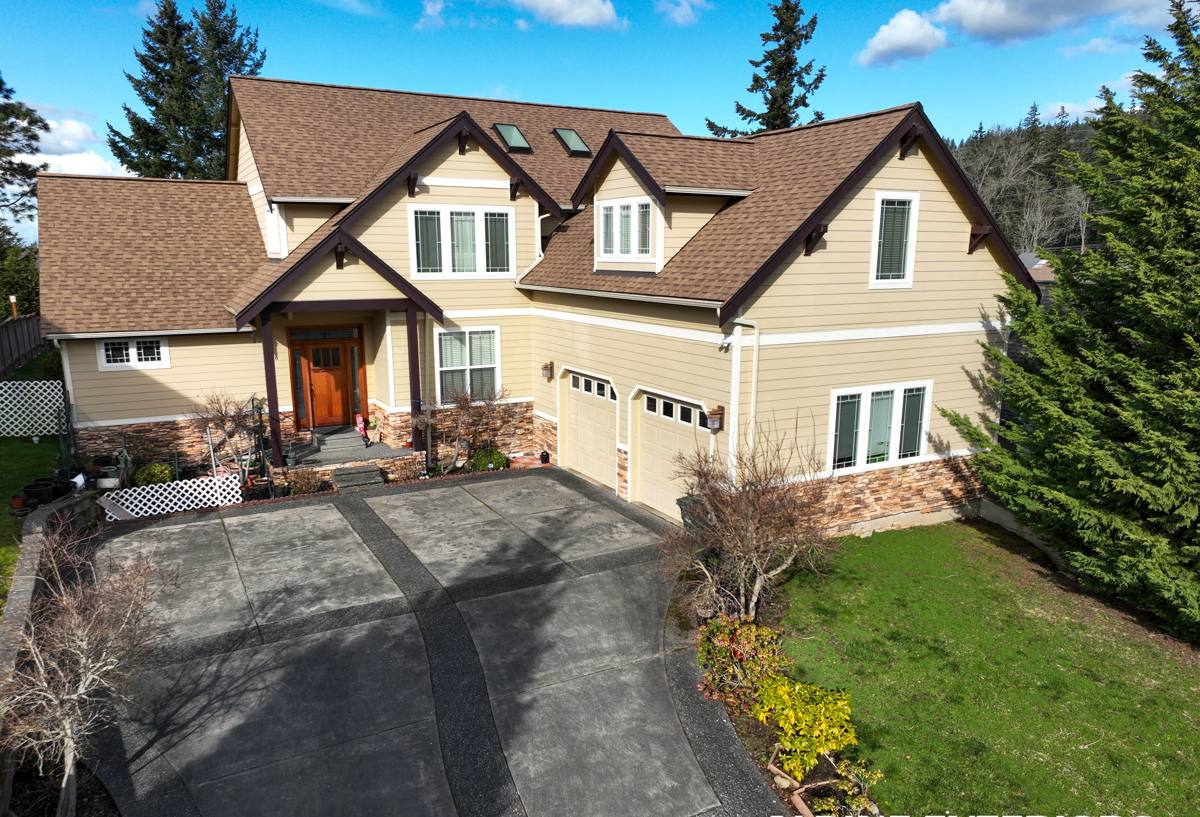
What a Correctly Installed Asphalt Shingle Roof Includes
Asphalt shingles are a system, not just a single product. A roof that fails early almost always failed because a step underneath the shingles was skipped or done poorly, not because the shingles themselves were defective. A correct installation includes:
- A sound, properly fastened roof deck — any soft or delaminated sheathing gets replaced, not shingled over
- Ice-and-water shield or a high-quality synthetic underlayment at eaves, valleys, and around penetrations, where wind-driven rain is most likely to find a way in
- Properly lapped synthetic felt or underlayment across the full field of the roof
- New metal flashing at valleys, chimneys, walls, and skylights — old flashing gets reused far too often and is a leading cause of leaks
- Correctly sized and positioned starter strip and drip edge along eaves and rakes
- Balanced intake and exhaust ventilation so the attic can actually breathe
- Shingles fastened per the manufacturer's nailing pattern, not a faster shortcut pattern
Skip any one of these and the shingles on top may look fine for a while, but the roof as a system is compromised.
Roof Problems We Commonly See in Columbia
Moss and Algae Growth
Shaded roof sections and long stretches of damp weather give moss a foothold, especially on north- and west-facing slopes. Left alone, moss holds moisture against the shingle surface, lifts shingle edges, and accelerates granule loss.
Granule Loss from Constant Wet-Dry Cycling
Shingles wear through repeated wetting and drying, not just sun exposure. In a climate that stays damp for long stretches and then dries out, granule loss can show up sooner than it would in a drier region, thinning the shingle's protective layer.
Flashing and Fastener Corrosion
Salt air accelerates corrosion on exposed metal — flashing, fasteners, and vent boots included. Standard-grade materials that would last decades elsewhere can start showing rust or degrading seals noticeably sooner this close to the water.
Wind-Driven Rain Intrusion
Storms coming off the bay don't just fall straight down — rain gets pushed sideways under shingle edges and around poorly sealed penetrations. Roofs without adequate underlayment at vulnerable points are the ones that develop slow, hard-to-trace leaks.
Our Asphalt Shingle Roofing Process
We run the same disciplined process on every Columbia reroof, adjusted for the specific slopes, shading, and exposure of the house:
- Inspection and estimate — we walk the roof (not just look from the ground), check the attic for ventilation and moisture issues, and give you a written scope before any work starts
- Tear-off — full removal of old roofing down to the deck, with debris hauled off site as it comes down, not left to pile up in the yard
- Deck inspection and repair — any soft, rotted, or delaminated sheathing is identified and replaced before anything goes back on
- Underlayment installation — ice-and-water shield at eaves, valleys, and penetrations, synthetic underlayment across the field
- Flashing — new flashing at all valleys, walls, chimneys, and skylights
- Shingle installation — starter course, field shingles, hip and ridge caps, all fastened to manufacturer spec
- Ventilation check — intake and exhaust balanced so the attic isn't trapping moisture against the new deck
- Cleanup and final walkthrough — magnetic sweep for stray fasteners, debris removal, and a walkthrough so you know exactly what was done
Choosing Shingles That Hold Up in This Climate
Not every asphalt shingle is a good fit for a house exposed to salt air and long moss seasons. We steer Columbia homeowners toward products designed for exactly these conditions, and we're upfront about the trade-offs of each tier.
| Shingle Type | Best For | Trade-Offs to Know |
|---|---|---|
| Standard 3-tab | Budget-conscious reroofs, simple roof lines | Shorter lifespan, less wind resistance, fewer style options |
| Architectural (dimensional) | Most Columbia homes — better durability and appearance | Higher upfront cost than 3-tab, but generally the better long-term value here |
| Algae-resistant (copper/zinc granules) | Shaded, moisture-prone slopes prone to moss and staining | Modest cost premium; not a substitute for gutter and moss maintenance |
| Premium/designer | Homeowners prioritizing appearance and top-tier warranties | Highest cost; benefits are mostly aesthetic and warranty length, not performance |
For most Columbia homes, we recommend architectural shingles with algae-resistant granules on shaded slopes. The extra cost is modest compared to the labor cost of tearing off and redoing a roof early because moss or granule loss got ahead of it.
Ventilation and Moisture Control Matter as Much as the Shingles
A shingle roof can be installed perfectly and still underperform if the attic underneath it is trapping heat and moisture. In a climate as damp as Bellingham's, poor ventilation contributes to condensation on the underside of the deck, which shortens the life of the sheathing and can encourage mold and mildew — separate from, but related to, the moss problem on the outside of the roof. We check intake ventilation (soffit vents) and exhaust ventilation (ridge or roof vents) on every job and correct imbalances as part of the reroof, not as an upsell afterward.
Signs Your Attic Ventilation Needs Attention
- Visible moisture, staining, or mold on the underside of the roof deck or rafters
- Ice or frost buildup on nail tips inside the attic during cold snaps
- Uneven moss growth that tracks with poorly ventilated sections
- Noticeably higher heating or cooling costs than similar homes nearby
Maintenance Checklist for Columbia Homeowners
Even a well-installed roof needs occasional attention in this climate. This is the short list we give homeowners after every install:
- Clean gutters and downspouts at least twice a year — clogged gutters back water up under the shingle edge
- Have moss treated or gently removed before it thickens; don't pressure-wash shingles, which strips granules
- Trim back overhanging branches to reduce shade and debris buildup on north-facing slopes
- Walk the yard after major windstorms and look for shingle debris or lifted edges
- Schedule a roof check every few years, or after any severe weather event, even if there's no visible leak
What Affects the Cost of an Asphalt Shingle Roof
Every roof is different, so we don't quote sight-unseen prices — but these are the main factors that move the number up or down on a typical Columbia reroof:
| Factor | Why It Matters |
|---|---|
| Roof size and pitch | More surface area and steeper pitches mean more material and more labor time |
| Number of existing layers | Tearing off multiple old layers takes longer and adds disposal cost versus a single-layer tear-off |
| Deck condition | Rotted or soft sheathing found during tear-off needs replacement before shingles go on |
| Roof complexity | Valleys, dormers, skylights, and chimneys all add flashing work and labor time |
| Shingle tier chosen | 3-tab, architectural, and algae-resistant or premium products carry different material costs |
| Ventilation upgrades | Adding or correcting intake and exhaust venting is worth doing during a reroof rather than later |
We walk every roof in person before giving a number, so you're pricing your actual house — not a generic average.
Why Hiring a Crew That Already Works in Columbia Matters
A roofing crew that regularly works in and around Bellingham knows what a house in a marine, high-rainfall environment actually needs — which flashing details matter most, which slopes tend to hold moss, and how to sequence a tear-off around Whatcom County's unpredictable weather windows so your home isn't left exposed. That local familiarity shows up in fewer callbacks and a roof that's built for the conditions it will actually face, not a generic installation pulled from a drier climate's playbook.
We're licensed and insured to work in Washington, and we stand behind our work with clear written warranties on both labor and materials, so you know exactly what's covered if something comes up down the road.
If your Columbia home is due for a new asphalt shingle roof, or you want an honest opinion on whether repair or replacement makes more sense, we're happy to take a look. Fill out the form below for a free, no-pressure estimate.