 Bellingham Roofing
 Decking on the Birch Bay Waterfront Is a Different Job
Birch Bay sits right on the water, and that changes what a deck has to survive. Homes a few miles inland in Bellingham deal with plenty of rain, but they aren't getting salt spray carried in on the wind or the same relentless exposure to wind-driven moisture that waterfront and near-waterfront Birch Bay properties see year-round. A deck built to a generic spec, without accounting for that salt air and the extra moisture load, tends to show problems years before it should.
We treat Birch Bay decking projects as a distinct job, not a copy-paste of what works elsewhere in Whatcom County. The material choice, the fasteners, the substructure, and the maintenance plan all get adjusted for a property this close to the water.
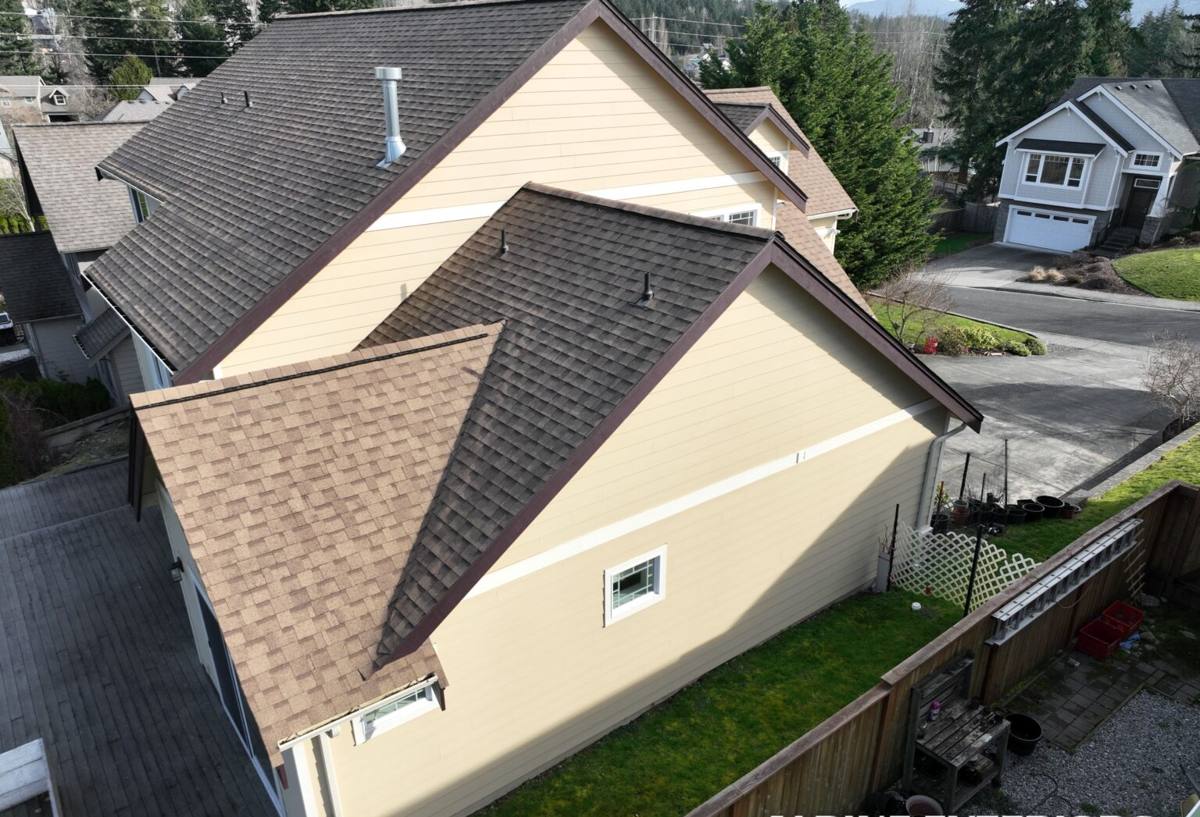
What Salt Air, Driving Rain, and Moss Season Actually Do
Three things drive most of the deck failures we see in this area, and they compound each other:
Salt Air
Airborne salt is corrosive. It accelerates rust on fasteners, hardware, and any exposed metal connectors, and it can degrade coatings and finishes faster than the manufacturer's stated lifespan assumes. A deck built with standard-grade hardware in a salt-air environment ages differently than the same deck built five miles inland.
Driving Rain
Wind-driven rain doesn't just fall on a deck, it gets pushed sideways into ledger connections, under rail posts, and into any gap where flashing was skipped or done poorly. Water that gets trapped behind boards or inside a ledger connection is what causes rot and structural damage, not the rain itself.
Moss Season
Whatcom County's long wet season gives moss and algae months to establish themselves on any deck surface that stays damp and shaded. Beyond looking bad, moss holds moisture against the deck surface and makes boards slick and dangerous underfoot, especially near stairs.
None of this is unique to any one material, but it's the reason the details of a decking job in Birch Bay matter more than the brand name on the board.
Why Composite Decking Fits This Environment
Composite decking (a blend of wood fiber and plastic, typically capped with a protective outer shell) doesn't rot, doesn't need annual staining, and resists the moisture absorption that causes wood to cup, crack, and splinter. For a property dealing with salt air and a long wet season, that's a real advantage over solid wood, which needs consistent upkeep to hold up in this climate.
That said, composite isn't maintenance-free, and we don't sell it that way. Capped composite boards can still grow surface moss or algae in shaded, damp spots if they're never cleaned, and lower-grade composite products can fade or show wear faster than a homeowner expects. The difference between a composite deck that looks good in year ten and one that looks tired in year three usually comes down to product grade and installation quality, not the category of material.
Composite vs. Other Decking Materials for a Birch Bay Property
| Material | Salt Air / Moisture Resistance | Moss & Algae Behavior | Ongoing Maintenance |
|---|---|---|---|
| Pressure-treated wood | Absorbs moisture, prone to swelling and rot over time | Rough grain traps moisture, moss establishes easily | Annual cleaning, sealing/staining |
| Cedar or other natural wood | Better natural resistance but still absorbs moisture | Similar risk to treated wood once finish wears | Regular sealing to maintain appearance and protection |
| Capped composite | Does not absorb moisture, resists salt-driven corrosion of the board itself | Smooth cap sheds surface moisture better, easier to clean off | Periodic washing, no staining or sealing |
| Uncapped composite (older generation) | Can absorb some moisture at cut edges | More prone to surface mold than capped boards | More frequent cleaning than capped composite |
We steer most Birch Bay homeowners toward capped composite specifically because of that moisture and moss behavior. It's not that other materials can't work here, it's that they demand a level of upkeep that most owners don't want to keep up with in a marine climate.
What a Correctly Installed Composite Deck Involves
The board itself is only part of the job. Most of the failures we get called out to inspect trace back to substructure or connection details that were rushed, not the decking material.
Ledger and Framing Connections
Where the deck attaches to the house is the single most important connection on the structure, and it's also the most exposed to wind-driven rain in a spot like Birch Bay. Proper flashing at the ledger board, correct fasteners rated for the environment, and a gap that lets water drain away from the house rather than into it are non-negotiable.
Fastener and Hardware Grade
Given the salt air here, we don't treat fastener choice as a place to save money. Standard hardware corrodes faster near the water, and corroded fasteners are a slow, hidden way for a deck to lose structural integrity long before the boards show visible wear.
Ventilation Underneath
Composite decking still needs airflow underneath the boards. A deck built low to the ground or against solid skirting with no ventilation traps moisture underneath, which shows up as mold, odor, and premature wear on the underside of the boards, even though composite doesn't rot the way wood does.
Board Spacing and Fastening Pattern
Composite boards expand and contract with temperature more than people expect. Gaps that are too tight or a fastening pattern that doesn't account for that movement leads to buckling or popped fasteners within a few seasons, particularly on a deck that gets direct sun part of the day and driving rain the rest of the year.
Our Process for a Birch Bay Composite Deck
- On-site assessment: we look at sun and wind exposure, existing structure condition if this is a replacement, and how close the property is to the water, since that changes hardware and drainage decisions.
- Material selection: we walk through board grade, color, and cap type options based on your budget and how much upkeep you want to do long-term.
- Structural and drainage plan: ledger flashing, joist spacing, and under-deck ventilation get planned before a single board is ordered.
- Installation: correct fastener grade for the environment, proper board spacing for expansion, and attention to every transition point (stairs, rail posts, house connection) where water likes to find a way in.
- Final walkthrough: we go over the maintenance basics with you so the deck ages the way it's supposed to.
Maintenance That Actually Matters in This Climate
Composite decking cuts down on maintenance, it doesn't eliminate it. In a Birch Bay environment, a short seasonal routine keeps a deck looking and performing the way it should for the long run.
- Rinse or sweep the deck surface regularly through moss season to keep organic buildup from taking hold
- Wash off salt residue after storms, especially on boards closest to open water exposure
- Keep gutters and downspouts clear so runoff isn't dumping extra water directly onto or under the deck
- Check rail post connections and stair fasteners once a year for any early sign of corrosion
- Trim back vegetation that keeps sections of the deck shaded and damp
- Address any standing water or slow-draining spots on the deck surface before moss gets a foothold
Common Problems We Find on Older Birch Bay Decks
When we're called out to inspect or replace an aging deck near Birch Bay, a handful of issues show up repeatedly: corroded fasteners that were never rated for a marine environment, ledger connections without proper flashing that let water into the house framing, and skirting installed with no ventilation gaps underneath. In almost every case, the damage traces back to a shortcut taken during the original install, not a failure of the decking material itself. That's the pattern that shapes how we build decks here now.
Why Local Experience in Birch Bay Matters
A crew that mostly works inland jobs in Bellingham or elsewhere in Whatcom County can build a solid deck, but they may not default to marine-grade hardware, extra flashing attention, or a maintenance conversation built around salt air and a long moss season unless they're used to seeing what goes wrong here. Working this stretch of coastline regularly means we're not guessing at what a deck needs to hold up, we've seen what fails and why, and we build accordingly from the first estimate.
Whatcom County's marine climate isn't hostile to composite decking, it just requires getting the details right. That's the whole difference between a deck that needs replacing in eight years and one that's still solid in twenty-five.
If you're planning a new composite deck or replacing one that's showing its age, we're happy to walk the property with you and give you a straight assessment, no pressure and no obligation. Use the form below to request a free estimate.