 Bellingham Roofing
 New Roof Installation for Happy Valley Homes
Happy Valley sits close enough to the water and the tree cover that its homes take a specific kind of beating year-round. Salt-laden air moving in off Bellingham Bay, long stretches of driving rain through fall and winter, and a moss season that never really ends all work against a roof at the same time. A new roof installation here isn't just a matter of picking shingles and nailing them down — it's about building an assembly that's matched to this particular corner of Whatcom County. That's the job we specialize in for Happy Valley homeowners: not a generic reroof, but one built for what this neighborhood's climate actually does to a house.
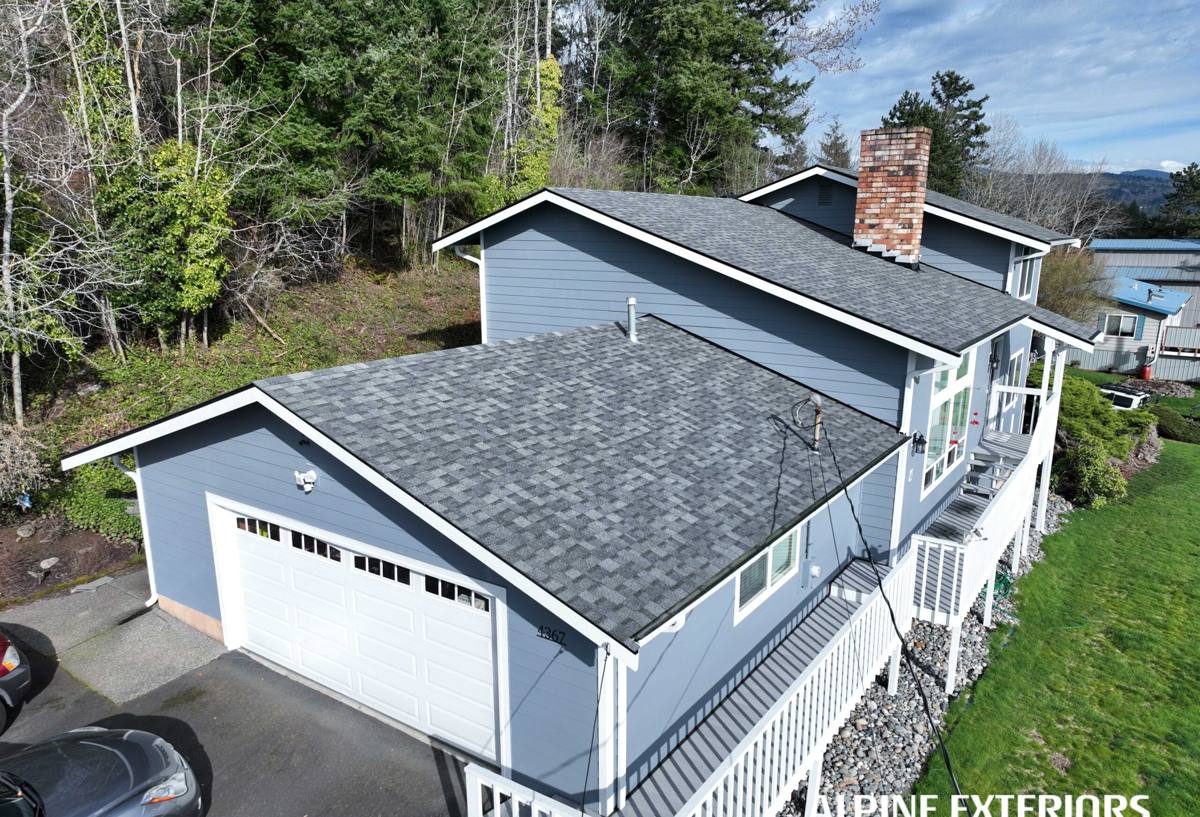
What Happy Valley's Climate Does to a Roof
Every roofing market has its own stress factors. In Happy Valley, three show up again and again on the roofs we inspect and replace.
Salt Air and Corrosion
Proximity to the bay means airborne salt settles on everything outdoors, including your roof's metal components. Flashing, fasteners, vent caps, and gutter hardware corrode faster here than they would twenty or thirty miles inland. Standard-grade fasteners and thin galvanized flashing that might hold up fine in a drier, inland town can start rusting and staining within a few years in this environment.
Driving Rain
Bellingham doesn't just get rain — it gets rain pushed sideways by wind off the water, which finds every weak seam, undersized overlap, and gap in flashing that a straight-down rain would never reach. Roofs here need underlayment and flashing details built for wind-driven water, not just vertical drainage.
Moss and Constant Moisture
Shade from mature trees, high humidity, and long damp stretches make Happy Valley prime moss territory. Moss holds moisture against the roof surface, works its way under shingle edges, and lifts tabs over time — accelerating wear well beyond what the shingles' rated lifespan assumes. A roof that isn't detailed and ventilated with moss in mind will show problems years before it should.
Signs a Happy Valley Home Needs a New Roof, Not Another Repair
Not every roofing problem calls for full replacement, but certain signs mean patching is just delaying the inevitable and spending money you won't get back:
- Granule loss heavy enough that you're finding grit in gutters and downspouts every time it rains
- Shingles that are cupping, curling, or cracking across multiple sections of the roof, not just one isolated area
- Persistent moss growth that returns within a season or two of cleaning, no matter how it's treated
- Soft spots in the decking found during inspection, or daylight visible through the roof deck from the attic
- A roof already at or past 20-25 years old, especially if it's never had ventilation or flashing upgrades
- Recurring leaks in the same area even after repeated repairs
If your roof is showing two or more of these at once, you're usually better off putting that repair budget toward a properly installed new roof rather than another round of patching.
What a Correct New Roof Installation Actually Involves
A quality reroof isn't just stripping old shingles and laying new ones. In a climate like this one, every layer of the system matters.
Tear-Off and Deck Inspection
We remove the existing roofing down to the deck rather than layering over it. This lets us actually see the plywood or OSB underneath, find any soft or delaminated sections caused by long-term moisture intrusion, and replace only what's damaged — not guess at what's hidden under old shingles.
Ice and Water Barrier at Vulnerable Points
Eaves, valleys, and areas around penetrations get self-adhering waterproof membrane before anything else goes down. Given how much wind-driven rain this area sees, these are the spots where water backs up or gets pushed uphill under standard underlayment.
Synthetic Underlayment Across the Field
The rest of the deck gets a synthetic underlayment rated for extended UV and moisture exposure — a meaningful upgrade over old-style felt paper, which sags and tears when it takes on water repeatedly during a long install or a wet season.
Corrosion-Resistant Flashing and Fasteners
Given the salt air in this area, we don't treat flashing and fastener choice as an afterthought. Higher-grade metals and coated fasteners cost more upfront than the minimum-spec hardware, but they're the difference between flashing that lasts the life of the roof and flashing that's visibly rusting and staining within five years.
Ventilation Built for Moss and Moisture Control
Proper intake and exhaust ventilation keeps the underside of the deck dry and reduces the humid, stagnant conditions moss thrives in. A roof that "breathes" correctly also lasts longer structurally, since trapped moisture is what rots decking from the inside out.
Final Detailing
Valleys, pipe boots, chimney flashing, and drip edge get finished last, since these are the highest-risk leak points on any roof and the ones most often rushed on a lower-quality job.
Material Options for Happy Valley Roofs
There's no single "correct" material for every home — it depends on budget, roof pitch, architectural style, and how long you plan to own the house. Here's how the common options stack up against this specific climate:
| Material | Performance in Salt Air / Rain / Moss | Typical Lifespan Here |
|---|---|---|
| Architectural asphalt shingle | Good performance with algae-resistant granules and proper ventilation; most common choice locally | 25-30 years |
| Standing seam metal | Sheds moss and moisture well due to smooth surface; needs marine-grade coatings and fasteners near the bay | 40-50+ years |
| Synthetic/composite shingle | Resists moisture absorption and moss better than standard asphalt; higher material cost | 30-50 years |
| Basic 3-tab asphalt shingle | Lower cost but thinner profile is more prone to wind lift and faster wear in driving rain | 15-20 years |
We'll walk through these options honestly during your estimate, including what each one actually costs to install and maintain over time in this specific location, not just the sticker price.
Why a Crew That Already Works in Happy Valley Makes a Difference
Roofing crews that mostly work inland or in drier parts of Whatcom County don't always default to the flashing grade, fastener spec, or ventilation approach that Happy Valley homes need. A crew that's already worked this neighborhood knows which roof lines tend to trap moss, which orientations take the worst of the wind-driven rain, and where the salt exposure is heaviest. That local pattern recognition shows up in fewer callbacks and a roof that's actually built for the conditions it has to survive, not a one-size-fits-all installation.
Our Process, Start to Finish
- Inspection and estimate — We walk the roof, check the deck condition where accessible, and talk through material options and cost ranges honestly, with no pressure to decide on the spot.
- Written proposal — You get a clear scope of work: materials, warranty terms, timeline, and total cost, in writing.
- Scheduling — We work around Bellingham's weather windows, since a proper tear-off and dry-in shouldn't be rushed against an incoming storm.
- Tear-off and deck repair — Old roofing comes off, the deck gets inspected, and any damaged sections are replaced before anything new goes down.
- Installation — Underlayment, flashing, ventilation, and roofing material go in following manufacturer specs and the details this climate demands.
- Final walkthrough — We review the completed roof with you, cover warranty paperwork, and answer any maintenance questions.
Cost Factors to Expect
Every roof is priced individually, but a few factors consistently move the number for Happy Valley homes:
- Roof size and number of facets, valleys, and penetrations
- Pitch and accessibility — steep or hard-to-access roofs take longer and require more safety setup
- Deck condition — hidden rot found during tear-off adds material and labor
- Material choice — architectural shingle, metal, and synthetic options each carry a different cost per square
- Ventilation and flashing upgrades needed to meet this climate's demands
We'd rather walk your roof and give you real numbers than throw out a broad estimate that doesn't hold up once we're actually up there.
Maintaining a New Roof in This Climate
A well-installed roof still benefits from basic upkeep in a place like this. Keeping gutters clear of debris that traps moisture, having moss treated before it establishes rather than after it's spread, and getting an inspection after major windstorms all extend the life of the investment. None of this is complicated, but skipping it is exactly how a well-built roof ends up wearing faster than it should.
If your Happy Valley home needs a new roof, we're happy to come take a look and give you a straightforward, no-pressure estimate. Use the form below to get started.