 Bellingham Roofing
 New Roof Installation in Birch Bay
Birch Bay sits directly on the water, which means homes here take a harder hit from the weather than roofs just a few miles inland. A new roof installation in Birch Bay isn't the same job as a new roof installation in a sheltered inland neighborhood — the salt air off the water, the wind-driven rain that comes straight in off the Strait, and a moss season that runs long on shaded and north-facing slopes all change what materials, underlayment, and flashing work actually hold up here. This page covers what a Birch Bay new roof installation should involve, what a correct job looks like, and how our process works from first look to final walkthrough.
If your roof is aging, showing granule loss, curling shingles, or soft spots on the deck, a full replacement is a major decision and a major investment. Getting it right the first time matters more here than in most places, because a roof installed without accounting for the local climate tends to show problems years sooner than it should.
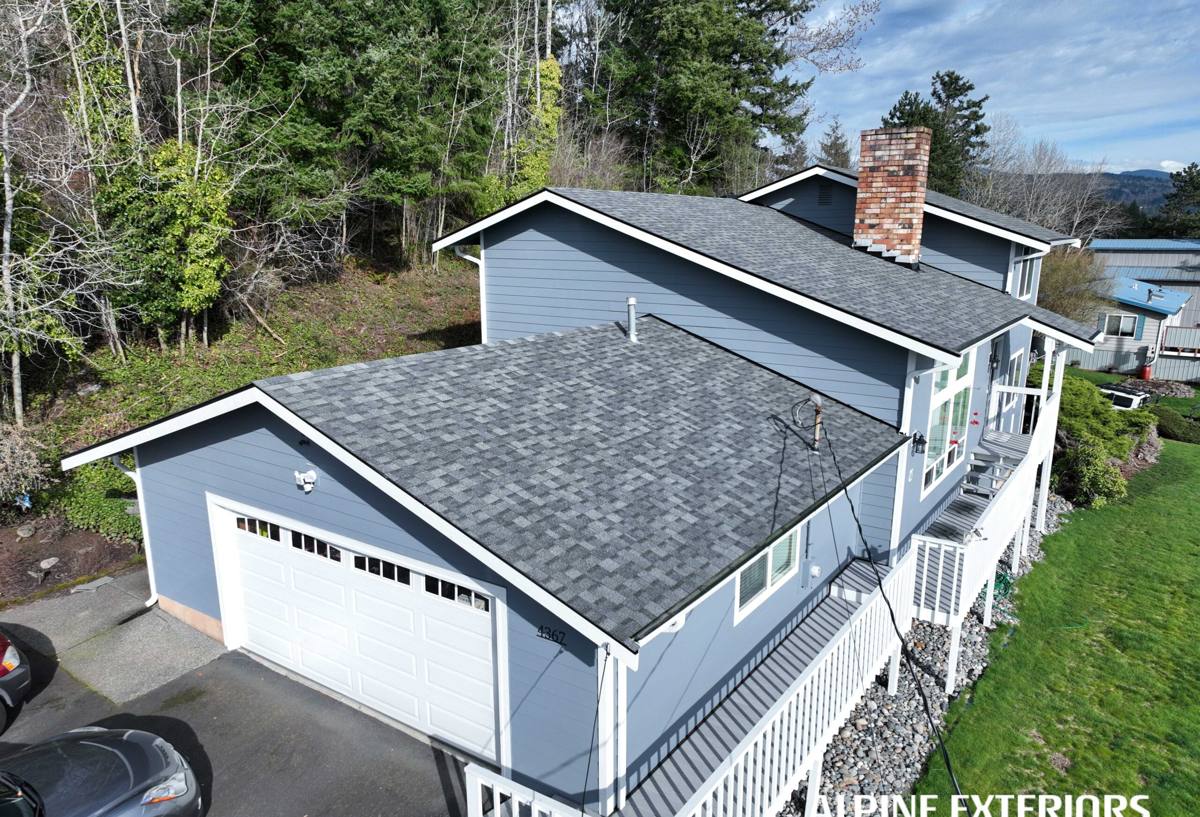
What Birch Bay's Coastal Climate Demands From a New Roof
Whatcom County's climate is damp and mild most of the year, but Birch Bay's direct exposure to open water adds a layer most inland roofs never deal with. A correct installation here has to account for three things specifically.
Salt Air and Metal Corrosion
Salt-laden air off the water accelerates corrosion in unprotected or lower-grade metal — flashing, fasteners, vents, and drip edge. Standard fasteners and thin flashing metal that would last decades inland can start showing rust and pitting much sooner this close to the shoreline. That's why the metal components on a Birch Bay roof matter as much as the shingles themselves.
Wind-Driven Rain
Rain here doesn't just fall — open water exposure pushes it sideways and drives it up under shingle edges, into laps, and around penetrations that would stay dry on a more sheltered roof. Underlayment, shingle lap patterns, and flashing details all have to be built for rain that's coming in at an angle, not straight down.
A Long Moss Season
Shaded slopes and north-facing roof sections stay damp long enough through the fall, winter, and spring for moss and algae to take hold. Left unmanaged, moss holds moisture against the shingle surface and works its way under tabs and flashing, which shortens the life of an otherwise sound roof.
Signs a Full Replacement Makes More Sense Than a Repair
Not every roof problem calls for a full tear-off. But there are signs that point to replacement being the more honest recommendation, especially on a home this exposed to the elements.
- Shingles are curling, cracking, or losing granules across large sections rather than in one isolated spot
- The roof is at or past the expected lifespan for its material, and repairs have become frequent
- There's visible sagging, which can indicate deck or structural moisture damage underneath
- Flashing at valleys, chimneys, or wall intersections is rusted, lifted, or was never properly integrated to begin with
- Moss coverage is heavy and has been growing back faster than it can reasonably be cleaned
- Daylight is visible through the roof deck from inside the attic, or there's a musty smell suggesting trapped moisture
- You're planning to stay in the home long-term and want to stop paying for repeat repairs on an aging roof
If only one or two of these apply, a repair or partial re-roof may be the more reasonable and cost-effective route, and we'll tell you that honestly during the inspection rather than pushing a full replacement that isn't yet necessary.
What a Correct New Roof Installation Actually Involves
A new roof is more than laying shingles over the old ones. Done correctly, especially in a marine environment like Birch Bay, it involves several layers working together.
Full Tear-Off and Deck Inspection
A full tear-off exposes the roof deck, which is the only way to find rot, soft spots, or long-term moisture damage hidden under the old roofing. Layering new shingles over an existing roof skips this step entirely and can trap problems underneath a brand-new surface.
Underlayment Built for Wind-Driven Rain
Synthetic or self-adhered underlayment provides a far more reliable water barrier than older felt products, particularly at eaves, valleys, and any area where wind-driven rain is likely to test the roof's defenses.
Flashing at Every Penetration
Valleys, chimneys, skylights, vent pipes, and wall intersections are where the large majority of roof leaks actually start — not in the open field of the roof. Correctly formed and properly lapped flashing, in metal that resists salt-air corrosion, is one of the details that separates a roof that lasts from one that leaks within a few years.
Ventilation That Controls Attic Moisture
Poor attic ventilation traps warm, moist air against the underside of the roof deck, which accelerates rot and gives moss an extra source of moisture from below. Balanced intake and exhaust ventilation is part of a correct installation, not an optional add-on.
Fastening and Wind Resistance
Correct nail placement and pattern, following manufacturer specifications, is what actually determines a roof's real-world wind resistance — not just the wind rating printed on the shingle wrapper. This matters on an exposed, waterfront property where wind loads are higher than average.
Material Options for Birch Bay Homes
Most Birch Bay homes are well served by asphalt shingles, but the specific product grade and features matter more here than they would inland. The table below covers the main factors worth understanding when comparing options.
| Factor | What It Affects | Why It Matters in Birch Bay |
|---|---|---|
| Algae-resistant shingles | Resistance to dark staining and organic growth | Directly relevant given the length of the local moss and algae season |
| Wind rating and fastening spec | How well the roof holds up in sustained wind | Waterfront exposure means higher and more frequent wind loads than inland lots |
| Flashing and fastener metal grade | Corrosion resistance over time | Salt-laden air corrodes lower-grade metal noticeably faster this close to the water |
| Underlayment type | Water resistance beneath the shingle layer | Backs up the roof surface against wind-driven rain intrusion |
| Shingle or material grade | Expected lifespan and warranty tier | A higher-grade product is a reasonable investment on a home taking this much weather exposure |
| Ventilation upgrades | Attic moisture control and shingle longevity | Reduces moisture-driven deck rot and moss growth from underneath the roof |
Metal roofing is also a legitimate option for some Birch Bay homes and holds up well in wind, but it comes with a higher upfront cost and different maintenance and installation considerations. The right choice depends on your roof structure, budget, and how long you plan to own the home — we'll walk through the honest trade-offs of each option during your estimate rather than steering you toward the highest-margin product.
How Our Installation Process Works
A new roof installation should follow a clear sequence, not a rushed one-day scramble. Here's the general order we follow:
- In-person inspection of the existing roof, attic ventilation, and any visible problem areas, with a written estimate — no drive-by quotes
- Material selection, walking through the trade-offs between shingle grades and underlayment systems for your specific roof
- Permitting and scheduling, including a realistic timeline that accounts for typical Whatcom County weather windows
- Full tear-off and deck inspection, with any rot or damaged sheathing identified and addressed before new material goes down
- Installation of underlayment, flashing, ventilation components, and the roofing material itself, following manufacturer fastening specifications
- Final walkthrough, cleanup, and a magnetic sweep of the property for stray nails and debris
Weather can affect scheduling more here than in a drier inland climate, and a contractor who promises a rigid fixed timeline regardless of forecast isn't being realistic with you. We build reasonable flexibility into scheduling rather than rushing a job into a rain window it shouldn't be done in.
Why Local Experience in Birch Bay Matters
A crew that regularly works waterfront and near-shoreline properties in Whatcom County has already seen how salt air affects fasteners over a few winters, how wind-driven rain finds gaps in underlayment that would never be tested on a sheltered inland roof, and which roof slopes hold onto moss the longest through the wet season. That knowledge shows up in the small decisions made on the job — which underlayment to lap where, how flashing gets formed at a given valley, what fastener grade is worth the extra cost. A contractor without that local track record can still do competent work, but they're more likely to miss the details that matter specifically on a home exposed to open water.
Permits and What to Expect During the Job
New roof installations typically require a permit, and a legitimate contractor will handle that as part of the process rather than skip it to save time. During the job itself, expect deliveries staged in your driveway or yard, tear-off debris collected in a dumpster or trailer on site, and daily cleanup as work wraps up each day. Most residential roof installations take one to three days depending on roof size, pitch, and complexity, with more complex roofs — multiple valleys, dormers, extensive flashing work — taking longer. We'll walk you through what to expect on your specific property before work begins, including where materials will be staged and how pets or vehicles should be managed during the job.
If you're weighing a repair against a full replacement, or you just want a straightforward look at what your roof actually needs, we're happy to come out for a free, no-pressure estimate and give you a written breakdown you can compare against anything else you've received.