 Bellingham Roofing
 Decking in Blaine Has to Work Harder Than Decking Inland
Blaine sits right on the water at the northern edge of Whatcom County, and that location shapes everything about how a deck ages here. Salt-laden air off Semiahmoo Bay and Drayton Harbor gets into fasteners, flashing, and finishes faster than it does even a few miles inland. Add in the long stretch of driving rain that defines a Pacific Northwest fall through spring, plus tree cover that keeps decks shaded and damp well into what should be dry season, and you have conditions that punish the wrong materials and the wrong installation choices. A deck built without those specifics in mind may look fine the first summer and start showing problems by year three.
Composite decking, installed correctly, holds up to this combination better than wood does — but "installed correctly" is doing a lot of work in that sentence. Composite is not a set-it-and-forget-it material, and salt air plus persistent moisture will still find any weak point in the framing, fasteners, or drainage. This page covers what a Blaine composite deck actually needs, not the generic version of that answer.
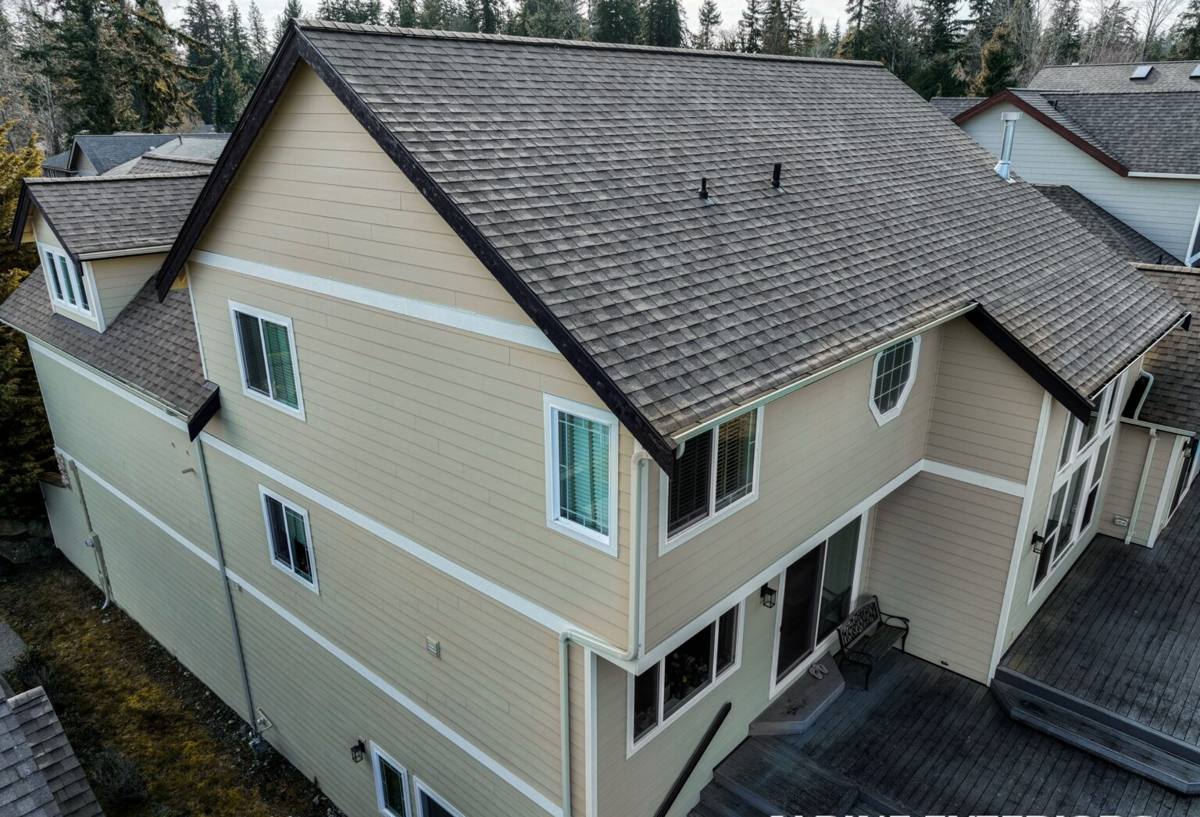
What Composite Decking Does Well Here — and What It Doesn't Fix by Itself
Composite boards resist rot and don't need annual staining, which matters in a climate where a deck can stay damp for days at a time. Most modern composite products also resist the moss and algae growth that plagues shaded, wet decking in this region better than untreated wood does, largely because of how the surface sheds water and resists organic staining. That's a real advantage in Blaine's moss season, which can run from fall through spring depending on sun exposure and tree cover.
What composite decking does not do is compensate for bad framing, poor drainage, or corner-cutting on fasteners. A composite deck built over undersized or poorly ventilated framing, with the wrong fastener hardware, or without attention to salt-air corrosion at hidden connection points will still fail early — the boards just hide the problem longer than wood would, which can mean the damage is worse by the time it's visible.
Where Problems Actually Start
- Ledger board and house connection points where moisture gets trapped against siding
- Fastener corrosion in salt-influenced air, especially with mismatched or budget-grade hardware
- Framing that isn't gapped or vented properly, trapping moisture underneath the deck surface
- Board-to-board gapping that's too tight, which stops proper drainage and traps debris that feeds moss
- Stair stringers and rail posts set in ground contact without adequate protection
Choosing a Composite Board for a Salt-Air, High-Moisture Property
Not all composite decking is built the same way, and the differences matter more in Blaine than they would somewhere drier. The main variables are the type of composite core, the cap (or lack of one), and the color and grain finish, which affects how well the board hides water spotting and pollen film between cleanings.
| Board Type | How It Handles Moisture & Salt Air | Maintenance Load | General Cost Position |
|---|---|---|---|
| Uncapped composite | Absorbs some moisture over time; more prone to surface staining near the water | Periodic cleaning; more susceptible to mold in shaded areas | Lower upfront cost |
| Capped composite (standard) | Polymer shell resists moisture absorption and salt residue better | Occasional wash-down, minimal scrubbing | Mid-range |
| Capped composite (premium line) | Best resistance to fading, staining, and moisture uptake at exposed connection points | Lowest maintenance; still needs periodic cleaning | Higher upfront cost, longer expected service life |
| PVC decking | Fully synthetic, no wood fiber to absorb moisture; performs well in wet, salty conditions | Low; mainly surface cleaning | Comparable to or above premium composite |
We don't push one brand as the only acceptable option — we walk each homeowner through what's available, what their budget supports, and how each product's warranty structure and installation requirements fit a property this close to the water. What we won't do is install a board system in a way that voids its own warranty, which happens more often than people expect when fastening or spacing specs get ignored to save time.
The Part of the Job Nobody Sees: Framing and Substructure
A composite deck is only as good as what's underneath it, and this is where a lot of decking problems in coastal Whatcom County actually originate. Framing lumber, joist hardware, and fasteners all need to be rated for the moisture and salt exposure Blaine sees, not just generic exterior-grade hardware.
What a Correct Substructure Includes
- Corrosion-resistant, coastal-rated joist hangers and structural screws — not standard galvanized where salt exposure calls for something better
- Proper ledger flashing that directs water away from the house rather than trapping it against siding or framing
- Joist spacing set to the composite manufacturer's spec, which is often tighter than dimensional lumber spacing to prevent long-term sag
- Adequate ventilation and clearance underneath the deck so moisture doesn't sit against framing year-round
- Ground-contact-rated posts and footings sized for the region's frost and moisture conditions
None of this is visible once the decking boards go down, which is exactly why it needs to be right the first time. Reworking a deck's substructure after the surface is installed is far more expensive than doing it correctly at the start.
How Our Process Works
- On-site assessment. We look at the existing structure (if there is one), sun and shade exposure, drainage path, and proximity to the water to understand what the property specifically needs.
- Material walkthrough. We go over board options, realistic cost ranges, and warranty terms so the decision is based on the property, not a sales pitch.
- Framing and structural work. Any needed repairs or upgrades to joists, ledger connections, footings, and flashing happen before a single composite board is installed.
- Deck installation. Boards are installed to manufacturer spacing and fastening specs, which is what keeps the warranty intact and prevents premature buckling or gapping.
- Finish details. Stair, rail, and fascia work is completed and all fastener heads and cut edges are checked for proper sealing where the manufacturer requires it.
- Final walkthrough. We review the finished deck with the homeowner and cover basic care specific to this climate before we consider the job done.
Living With a Composite Deck Through Blaine's Moss Season
Composite resists moss and algae better than bare wood, but "resists" isn't "immune." Shaded decks near tree lines or on the north side of a house will still collect organic film over a long wet season, and letting it build up can leave a deck slick and, over years, dull the surface finish.
Basic Seasonal Care Checklist
- Sweep debris (leaves, needles, pollen) off the deck regularly through fall — trapped organic matter is what feeds moss growth
- Rinse or wash the surface a few times a year with a soft-bristle brush and mild soap; avoid pressure washing at close range, which can damage the cap layer
- Check that gaps between boards stay clear so water keeps draining instead of pooling
- Inspect railing posts and stair connections once a year for any looseness, which can signal moisture getting into a connection point
- Keep gutters and downspouts near the deck clear so runoff isn't draining directly onto or under the decking
What Affects the Cost of a Blaine Composite Deck
| Factor | Why It Moves the Price |
|---|---|
| Deck size and shape | Square footage and the number of angles, cutouts, or multi-level sections directly affect labor and material |
| Board tier (uncapped, capped, premium, PVC) | Material cost per square foot varies significantly across these categories, as shown above |
| Substructure condition | An existing deck with sound framing costs less to resurface than one needing joists, footings, or ledger work rebuilt |
| Height and rail requirements | Taller decks need code-compliant railing and sometimes additional structural bracing |
| Site access | Waterfront and hillside lots common around Blaine can add labor time for material staging and equipment access |
We give real numbers after we've actually seen the property — anything quoted without a site visit is a guess, and we'd rather give an honest estimate than a low one that changes later.
Why a Crew That Already Works in Blaine Matters
Decking work in a coastal Whatcom County community is different from decking work twenty miles inland. A crew that regularly works Blaine and the surrounding Bellingham area already knows which fastener grades hold up to the salt air here, how far moss creep tends to go under shaded decks in this specific climate, and how local drainage and frost conditions affect footing depth. That local pattern recognition is what keeps small decisions — a hardware upgrade, a flashing detail, a board-gap adjustment — from getting skipped because they weren't in a generic install checklist.
It also means we're not guessing at permitting or inspection expectations for the area, and we're a known, reachable local business if a warranty question or maintenance question comes up years down the road — not a crew that worked one job here and moved on.
Get a Straight Answer for Your Property
If you're planning a new composite deck or replacing one that's showing its age, we're happy to come take a look, walk the site with you, and give you a clear picture of what it would take to do it right for a Blaine property. There's no pressure and no obligation — just a free estimate based on what your home actually needs.