 Bellingham Roofing
 Storm Damage Roof Repair in Barkley
When a storm rolls through Whatcom County, a Barkley roof takes on a specific combination of stress that doesn't show up the same way everywhere. Wind gusts off the water, driving rain pushed sideways instead of falling straight down, and a moss season that never really ends all put pressure on a roof in ways that compound rather than resolve on their own. A shingle lifted in one windstorm doesn't necessarily blow off in the next one — it just sits there, slightly open, letting water in a little further each time it rains until the damage underneath is a lot worse than what's visible from the ground.
We work storm damage repair calls throughout Barkley and the surrounding Bellingham area, and the way we approach an inspection and repair is built around this region's weather pattern specifically — not a generic storm-damage checklist that ignores how much salt air, sideways rain, and sustained moss pressure a roof here actually deals with year-round.
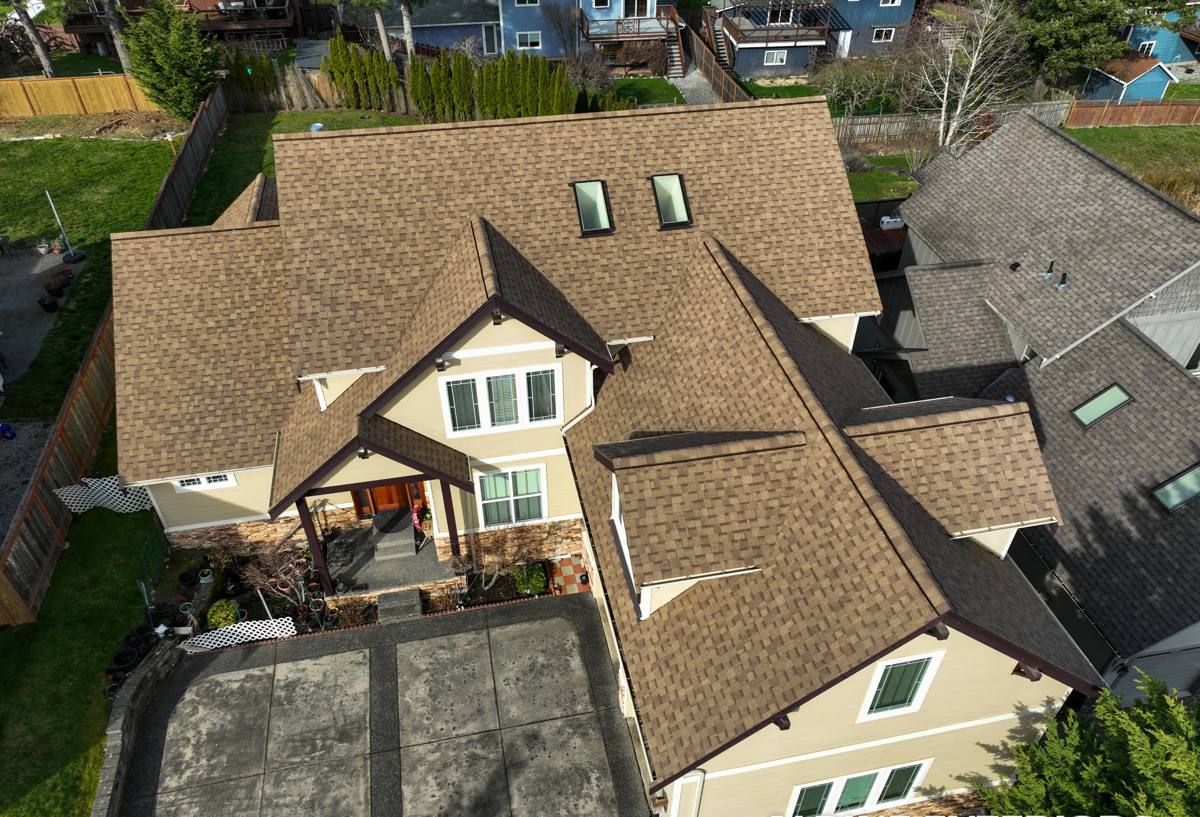
How Storms Actually Damage a Roof Here
Storm damage in Whatcom County rarely looks like the dramatic, obvious kind you'd see after a hailstorm in other parts of the country. It's usually quieter and easier to miss, which is exactly why it tends to get worse before a homeowner notices.
Wind
Sustained wind and gusts lift shingle edges and work fasteners loose, especially on ridgelines and roof faces that catch the brunt of storms coming off the water. A shingle doesn't have to blow off completely to become a problem — a partially lifted or creased shingle loses its ability to shed water the way it was designed to, even if it's still nailed down and still visible from the street.
Wind-Driven Rain
Rain that's pushed sideways by wind behaves very differently than rain falling straight down. It gets forced up under shingle laps, into valleys, and around flashing at chimneys, vents, and skylights — spots that would stay dry in a calmer climate but take on real water pressure here. Flashing details that are just adequate elsewhere often aren't enough for a Barkley roof facing a full wet season of this kind of exposure.
Falling Debris
Branches and larger limbs coming down in high wind can crack shingles, dent flashing, or puncture underlayment outright. Even smaller debris impacts that don't look serious can compress the mat of a shingle enough to shorten its remaining service life.
Moss, Following the Storm
Storm damage and moss pressure feed each other here. Once a shingle is lifted, cracked, or creased, it holds moisture longer than an intact roof surface would, and that's exactly the condition moss needs to get established. A roof that comes through a storm with unrepaired damage often ends up with a moss problem developing in that exact spot within a season or two, which then holds even more moisture and accelerates whatever damage started the whole cycle.
What a Correct Storm Damage Repair Actually Involves
A proper storm damage repair starts with a full roof inspection, not just a patch over whatever's visible from the ground or the driveway. We check the obvious impact points, but we also check the areas storms in this climate tend to damage quietly: ridge caps, valleys, flashing around penetrations, and the underlayment beneath any shingles that look questionable.
From there, the repair itself needs to match how the roof will actually be exposed going forward, not just how it looked before the storm:
- Damaged or lifted shingles replaced with matching material, properly nailed to spec rather than just re-set in place
- Flashing at chimneys, vents, and skylights re-sealed or replaced where wind-driven rain has worked it loose
- Underlayment checked and replaced in any section where water has tracked past the shingle layer
- Valleys cleared and inspected, since debris and moss both tend to collect there first
- Fasteners checked for backing out or corrosion, which salt air accelerates faster than an inland climate would
- A look at attic ventilation and any interior water staining, since storm damage on the outside often has a matching sign on the inside
Skipping any one of these steps in favor of a faster patch usually means the same section of roof comes back as a repair call again within a season or two — often after the next storm, when the shortcut gets tested for real.
Our Process for Barkley Storm Repair Calls
Storm damage repair moves differently than a planned roofing project, and homeowners calling us after a storm usually want two things: a fast, honest read on how serious the damage actually is, and a repair that will actually hold through the next storm rather than just look fixed.
- Inspection: We walk the roof and check every likely damage point — impact areas, flashing, valleys, ridge lines — and we'll tell you plainly if what we find is cosmetic or structural.
- Assessment and documentation: We document what we find, which matters if you're filing an insurance claim, and we'll explain what's driving the recommendation either way.
- Straight talk on repair vs. replacement: If a section can be properly repaired, we'll say so. If the damage is extensive enough, or if the roof was already near the end of its service life before the storm hit, we'll be direct about that too rather than recommending a patch that won't last.
- Repair carried out to spec: Matching materials, correct fastening, and flashing detailed to actually shed water through a full Whatcom County wet season — not just pass a dry-day look.
- Follow-up: We'll flag anything else we noticed during the inspection that's worth keeping an eye on, even if it wasn't part of this particular storm's damage.
Storm Damage vs. Everyday Wear: Telling the Difference
Not every issue a homeowner notices after a storm was actually caused by that storm. Some of it is wear that was already underway and simply became more visible once you started looking closely at the roof. Knowing the difference matters for repair decisions and for insurance conversations.
| Sign | More Likely Storm Damage | More Likely Ongoing Wear |
|---|---|---|
| Shingles missing or visibly displaced | Yes — especially if it appeared right after a windstorm | Less likely on its own |
| Granule loss in gutters | Can spike after hail or heavy wind-driven debris | Gradual buildup over years is normal aging |
| Moss coverage on north-facing slopes | Not typically storm-related | Yes — this builds up over one or more full moss seasons |
| Cracked or dented flashing | Yes, from wind, impact, or debris | Can also fail slowly from age and corrosion |
| New interior water staining | Yes, especially if it followed a specific storm event | Can also indicate a long-standing, slow leak |
| Curling or brittle shingles across the whole roof | Not storm-specific | Yes — this points to a roof nearing the end of its service life |
An honest inspection sorts this out rather than attributing every issue to the most recent storm. Sometimes a storm exposes a problem that was already developing; other times it genuinely is the cause, and that distinction affects both the repair plan and any insurance claim.
Cost Factors for Storm Damage Roof Repair
Every roof and every storm event is different, so we don't quote sight-unseen, but the factors that drive cost on a Barkley storm repair are consistent enough to walk through honestly upfront.
| Factor | Why It Affects Cost |
|---|---|
| Extent of shingle damage | A handful of lifted shingles is a much smaller job than a wind-stripped section of roof |
| Underlayment condition | If water has tracked past the shingles, underlayment replacement adds labor and material |
| Flashing complexity | Roofs with multiple penetrations — chimneys, skylights, vents — take more time to re-flash correctly |
| Roof pitch and access | Steeper roofs and difficult access points require more time and safety setup |
| Age of the existing roof | An older roof nearing end of life may make targeted repair less cost-effective than partial or full replacement |
| Matching materials | Older shingle lines can be harder to color-match, which sometimes affects the scope of a repair |
We'll walk you through exactly which of these apply to your roof before we give you a number, so you're not guessing at what's driving the estimate.
Insurance Claims and Storm Damage
A lot of Barkley homeowners calling after a storm are also navigating an insurance claim for the first time. We're not an insurance adjuster and we won't pretend to be one, but we can give you a clear, documented account of what the roof looks like and what caused it, which is useful information to bring to your adjuster or claims process. Our job is to give you an honest assessment of the roof — what genuinely needs repair, and what doesn't — regardless of how that assessment lines up with a claim outcome.
Signs a Barkley Roof May Have Storm Damage
Some storm damage is obvious right away. Some of it takes a trained eye, or shows up weeks later once water has had time to work its way further in. Worth checking for after any significant windstorm:
- Shingles that look lifted, curled, or out of alignment compared to the rest of the roof
- Granules collecting in gutters or at downspout outlets
- Visible gaps or creases in the shingle field, especially on wind-exposed slopes
- Dented or bent flashing around chimneys, vents, or skylights
- New or growing water stains on ceilings or in the attic
- Debris — branches, limbs, or heavier material — that made contact with the roof surface
- Moss or damp patches concentrated around a specific area rather than spread evenly
None of these automatically means major repair work is needed, but each one is worth having looked at, since storm damage in this climate tends to get worse with the next wet-weather stretch rather than stay static.
Why a Local Crew Matters for Storm Repair
Storm damage repair calls move fast, and the roofs that fare best afterward are usually the ones repaired by a crew that already understands how this specific climate treats a roof — not one working from a generic checklist built for a different region's weather. A crew that works Whatcom County roofs regularly knows which slopes take the worst of the wind-driven rain, where flashing tends to fail first, and how much moss pressure a given roof orientation is realistically dealing with.
That familiarity shows up in small decisions during a repair — how a valley gets detailed, where an extra course of flashing is worth adding, how fasteners are spaced given local wind exposure — that matter for how the roof performs through the next storm, not just how it looks the day the repair is finished.
If your Barkley home has storm damage or you just want an honest look at how your roof came through a recent storm, reach out using the form below to schedule a free, no-pressure estimate.