 Bellingham Roofing
 Why Decks in Blaine Wear Out Faster Than the Manufacturer's Brochure Suggests
Blaine sits right up against Semiahmoo Bay and Boundary Bay, which means most decks here are dealing with something a lot of inland Whatcom County homes never see: a steady drift of salt-laden air moving in off the water. Salt is hygroscopic — it pulls moisture out of the air and holds it against wood fiber, fasteners, and metal connectors longer than plain rain would. Combine that with the region's long stretch of driving rain from fall through spring, and a wet season that can run seven or eight months with barely a dry week in it, and you get decks that show rot, corrosion, and structural fatigue well before their expected lifespan.
Then there's moss. Blaine's mild, damp winters are close to ideal moss-growing conditions, and once moss establishes on decking boards or in the shaded gaps under railings, it holds water against the wood around the clock, not just when it's actively raining. A deck that looks cosmetically fine in July can be hiding soft joists, rusted-through fasteners, or a ledger board that's been quietly rotting behind a moss mat for two winters. This page is specifically about replacing a deck in Blaine — what local conditions demand, what a correct rebuild looks like, and how we approach the work.
Repair or Replace? Signs You're Past the Patch-Job Stage
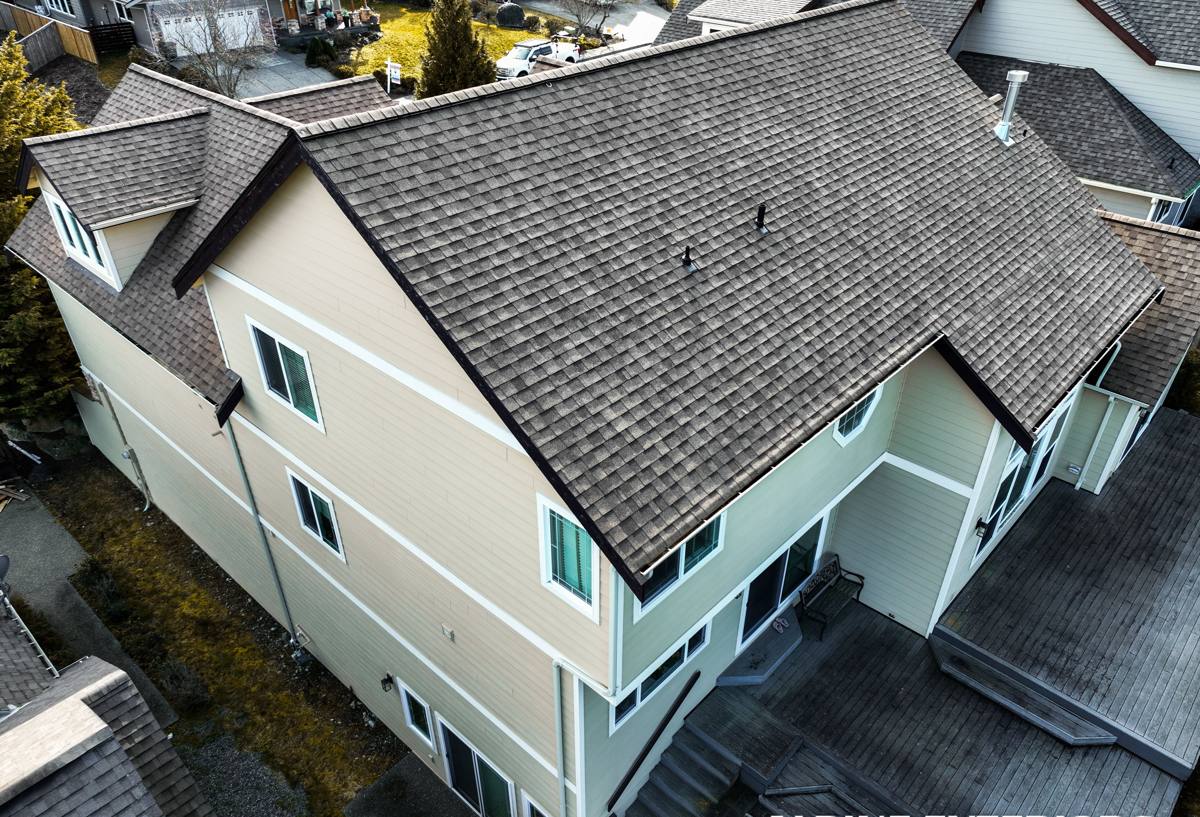
Not every tired deck needs a full teardown. But there's a point where patching boards or sistering a joist is just delaying a bigger failure. In our experience working coastal Whatcom County homes, these are the signs that push a deck from "repair" into "replace" territory:
- Soft, spongy, or springy spots underfoot — especially near the house or along the outer rim joist
- Fasteners that are rusted, backing out, or leaving dark streaks on the boards (a sign the metal is corroding faster than the wood is failing)
- Gaps or separation where the deck ledger meets the house — a common point for hidden water intrusion
- Persistent moss or algae that returns within weeks of cleaning, especially on shaded sections
- Visible sagging in the deck surface or railings that flex more than they used to
- A structure that's more than 20–25 years old and was never inspected below the surface
- Multiple past repairs to the same section — a sign the underlying framing, not just the boards, has failed
If you're only seeing one or two of these, a repair may still make sense. If you're seeing three or more, or the deck is original to a home built before local codes tightened up on ledger attachment and flashing, replacement is usually the more honest recommendation — and the more cost-effective one over a 10-year horizon.
What a Correct Deck Replacement Actually Involves
A deck replacement isn't just pulling up old boards and screwing down new ones. In a climate like Blaine's, most of what determines whether a deck lasts 10 years or 30 years is invisible once the project is done — it's in the substructure, the fasteners, and the flashing details.
Footings and Posts
We check footing depth and condition against current code requirements, not just what was there before. Undersized or frost-heaved footings are a common issue on older Blaine decks, and it's far cheaper to correct that during a full replacement than to discover it later as a leaning post.
Framing and Joist Layout
Joist spacing gets matched to the decking material you choose — composite boards generally need tighter joist spacing than solid wood to avoid flexing or "bounce." We use corrosion-resistant hardware throughout, which matters more here than almost anywhere else in the county given the salt exposure.
Ledger Attachment and Flashing
The ledger board — where the deck attaches to the house — is the single most common source of hidden rot on failed decks we've torn out. Proper flashing (metal, not just tape or caulk) directs water away from this joint instead of letting it pool against the house sheathing. This detail alone is worth more to a deck's long-term health than almost any material upgrade.
Decking Surface and Railings
This is the visible part — the material choice, fastening pattern, and railing system. It matters for appearance and daily wear, but it's the last thing we build, on top of a structure that's already sound.
Choosing a Decking Material for Blaine's Coastal Conditions
There's no single "best" decking material — there's a best fit for your budget, your maintenance appetite, and how much salt air and shade your specific site gets. Here's how the common options actually perform in this climate:
| Material | Moisture & Salt Behavior | Maintenance | Relative Cost |
|---|---|---|---|
| Pressure-treated lumber | Resists rot with proper sealing, but fasteners and hardware need to be stainless or coated to avoid galvanic corrosion near salt air | Annual cleaning and re-sealing recommended | Lowest upfront |
| Cedar | Naturally rot-resistant and handles moisture well, but greys and can develop moss in shaded, damp spots without upkeep | Periodic oiling or staining to maintain appearance | Mid-range |
| Composite decking | Doesn't absorb moisture into the board itself; performs well against salt air, though lower-quality composites can still trap moss on the surface | Low — occasional washing, no sealing or staining | Mid to high |
| PVC/capped polymer | Fully sealed surface, best resistance to moisture and salt of the common options | Lowest — soap and water | Highest |
We don't push one product line over another as a rule — we walk through the trade-offs with you: upfront cost versus lifetime maintenance, how much shade and moss exposure your site gets, and what look you're after. What we do insist on, regardless of surface material, is stainless or coated fasteners and proper flashing underneath — that's a standard we hold on every deck we build, coastal or not, because it's the difference between a deck that ages gracefully and one that fails from the framing up while the surface still looks fine.
Our Deck Replacement Process
1. On-Site Assessment
We start by getting under the deck, not just looking at the surface. That means checking footings, ledger attachment, joist condition, and any moss or moisture patterns specific to your lot's sun exposure and proximity to the water.
2. Straightforward Proposal
You get a clear scope and price before any demo starts — what's being replaced, what materials are involved, and why. No surprise change orders for things we should have caught during the assessment.
3. Permitting
Deck replacements in Blaine typically require a building permit through the City of Blaine, especially for anything involving structural changes, footing work, or decks above a certain height. We handle that paperwork as part of the job so you're not chasing it down yourself.
4. Demo and Structural Rebuild
Full removal of the old deck surface and any compromised framing, footing corrections where needed, and a rebuilt substructure using corrosion-resistant hardware throughout.
5. Decking, Railings, and Finish Work
Installation of your chosen decking material, code-compliant railings, and stairs, with attention to fastening patterns and drainage gaps that keep water and debris from sitting on the surface.
6. Final Walkthrough
We walk the finished deck with you, cover basic maintenance expectations for your specific material, and make sure everything meets code before we call the job done.
Permits and Code Considerations in Whatcom County
Deck work in Blaine generally falls under the City of Blaine's building permit process, which follows Washington State building code for structural elements — footing depth, ledger attachment, guardrail height, and baluster spacing all have specific requirements, especially on any deck more than 30 inches above grade. Older decks built before these requirements were tightened are a common source of failed inspections when homeowners try to sell or refinance. Replacing a deck is a natural point to bring the whole structure up to current code rather than carrying forward an outdated ledger connection or an under-spec railing.
Protecting Your New Deck From Salt Air and Moss Going Forward
A correctly built deck still needs some upkeep in this climate — the goal is to make that upkeep light, not eliminate it entirely. A few habits go a long way:
- Sweep debris and standing leaves off the surface regularly, especially in shaded corners where moss gets a foothold first
- Rinse salt residue off the deck a few times a year if you're close to the water, particularly after storms with onshore wind
- Keep gutters and downspouts clear so roof runoff isn't dumping extra water onto or near the deck structure
- Check railings and stair connections annually for any looseness — fasteners in salt air can loosen faster than inland
- Trim back vegetation that shades the deck surface and slows drying time after rain
None of this requires a major time investment, but skipping it is how a well-built deck ends up needing premature repairs anyway.
Why Hire a Crew That Already Works in Blaine
Deck framing, fastener choice, and flashing details that hold up fine in a drier inland climate can fall short here. A crew that's replaced decks throughout Blaine and the surrounding Whatcom County coastline already knows which fastener grades actually resist this air, which shaded lot layouts are prone to chronic moss, and where the City of Blaine's permit and inspection process tends to have questions. That local track record shows up as fewer callbacks and a deck that's actually built for the conditions it's going to sit in for the next few decades, not a generic spec sheet from a manufacturer based somewhere drier.
Get a Free, No-Pressure Estimate
If your deck is showing soft spots, chronic moss, rusted hardware, or it's simply old enough that you're not sure what's underneath it anymore, we're happy to take a look. Use the form below to request a free estimate — no pressure, just a straight assessment of what your deck actually needs.