 Bellingham Roofing
 Edgemoor's Setting Is Beautiful — and Hard on Siding
Edgemoor sits close to the water on wooded, bluff-top lots that give homes privacy, shade, and views — and also give them a harder climate to build against than most people expect. The proximity to the bay means salt-laden air moves through the trees and settles on exterior walls year-round. Add Bellingham's long wet season, driving rain off Puget Sound storms, and the deep shade cast by mature evergreens, and you get a wall assembly that stays damp longer than siding in a sunnier, more open part of Whatcom County. That combination — salt, moisture, and shade — is exactly the environment where the wrong siding choice or a sloppy installation shows its problems fastest.
Board and batten is a popular fit for Edgemoor's mix of craftsman, Northwest contemporary, and coastal-style homes. The vertical lines read as clean and architectural, and the pattern hides the way custom, wooded lots rarely give you a perfectly flat, symmetrical elevation. But board and batten is also one of the less forgiving siding profiles to get wrong, because it relies on a lot of narrow seams and fastening points staying sealed against exactly the kind of weather Edgemoor sees most.
Why Board & Batten Fits Edgemoor's Architecture
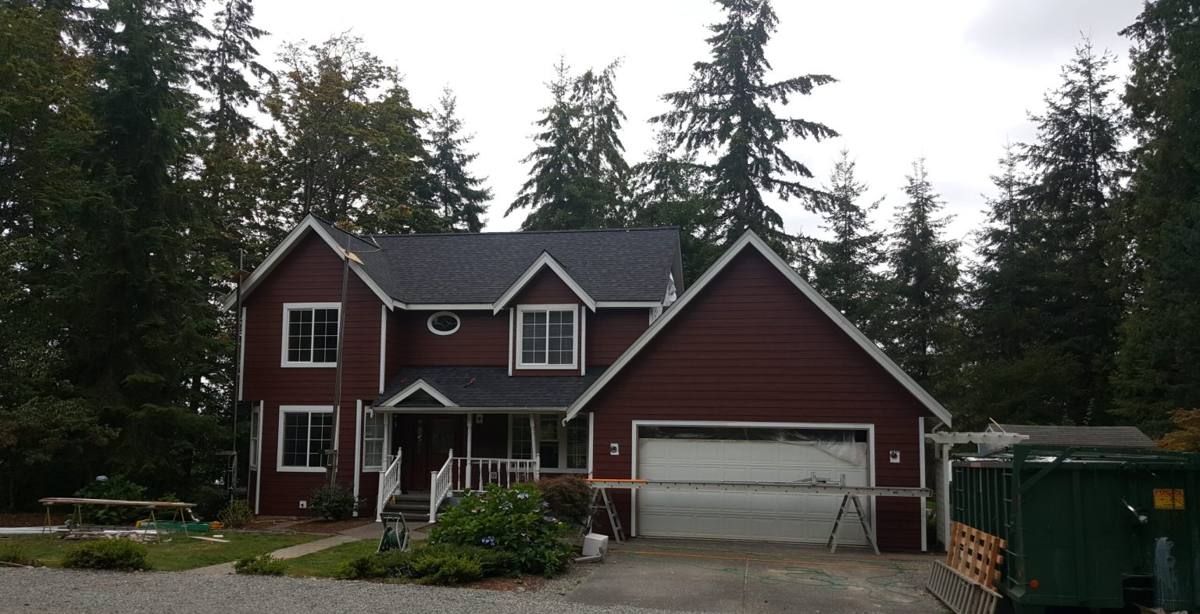
The vertical board-and-batten profile has deep roots in Pacific Northwest building — it was originally a practical way to cover seams on simple wood-frame structures, and it's carried forward into the region's farmhouse, craftsman, and modern coastal styles. In a neighborhood like Edgemoor, where lots are often irregular and homes are tucked among trees rather than lined up on a flat street grid, the strong vertical lines of board and batten do a lot of visual work. They draw the eye upward, pair well with stone or wood accents, and read as intentional and architectural rather than generic.
It also works well as an accent alongside lap or shingle siding — a common approach on Edgemoor homes that want a gable end, entry feature, or upper story to stand apart from the rest of the elevation.
Where It Makes the Most Sense
- Gable ends and dormers where a vertical line breaks up a large roof plane
- Entry features, porches, and bump-outs meant to stand out from the main field of siding
- Full elevations on craftsman, farmhouse, or modern coastal designs
- Additions or remodels where you want a deliberate material break from the original siding
Why We Only Install It in James Hardie Fiber Cement
Board and batten can be built from several materials — cedar, primed spruce, engineered wood like LP SmartSide, vinyl, or fiber cement — and we've made a deliberate call to install only James Hardie fiber cement. It's not that the alternatives don't work anywhere; it's that Edgemoor's specific conditions expose their weak points faster than most homeowners expect.
Real wood board and batten looks great new, but every seam and batten joint is a place moisture can enter, and in a shaded, salt-air environment like Edgemoor, that means more frequent recoating, more vigilance for rot at the bottom of boards, and a shorter realistic lifespan before boards need replacing. Engineered wood products use resin-treated wood strands and hold up better than raw lumber, but they're still an organic core, and their warranties are typically stricter about caulking, painting intervals, and moisture exposure — details that are easy to fall behind on with tall, shaded, hard-to-reach walls. Vinyl board and batten is low-maintenance and inexpensive, but it's a thin plastic panel that can warp in sustained heat reflection, crack in cold snaps, and it simply doesn't hold the crisp, deep-shadow-line look that makes board and batten worth choosing in the first place.
James Hardie fiber cement is cement, sand, and cellulose fiber — it doesn't rot, it isn't a food source for moss or mildew the way wood is, and it holds paint and factory finish far longer than wood or engineered wood siding in a marine climate. It's also non-combustible, which matters more each year as wildfire smoke and drought stress become a bigger part of Pacific Northwest summers. We install it because it's the product that holds up to the conditions we actually see on Edgemoor job sites, not because it's the only thing that exists.
How the Common Options Compare in Edgemoor's Climate
| Material | How It Handles Salt Air & Moisture | Moss & Mildew Resistance | Realistic Maintenance |
|---|---|---|---|
| James Hardie fiber cement | Engineered for wet marine climates; won't rot or swell | Resists organic growth; factory finish sheds it easily | Occasional wash; repaint decades out, if ever |
| Cedar / primed spruce | Absorbs moisture at seams and end grain over time | Organic material; feeds moss and mildew in shade | Frequent recoating and seam inspection |
| Engineered wood (LP SmartSide) | Better than raw wood but still a wood-strand core | Resistant but not immune; strict warranty upkeep required | Regular caulk and paint schedule to hold warranty |
| Vinyl | Won't rot, but can warp and gap at seams over time | Doesn't feed growth but grime and moss sit on the surface | Low, but limited repair options if damaged |
What a Correct Board & Batten Job Actually Involves
Board and batten looks simple — vertical boards, battens over the seams — but the assembly behind the surface is what determines whether it lasts. This is where a lot of installs go wrong, especially on the shaded, moisture-prone walls common in Edgemoor.
The details that matter most
- A drainage plane behind the siding. A correctly installed weather-resistive barrier, and ideally a rainscreen gap, lets any moisture that gets past the surface dry out instead of sitting against the sheathing.
- Proper fastening. Hardie board and battens need to be fastened per manufacturer spec — the right nail type, spacing, and blind- or face-nailing pattern — so the panel can move slightly with temperature and humidity without splitting or popping fasteners.
- Flashing at every horizontal transition. Window heads, roof lines, and trim boards all need proper flashing so water is directed out and away rather than behind the siding.
- Correct gaps and sealed joints. Board and batten has more vertical seams than lap siding, and each one needs the right gap and factory-approved sealant to stay watertight through Bellingham's wet season without trapping moisture.
- Bottom clearance. Siding held too close to grade, decks, or roof planes stays damp longer and is the most common place we see rot and moss establish first.
Skipping any one of these doesn't usually show up in year one. It shows up in year four or five, as staining, soft spots at the base of boards, or moss creeping in behind battens — problems that are far more expensive to fix than to prevent at install time.
Our Process on Edgemoor Homes
1. On-site assessment
We walk the property, look at tree cover and sun exposure, check existing moisture or rot damage, and note anything specific to the lot — retaining walls, tight side yards, steep grade — that affects the job.
2. Honest estimate and product plan
We walk you through the right Hardie board and batten profile and colors for your home, explain what the job involves, and give you a clear, itemized estimate — no pressure, no upsell to products we don't stand behind.
3. Prep and removal
Old siding comes off carefully, sheathing is inspected for hidden rot or moisture damage before anything new goes up, and any needed repairs are addressed and documented before we cover them.
4. Installation to manufacturer spec
Weather barrier, flashing, fastening pattern, and joint spacing are all done to James Hardie's published installation requirements — the same requirements that keep the product warranty intact.
5. Final walkthrough
We go over the finished job with you, point out anything you should know for long-term care, and make sure you're satisfied before we consider it done.
Living With Board & Batten in a Moss-Prone, Salty Environment
James Hardie siding is low-maintenance, not zero-maintenance. In Edgemoor's shaded, moist setting, a little seasonal attention keeps it looking sharp for the long haul.
A simple seasonal checklist
- Rinse siding once or twice a year, more often on walls under heavy tree cover, to keep salt residue and organic buildup from accumulating
- Trim back branches and shrubs to keep airflow moving across shaded walls
- Clean gutters regularly so overflow doesn't run down the siding face
- Check caulked joints and trim intersections yearly for cracking or separation
- Watch the base of walls near grade, decks, and downspouts for early signs of moss or staining
None of this is heavy labor — it's the kind of upkeep that takes an afternoon and prevents the kind of moisture problems that are common on wood and engineered wood siding in this same setting.
What Board & Batten Costs to Do Right
Board and batten typically costs somewhat more than standard lap siding, largely because of the extra battens, seams, and labor involved in getting the reveal and fastening pattern correct. Exact pricing depends on your home's size, wall complexity, and current siding condition, but the factors below are what actually move the number.
| Cost Factor | Why It Matters |
|---|---|
| Wall height and access | Tall gables, steep lots, and tree-shaded walls common in Edgemoor add labor and equipment time |
| Tear-off and sheathing repair | Hidden rot found under old siding needs to be fixed before new siding goes on |
| Full elevation vs. accent use | Board and batten as a full-house material costs more than using it as a gable or entry accent |
| Trim and flashing detail | Windows, corners, and roof transitions need correct flashing, which adds material and labor |
| Color and finish | Factory ColorPlus finishes cost more upfront than field-painted but skip repainting for years |
Why a Crew That Already Works Edgemoor Matters
Edgemoor's lots aren't uniform tract housing — they're wooded, often steep, and built around mature trees and bluff terrain that affect everything from scaffolding and material staging to how a wall dries out after a storm. A crew that has worked the neighborhood before knows to expect shaded north walls that stay damp longer, tight side-yard access on older lots, and the kind of tree-root and drainage issues that come with building near the water. That experience shows up in small decisions during the job — where to add extra flashing, which walls need a wider drainage gap, how to stage material on a lot without flat, open space — that a crew unfamiliar with the area might not think to make.
It also means we're not guessing at what Bellingham's wet season does to an unfinished job. We plan around it, sequence the work to limit exposed sheathing time, and build in the details that this specific climate demands rather than applying a one-size-fits-all install.
Get a Free Estimate for Your Edgemoor Home
If you're considering board and batten siding for a full elevation, an accent feature, or a remodel, we're happy to take a look at your home and give you a straightforward, no-pressure estimate. Use the form below to get started — we'll walk the property, answer your questions, and give you a clear picture of what the job involves before you decide anything.