 Bellingham Roofing
 Building Decks in Columbia the Way This Climate Demands
Columbia sits close to the water and to Whatcom Falls, inside a part of Bellingham that gets the full range of what this county's weather can do to an outdoor structure. Salt-tinged marine air moves through the neighborhood most of the year, rain arrives sideways as often as it falls straight down, and shaded lots under mature trees hold onto moisture long after a storm has passed. A deck is more exposed to all of that than almost any other part of a house — it has no roof over it in most cases, it sits low to grade where moisture collects, and every joint, fastener, and board end is a potential entry point for water. Build one without that climate in mind and it will show wear years before it should.
Bellingham Roofing Companies works throughout Whatcom County, and while roofing is where we started, deck building runs on the same core skill: keeping water out of a structure over the long haul. A deck that's framed, fastened, and finished correctly will handle a Columbia winter without complaint. One that cuts corners on flashing, fastener grade, or drainage will telegraph every mistake within a season or two, usually in the form of soft boards, rusting hardware, or a slick coat of moss nobody wants to walk on.
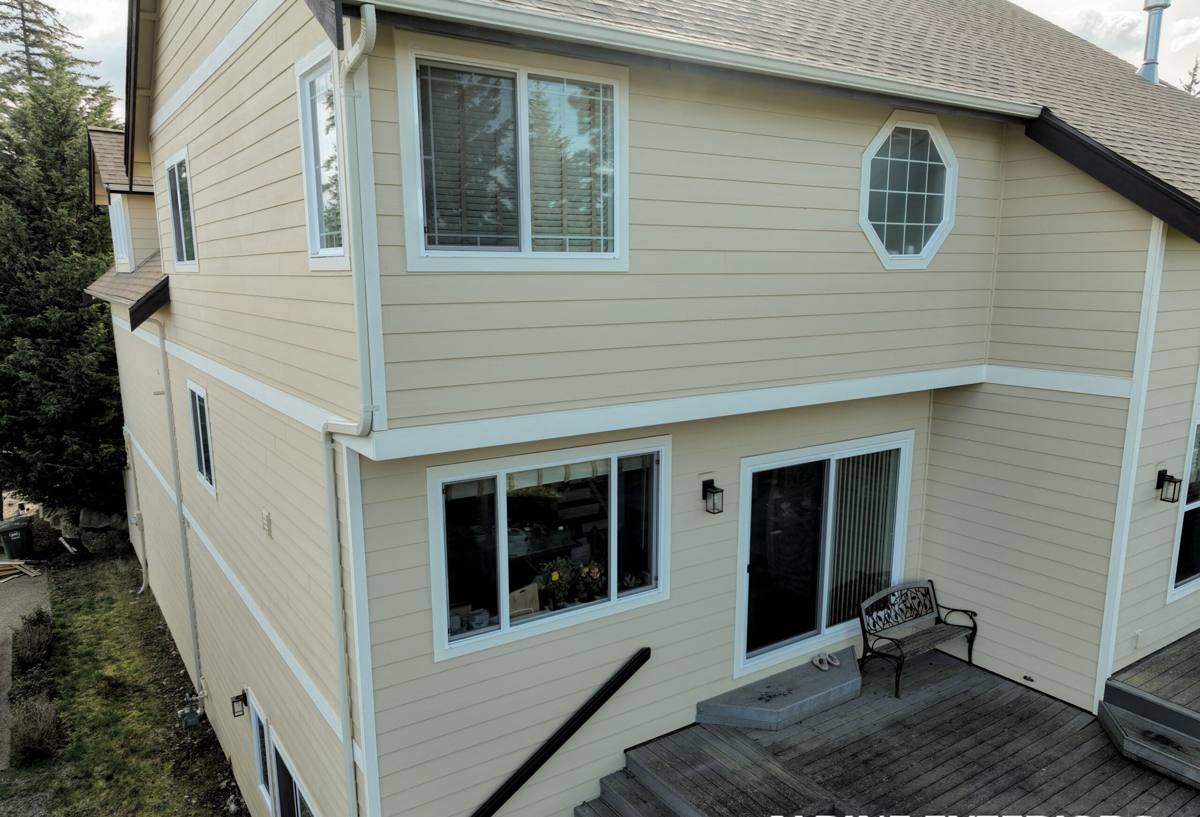
What Columbia's Climate Does to a Deck
Salt Air and Fastener Corrosion
Even a few miles from open water, homes in this part of Bellingham get a steady dose of salt-carrying air. On a deck, that shows up first in the hardware — screws, joist hangers, and structural connectors that aren't rated for the exposure will start pitting and staining well before the wood around them shows any problem. Once a fastener starts to corrode, it loses holding strength quietly, which is a bigger concern on a structure people stand on than it is almost anywhere else on a house.
Driving Rain and Standing Water
Rain here rarely falls straight down. Wind pushes it under railings, into ledger connections, and between deck boards from angles that a simple sloped surface won't always shed on its own. Combined with Columbia's tree cover and shaded yards, that means water sits longer on deck surfaces and in the framing below than it would in a drier, more open location. Any spot where water can pool instead of drain — a low board, a poorly sloped ledger, a clogged gap between boards — becomes the place rot and corrosion start first.
A Long Moss Season
Whatcom County's mild, wet stretch of the calendar gives moss and algae a long window to take hold on any exterior surface that stays damp and shaded, and a deck under trees is about as good a target as moss gets. Beyond the slip hazard, moss holds moisture directly against the decking surface, which accelerates whatever decay process is already underway underneath it.
Decking Materials: What Actually Holds Up Here
There's no single correct material for every home — budget, how much sun and shade the deck gets, and how much upkeep you're willing to do all factor into the right call. What matters is understanding how each option actually behaves in a climate this consistently wet before you commit to one.
| Decking Material | Moisture & Rot Behavior | Typical Maintenance | Realistic Lifespan Here |
|---|---|---|---|
| Pressure-treated lumber | Chemically resistant to rot, but end cuts and fastener holes are vulnerable if not sealed | Moderate; periodic cleaning and resealing | 15-25 years with upkeep |
| Cedar | Naturally moisture-resistant but softens over time in constant shade and dampness without diligent finishing | Higher; regular staining or sealing | 15-20 years depending on exposure and care |
| Composite decking | Won't rot or splinter; some early-generation products held surface moisture and grew mold in heavy shade | Low; occasional washing | 25-30+ years |
| PVC / capped composite | Fully moisture-sealed surface, best resistance to standing water and moss growth | Low | 25-30+ years |
For a shaded, tree-covered lot like a lot of Columbia's, we lean toward materials that don't depend on a homeowner keeping up with staining and sealing on a strict schedule, since a missed year or two in this climate does real damage to wood decking. That said, plenty of Columbia homeowners want the look of real wood and are willing to maintain it — we'll walk through the honest trade-offs for your specific lot rather than defaulting to whichever product is easiest for us to install.
The Structural Details That Actually Determine How Long a Deck Lasts
The decking surface is the part everyone sees, but most deck failures in this climate start underneath it, in details that are invisible once the project is finished. On every deck we build, that means:
- Ledger board flashing that sheds water away from the house rim joist instead of trapping it against the wall
- Joist tape or a comparable moisture barrier on top of every joist, so fasteners don't sit in a permanently wet channel
- Footings sized and set below frost depth, on solid bearing soil rather than fill dirt or organic material
- Stainless steel or hot-dip galvanized fasteners and structural hardware rated for the exposure, not general-purpose fasteners
- Board spacing and layout that lets water drain through rather than pool on the surface
- Proper airflow underneath the deck so the framing has a chance to dry out between wet spells
None of this is optional on a Columbia deck. Skipping any one of these details is exactly what turns a deck that should last decades into one with soft framing or a failing ledger connection within a handful of wet seasons — and a ledger failure is a structural safety issue, not a cosmetic one.
Permits, Ledger Attachment, and Doing It to Code
Deck construction in Bellingham is subject to permitting and inspection, and for good reason — the ledger connection between a deck and the house is one of the more common structural failure points in residential construction nationally when it's done wrong. We pull the required permits, size the ledger attachment and footings to code, and build to pass inspection rather than treating the permit process as an obstacle to work around. A deck that was never permitted or inspected is also a real problem at resale time, when a buyer's inspector finds it.
How a Columbia Deck Project Runs With Us
We start with a walk of the site to look at grade, drainage, sun and shade exposure, and how the deck will tie into the house, since those factors drive both the design and the material recommendation more than personal preference does. From there we handle the permit application, build the substructure to the details above, install the decking and railing system, and do a final walkthrough before we consider the job finished. We also handle roofing on the same house when it's relevant, so if a deck project turns up a roof-to-wall flashing issue nearby, we can flag it honestly instead of pretending it's outside our scope.
Signs an Existing Columbia Deck Needs Attention
- Soft, spongy, or discolored decking boards, especially in shaded areas or near the house
- Visible rust staining around fasteners or structural hardware
- A ledger board that looks separated, gapped, or stained where it meets the house
- Persistent moss or algae growth that returns quickly after cleaning
- Railing posts that feel loose or that flex more than they used to
- Standing water on the deck surface more than a few minutes after rain stops
Any one of these is worth a look before it becomes a structural issue rather than a maintenance one. Rot and corrosion in deck framing tend to move faster than homeowners expect, especially once moisture gets past the surface finish.
Why a Crew That Already Works Columbia Matters
Deck building isn't the same job in every climate, and a crew that mostly builds in drier regions can make choices — fastener grade, flashing details, board spacing — that would be perfectly fine somewhere else and are a mistake here. We work throughout Whatcom County and see how decks in this specific mix of salt air, driving rain, and shaded, moss-prone lots actually age over time, which shapes every material and detail recommendation we make. That's a different starting point than a general contractor building a deck as a one-off, and it shows up in how the structure holds up ten and twenty years out, not just how it looks the day it's finished.
If you're planning a new deck in Columbia or want an honest look at whether an existing one needs repair or replacement, we're glad to come take a look. Reach out for a free, no-pressure estimate using the form below.