 Bellingham Roofing
 Windows Built for Columbia's Marine Climate
The Columbia neighborhood sits close enough to Bellingham Bay that salt-laden air, wind-driven rain, and long stretches of damp, low-light weather are just part of owning a home here. Whatcom County's marine climate doesn't hit a house with dramatic storms as often as it hits it with slow, constant moisture — and that's exactly the kind of exposure that wears out old windows from the inside. Frames swell and stick, seals give up years before their warranty says they should, and single-pane or early dual-pane glass lets heat slide right out on the cold, wet months that make up most of our year.
Energy-efficient windows solve more than a heating bill problem in this neighborhood. Done right, they stop the moisture intrusion, drafts, and condensation that lead to the bigger issues — soft trim, mold at the sill, and rot working its way into the wall framing. Done wrong, a window replacement can trap water behind new siding and make things worse. The difference is almost always in the installation, not just the product.
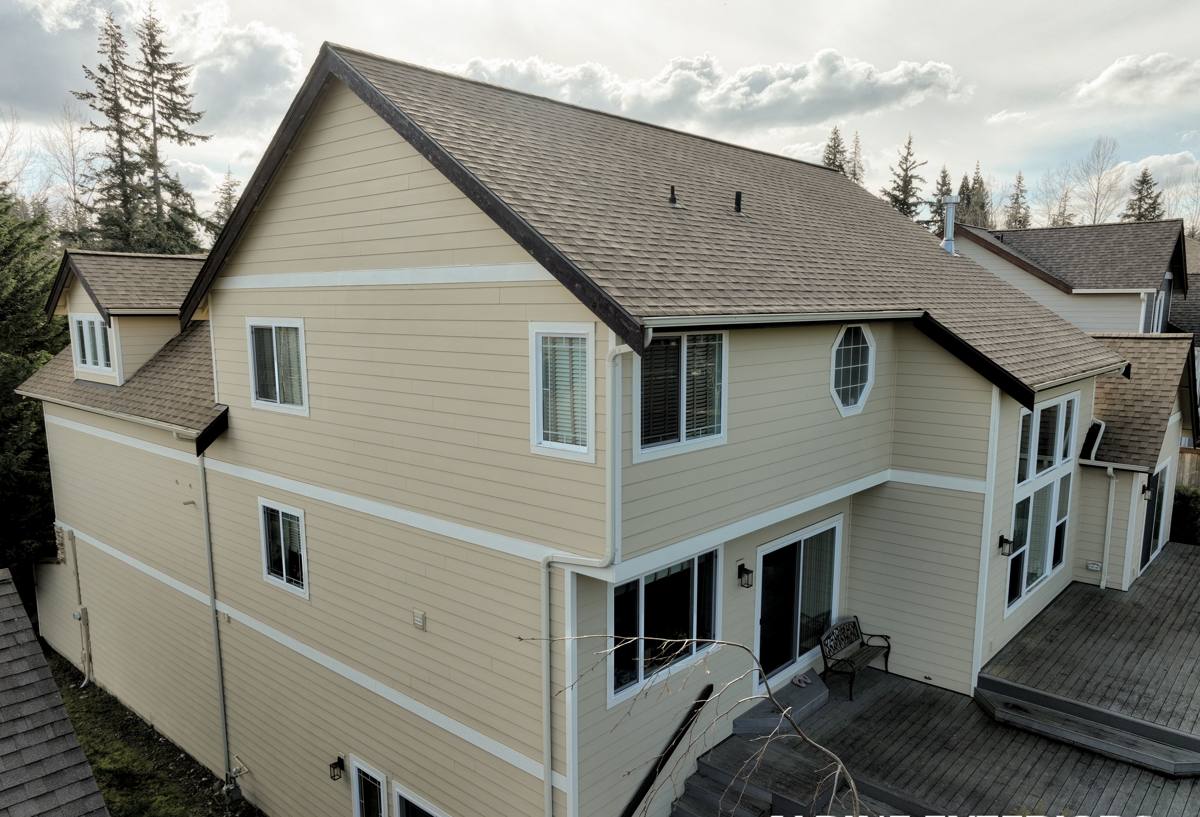
What's Actually Wearing Out Your Windows
Most Columbia homeowners who call us about windows aren't shopping for an upgrade for its own sake — they've noticed a specific problem. Here's what we hear most often, and what it usually means:
- Cold drafts near the frame — failed weatherstripping or a frame that's no longer square, common in homes with older wood or aluminum windows
- Fogging between the panes — the seal on a dual-pane unit has failed and the gas fill (or plain air) has escaped; this can't be fixed, only replaced
- Black staining or soft wood at the sill — water has been getting behind the window over time, often from failed exterior caulking rather than the window itself
- Windows that stick or won't stay open — swelling from repeated wet/dry cycles, typical in original wood-frame windows on older Columbia homes
- Visible moss or algae staining on the frame or nearby trim — a sign the area holds moisture longer than it should, which matters when we're planning flashing and drainage
None of these are cosmetic issues on their own — they're indicators of how well the window is managing water and air, which is the whole job of a window in this climate.
What "Energy-Efficient" Actually Means
The term gets used loosely in sales pitches, so it's worth being specific. Every window sold with an NFRC (National Fenestration Rating Council) label carries a few numbers that actually tell you how it will perform:
U-Factor
This measures how much heat the window lets escape — lower is better. In a climate like ours, where the bigger cost is keeping heat in during a long, mild-but-damp heating season, U-factor is usually the number that matters most for a Bellingham home.
Solar Heat Gain Coefficient (SHGC)
This measures how much solar heat passes through the glass. It matters less here than it would in a sunnier climate, but on west- and south-facing walls that catch afternoon sun, the right SHGC keeps rooms from overheating in summer without sacrificing winter light.
Air Leakage
Rated separately, and arguably the most overlooked number. A window with a great U-factor but poor air sealing will still leak comfort — and in a driving-rain climate, air leakage paths are often the same paths water finds its way in through.
We spec windows to Washington's energy code minimums as a floor, not a target — most Columbia homes benefit from going a step beyond code, especially on the walls that take the worst weather.
Frame Material: What Actually Holds Up Here
Frame material affects lifespan, maintenance, and how well the window resists our specific weather far more than most homeowners expect. Here's how the common options compare for a coastal Whatcom County home:
| Frame Material | Moisture Resistance | Maintenance | Typical Trade-Offs |
|---|---|---|---|
| Vinyl | Good — won't rot, but can flex or discolor with age | Low | Best value; limited color/finish options; welded corners can be a weak point if poorly made |
| Fiberglass | Excellent — dimensionally stable, doesn't swell or shrink with moisture | Low | Higher upfront cost; handles our wet/dry cycling better than vinyl over the long run |
| Wood-clad | Good on the exterior cladding; interior wood still needs protection from condensation | Moderate to high | Better insulating core and classic look; cladding seams need attention during install |
| Aluminum | Poor without thermal breaks — conducts cold and can sweat/condensate heavily | Low | We generally steer clients away from non-thermally-broken aluminum for this reason, not because it's a bad material everywhere — it's just a poor match for our wet, cool climate |
We don't push one brand or material on every job. The right call depends on your home's age, exposure to weather off the bay, and what you're trying to solve — a drafty 1970s aluminum-frame home has different priorities than a 1990s vinyl-window home with failed seals.
Why Installation Matters More Than the Window Itself
A high-end window installed with poor flashing will leak. A mid-range window installed correctly, with proper flashing, sill pans, and sealant sequencing, will outperform it. This is the part of the job that's invisible once the trim goes back on — and it's where driving rain off the bay finds every shortcut.
Our process
- On-site assessment — we check existing framing, sill condition, and look for signs of prior water intrusion before quoting anything
- Removal and inspection — once the old window is out, we inspect the rough opening for rot or soft framing that needs repair before a new window goes in
- Sill pan and flashing — a sloped sill pan and properly lapped flashing (integrated with your home's weather-resistive barrier, not just caulked over it) is the single biggest factor in whether a window stays dry for the next 20 years
- Air sealing and insulation — the gap around the window frame is insulated and air-sealed correctly, not just stuffed with foam
- Exterior sealant and trim — sealed and finished to shed water, with attention to the details that collect moss and algae over a Bellingham winter
- Final check — operation, seal, and squareness confirmed before we call the job done
A Practical Checklist for Homeowners
Whoever you hire, these are the things worth confirming before work starts:
- NFRC-labeled windows with U-factor and air leakage ratings appropriate for our climate zone
- A written scope that includes sill pan flashing, not just "install window"
- A plan for what happens if rot or damage is found in the rough opening once old windows come out
- Clarity on warranty coverage — both the manufacturer's product warranty and the installer's labor warranty
- A timeline that accounts for weather — window openings should never sit open overnight during a wet forecast
- Local references or completed work in Bellingham or nearby Whatcom County neighborhoods
What Drives the Cost
Pricing varies a lot by window size, count, frame material, and what condition the existing opening is in — we won't quote a number without seeing the job. But these are the main factors that move the price up or down:
| Factor | Impact on Cost |
|---|---|
| Frame material (vinyl vs. fiberglass vs. wood-clad) | Moderate to significant — fiberglass and wood-clad run higher than vinyl |
| Number of windows replaced at once | Per-window cost typically drops with larger batches |
| Rot or damage found in the rough opening | Can add cost if framing repair is needed — we flag this before proceeding, not after |
| Window size and configuration (single vs. multi-pane, custom shapes) | Larger and custom units cost more than standard sizes |
| Full-frame replacement vs. insert (pocket) replacement | Full-frame costs more but is often the right call on older, worn-out frames |
Why Local Experience in This Neighborhood Matters
Columbia has a mix of home ages and construction styles, and every one of them handles Bellingham's weather a little differently. A crew that's worked in this part of the city knows what to expect when they pull the trim off a home built decades ago versus one built more recently — where moisture tends to collect, how the local weather off the bay hits different exposures, and what it takes to keep water out through another Whatcom County winter. That familiarity shows up in fewer surprises mid-project and a install that's built for the conditions your home actually faces, not a generic spec sheet.
If your windows are drafty, fogged, sticking, or just old enough that you're wondering whether it's time, we're happy to take a look and give you a straight answer — including telling you if a repair makes more sense than a full replacement. Reach out for a free, no-pressure estimate using the form below.