 Bellingham Roofing
 New-Construction Windows Built for Cordata's Climate
Cordata sits on the north side of Bellingham, close enough to the water and the lowland fog belt that new-construction windows here have to earn their keep from day one. Whatcom County's mix of salt-laced marine air, long stretches of driving rain, and a moss season that can run from October through May puts real stress on window units, flashing, and the framing details around them. When a house is going up new, you get exactly one chance to build the window openings correctly before siding, trim, and interior finishes cover up the work. Get it right at framing and the windows perform for decades. Get it wrong and you're chasing leaks, fogged glass, and rot behind the trim within a few winters.
This page is specifically about new-construction window installation in Cordata — not replacement windows going into an existing wall, and not a general overview of every neighborhood we serve. The install method, the flashing sequence, and the product choices are different when you're working with open studs and no existing weather barrier to protect.
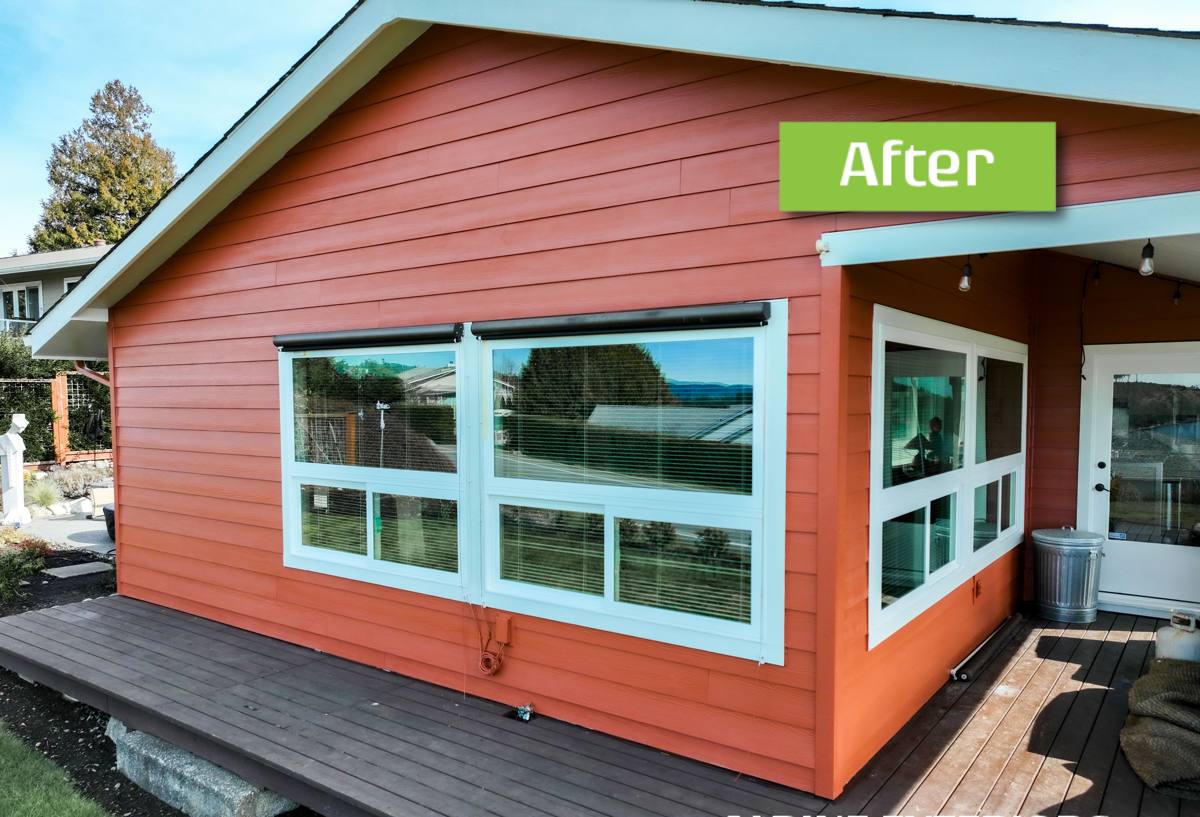
What Cordata's Climate Actually Does to a Window Opening
Bellingham's weather is mild compared to a lot of the country, but "mild" doesn't mean easy on a building envelope. A few things matter specifically for new construction here:
- Wind-driven rain: Storms off the Strait and Bellingham Bay push rain sideways, which means water gets forced up and under sills, not just down the face of the wall. Sill pan flashing isn't optional here — it's the difference between a dry wall cavity and a hidden leak.
- Salt-influenced air: Cordata isn't waterfront, but the broader Whatcom County air carries enough salt and moisture that unprotected fasteners, low-grade flashing metals, and cheap hardware corrode faster than they would inland.
- Moss and organic growth: Long wet seasons mean moss, algae, and lichen take hold on any surface that stays damp — including window sills, mulled unit joints, and trim that isn't detailed to shed water and dry out.
- Extended damp season: Framing lumber and OSB sheathing in this region can sit exposed to moisture for weeks during a build. If the window rough openings aren't properly wrapped and protected during construction, the wood is already absorbing water before the window ever goes in.
None of this means Cordata is a harsh environment in the way a coastal storm zone is. It means the ordinary risks of window installation — bad flashing laps, missed sealant, wrong fastener spacing — get punished faster and more visibly here than in a dry climate.
What a Correct New-Construction Window Install Actually Involves
New-construction windows are installed with a nailing fin that gets fastened directly to the sheathing, then integrated into the house wrap and flashing system before siding goes on. The sequence matters as much as the window itself.
The Flashing Sequence
Done right, the order is: sill pan flashing first (sloped to drain outward, with end dams), then the window set into the pan, then side flashing, then head flashing last — each layer lapping over the one below it like shingles, so water always sheds outward and down. Skip the sill pan or reverse the lapping order and you've built a pocket that holds water against the framing instead of shedding it.
Air and Water Barrier Integration
The window has to tie into the weather-resistive barrier (house wrap or a fluid-applied membrane) as a continuous system, not as an isolated patch around each opening. Gaps, wrinkles, or missed seams at the corners are where most new-construction leaks start — and they don't show up until years later, after the drywall and siding are long finished.
Fastening and Shimming
Nailing fins need full fastener schedules per the manufacturer's instructions — skipping fasteners to save time is a common shortcut that shows up later as air leaks or a window that's gone out of square. Shimming at the jambs and sill keeps the unit square and prevents the sash from binding or the glass from stressing over time.
Insulation and Sealant at the Interior
The gap between the window frame and the rough opening needs low-expansion foam or backer rod and sealant — not spray foam that over-expands and bows the frame. This is a small detail that gets rushed on a lot of builds and causes operating problems down the road.
Choosing Window Products for a Cordata Build
Vinyl, fiberglass, and clad-wood windows are all viable choices for new construction in this climate, and the right one depends on the home's design, budget, and finish level rather than any one product being universally "best."
| Frame Material | Strengths in This Climate | Trade-Offs |
|---|---|---|
| Vinyl | Won't rot or corrode, low maintenance, good value, holds up well against damp/salt air | Limited color range, frame can be less rigid on very large units |
| Fiberglass | Very stable in temperature swings, strong, paintable, low maintenance | Higher upfront cost than vinyl |
| Clad-Wood | Traditional interior wood look, exterior cladding resists weather | Requires more attention to flashing detail at the cladding seams; higher cost; any breach in the cladding exposes wood beneath it to moisture |
Whatever material you choose, glass performance matters as much as frame material in Whatcom County. Look for double or triple-pane units with a warm-edge spacer and a low-E coating tuned for our marine climate — it helps with condensation control on cold, damp mornings, which is a common complaint in new builds with tight, well-insulated walls.
Our Product Standard
We install from established, warrantied window lines rather than off-brand or private-label products with thin support networks. If a manufacturer's installation instructions conflict with best flashing practice for this climate, we follow the sequence that keeps water out — that's a standard we hold regardless of brand.
Our Process for New-Construction Window Jobs in Cordata
- Plan review and rough opening check. We confirm rough openings match the specified window sizes before framing is closed up, catching sizing conflicts while they're still cheap to fix.
- Weather barrier and flashing installation. House wrap or membrane goes on, sill pans are set and sloped, and the flashing sequence is built in the correct shingle-lap order.
- Window setting and fastening. Units are set, shimmed square and plumb, and fastened to the full manufacturer schedule.
- Head flashing and barrier tie-in. Head flashing goes on last, taped and integrated into the weather barrier above the opening.
- Interior sealing and insulation. Gaps are filled with the correct low-expansion material, and interior trim details are confirmed before drywall closes the wall.
- Final walkthrough. Every unit is checked for square operation, smooth locking, and a clean, weathertight exterior finish before we call the job done.
Why Hiring a Crew That Already Works Cordata Matters
New-construction window flashing isn't a place to learn on the job. A crew that regularly works Cordata and the surrounding Bellingham area already knows how the local wind-driven rain behaves against different house orientations, how long the wet season runs, and where builders in this area tend to cut corners that cause callbacks two or three winters later. That familiarity shows up in small decisions — how deep the sill pan end dams are cut, how much lap is left at flashing seams, which sealants actually cure properly in cool, damp conditions — that don't show up on a spec sheet but make the difference between a window that performs for 30 years and one that needs attention in five.
It also means coordination. New-construction window work has to sync with the framer, the house wrap crew, and the siding installer. A crew that's done this sequence together before, on homes in this same climate, keeps the schedule moving without gaps in the weather barrier being left exposed longer than necessary.
A Practical Checklist for Homeowners and Builders
If you're overseeing a new build in Cordata, these are worth confirming before the walls close up:
- Sill pan flashing is installed and sloped to drain outward, not flat or reverse-sloped
- Flashing laps in the correct order: sill, then jambs, then head — each layer over the one below
- Full fastener schedule used on every nailing fin, not a reduced or "quick" pattern
- Weather barrier seams at window corners are sealed and free of wrinkles or gaps
- Windows are shimmed square and check out with smooth sash operation before trim goes on
- Interior gap fill uses low-expansion foam or backer rod/sealant, not high-pressure spray foam
- Glass package includes a low-E coating suited to a cool, damp marine climate
Timing and Weather Windows for Installation
New-construction window installation can happen in most conditions since the units go into a framed, sheathed opening, but active rain during the flashing and sealing steps is still worth avoiding — wet flashing surfaces don't bond sealant properly, and that's exactly the kind of shortcut that causes leaks later. Given how much of the year in Whatcom County includes rain, this usually means working around forecasted dry windows rather than waiting for a dry season that may not come. A crew experienced with local weather patterns plans the flashing and sealing stages around these windows as a matter of course.
If you're building or framing a home in Cordata and want window installation done right the first time, we're happy to walk the plans, talk through product options, and give you a straightforward, no-pressure estimate. Reach out using the form below to get started.