 Bellingham Roofing
 Why Birchwood Decks Wear Out Faster Than the Brochure Says
A deck in Birchwood doesn't fail the way a deck in Arizona or even Spokane fails. Out here in Whatcom County, the damage is slower and sneakier. Salt-laden air drifting in off the Sound accelerates corrosion on fasteners and metal connectors long before the wood itself looks bad. Driving rain — the kind that comes in sideways during a fall or winter system — gets pushed under flashing and ledger boards instead of just falling straight down and running off. And because we get long stretches of overcast, damp weather, moss and algae get months at a time to colonize any deck surface that doesn't dry out quickly between rains.
None of that means Birchwood decks are doomed. It means a deck built or repaired for this climate needs different priorities than a generic repair job: drainage, ventilation, fastener choice, and moss control matter more here than they would in a drier climate. When we look at a deck repair in this neighborhood, we're not just patching what's broken — we're asking why it broke in the first place, because in Bellingham that's almost always moisture-related.
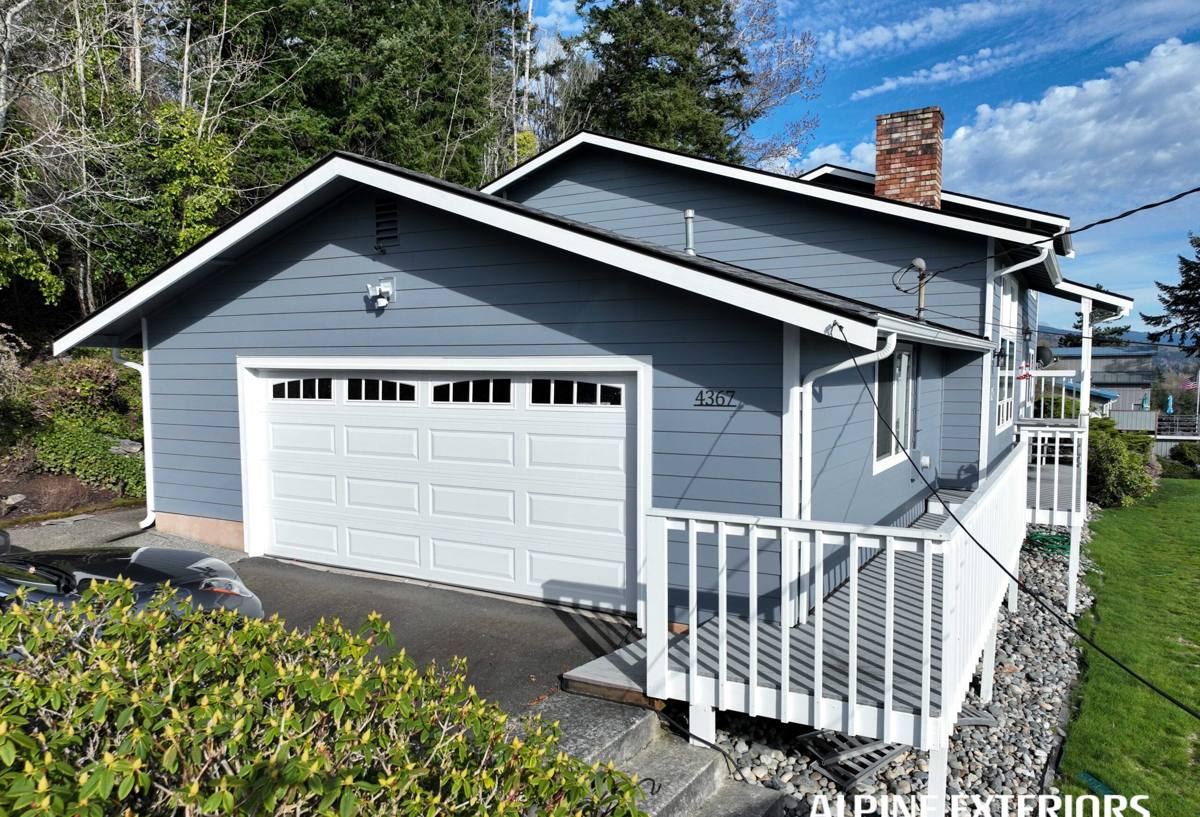
What Moss, Rain, and Salt Air Actually Do to a Deck
Moss and Organic Growth
Moss doesn't just sit on top of decking looking unsightly — it holds moisture against the wood surface for days after a storm has passed, which is exactly the condition wood rot needs. On shaded decks, or ones tucked under trees, this can quietly rot deck boards from the top down while the underside still looks fine.
Driving Rain and Wind-Driven Moisture
Standard flashing details that work fine in calmer climates can underperform here because wind pushes rain sideways and upward into gaps that were only designed to shed water falling straight down. The most common failure point we see is where the deck ledger board attaches to the house — if that flashing wasn't installed correctly, water works its way behind the siding and into the rim joist over years, and you often don't see it until the deck starts to feel spongy or pulls slightly away from the house.
Salt Air and Corrosion
Coastal and near-coastal air in this part of Washington carries enough salt to speed up corrosion on lower-grade fasteners, joist hangers, and hidden fastening hardware. A deck can look structurally sound on the surface while the nails or screws holding the frame together are quietly weakening underneath. This is one of the reasons a visual-only inspection isn't enough — we check the hardware, not just the boards.
Signs Your Deck Needs Repair (Not a Full Rebuild)
Most decks don't need to be torn out and replaced. They need targeted repair to the parts that actually failed while the sound structure is left alone. Here's how to tell which category you're in before you call anyone:
- Soft, spongy, or bouncy spots when you walk across specific boards or areas
- Visible moss, algae, or black staining that returns quickly after cleaning
- Gaps opening up where the deck meets the house, or the ledger board pulling away
- Rust streaks running down from screw heads, joist hangers, or railing brackets
- Railings or stair stringers that feel loose or wobble under normal use
- Standing water that takes more than a day to fully drain after rain
- Discoloration or splitting concentrated in one section rather than spread evenly
If most of your deck still feels solid and dry underneath, and the issues are limited to a few boards, the ledger connection, stairs, or railings, repair is almost always the right call — it's less disruptive and far less expensive than a full rebuild.
What a Correct Deck Repair Actually Involves
A repair that just swaps out the obviously rotten board and calls it done tends to fail again within a season or two, because it doesn't address why that board failed. A repair done right in this climate typically includes:
Structural Inspection First
Before any board comes off, we check the ledger board attachment, the joists and beams underneath, the posts and footings, and the condition of any hardware. Surface damage is often a symptom of a structural or drainage problem, not the problem itself.
Fixing the Water Path, Not Just the Symptom
If rot shows up near the house, we look at the flashing and ledger connection. If it shows up at the outer edge, we look at drainage and slope. Replacing decking without correcting the underlying moisture path just buys you a few more years before the same spot fails again.
Matching or Upgrading Materials Appropriately
Replacement boards should match the existing deck's structural capacity, and fasteners should be rated for the exposure — stainless steel or high-grade coated hardware in areas closer to salt air exposure, proper joist hangers where framing is disturbed, and flashing tape at any new ledger or post connection.
Railings, Stairs, and Code-Relevant Details
Loose railings and stair stringers are a safety issue, not just a cosmetic one. Repairs to these components get checked against current safety spacing and attachment standards, even on an older deck that wasn't originally built to today's code.
Repair vs. Replacement: How to Think About the Decision
Homeowners often assume any visible damage means the whole deck is on its way out. That's rarely true. The table below outlines the factors that actually separate a repair job from a full rebuild.
| Factor | Repair Usually Makes Sense | Replacement Usually Makes Sense |
|---|---|---|
| Extent of rot/damage | Limited to a few boards, stairs, or railings | Widespread across framing, multiple sections, or the ledger |
| Framing condition | Joists and beams are solid when probed | Joists or beams are soft, crumbling, or previously patched |
| Age of the deck | Under 15-20 years, built with standard framing | Older deck nearing the end of its structural service life |
| Ledger/house connection | Sound, with isolated flashing issues | Long-term water intrusion into the rim joist or wall framing |
| Budget goals | Extend usable life at lower cost | Want a layout change, larger footprint, or long-term low-maintenance surface |
Our Deck Repair Process
- Inspection and honest assessment — we check the surface, framing, hardware, and drainage, and tell you plainly what's failing and why.
- Written scope and estimate — you get a clear breakdown of what's being repaired, what materials are used, and what it costs, before any work starts.
- Removal of failed material — only the compromised boards, framing, or hardware come out; sound structure stays in place.
- Correcting the root cause — flashing, drainage, or ventilation issues get addressed so the repair actually lasts.
- Rebuilding with climate-appropriate materials — corrosion-resistant fasteners, proper flashing tape, and matched or upgraded decking.
- Final walkthrough — we check railings, stairs, and fastening by hand before we consider the job finished.
Materials We Use and Why
For repairs, we generally match the existing deck's material unless there's a good reason to change it. Pressure-treated lumber remains a solid, cost-effective choice for framing and is often the right call for structural repairs. For decking surfaces exposed to heavy moss and moisture, composite boards can reduce maintenance, though they come with a higher upfront cost and their own installation requirements — proper spacing and ventilation underneath matter just as much with composite as with wood, since trapped moisture is still trapped moisture regardless of the surface material.
On the hardware side, we lean toward stainless steel or high-grade coated fasteners and joist hangers, especially on decks with any salt air exposure. It costs a bit more upfront but avoids the early corrosion that leads to premature failure of connections that are otherwise hard to inspect once the deck is closed back up.
Maintenance Checklist to Extend Your Deck's Life
Between repairs, a little seasonal attention goes a long way in this climate. This is the routine we'd recommend to any Birchwood homeowner:
- Sweep off leaves, needles, and debris regularly, especially in fall
- Clean moss and algae off decking surfaces before it builds up thick enough to hold moisture
- Check that gaps between boards aren't clogged with debris that traps water
- Inspect the ledger board area where the deck meets the house once a year
- Look at fastener heads and hardware for early rust staining
- Re-seal or re-stain wood decking on the manufacturer's recommended schedule, not just when it looks faded
- Test railings and stair stringers by hand for looseness at least once a year
Why a Crew That Already Works in Birchwood Matters
A deck repair crew that mostly works drier climates tends to under-detail flashing and drainage, because in their experience it hasn't mattered as much. Around Bellingham and the rest of Whatcom County, those details are the difference between a repair that lasts and one you're paying for again in three years. Working in this neighborhood regularly also means we're familiar with the kind of exposure — wind direction, shade patterns, proximity to the water — that shapes how fast moss returns and where water tends to collect on a given lot. That local pattern recognition doesn't replace a proper inspection, but it does mean we know what to look for first.
If your deck is showing soft spots, moss that won't quit, loose railings, or rust at the fasteners, we're happy to take a look and give you a straight answer about whether it needs repair or something more. Reach out for a free, no-pressure estimate using the form below.