 Bellingham Roofing
 Why Edgemoor Roofs Wear Differently Than the Rest of Bellingham
Edgemoor sits close to the water, with a lot of tree cover and homes tucked into wooded, view-oriented lots. That combination is beautiful to live in and hard on a roof. Salt-laden air off the bay accelerates corrosion on fasteners, flashing, and any exposed metal. The tree canopy means shade, damp organic debris, and a head start for moss on north-facing slopes. And Bellingham's wet season isn't just rain — it's weeks of driving, wind-pushed rain that finds every weak seam, undersized flashing detail, and aging boot around a pipe. A roof spec'd for a dry inland suburb doesn't hold up the same way here.
When we install a new roof in Edgemoor, we're not just following a manufacturer's minimum spec sheet. We're building for a specific combination of salt exposure, shade, and sustained moisture that shortens the life of a roof that was installed to a generic standard.
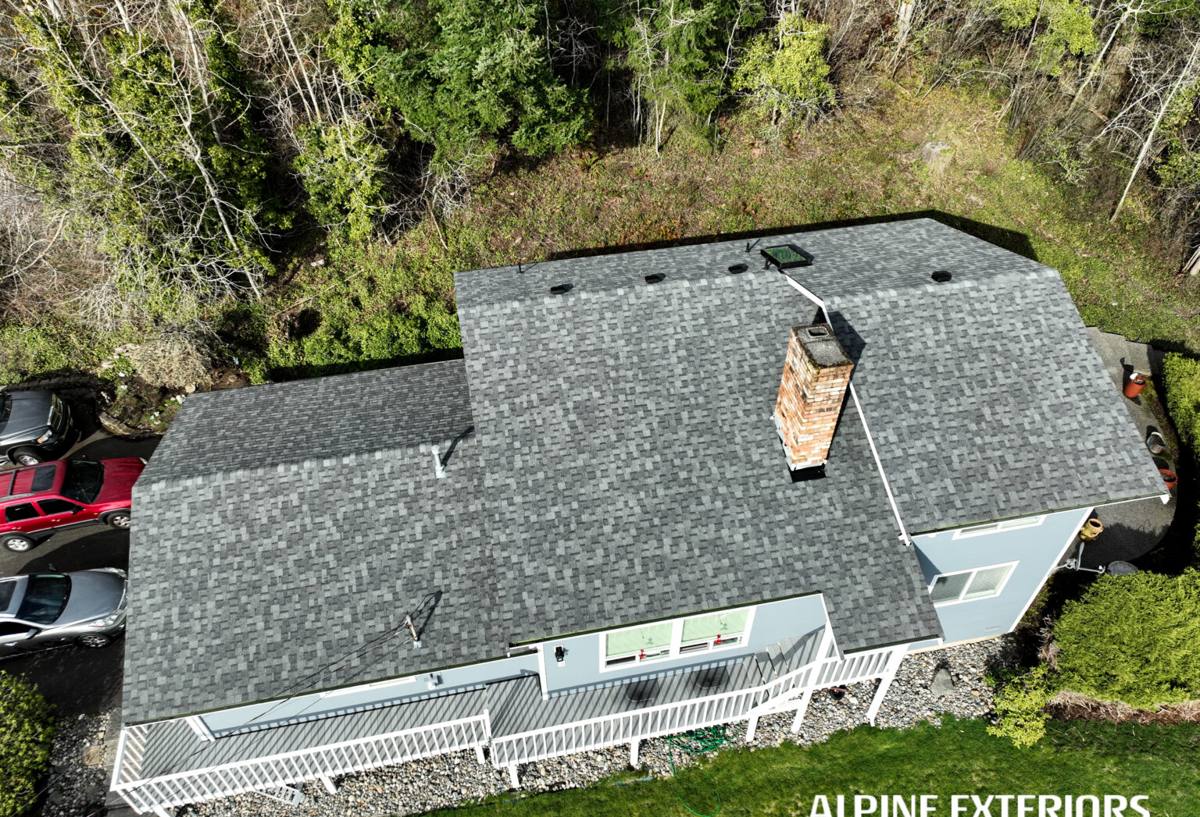
Signs an Edgemoor Home Is Due for Full Replacement, Not Another Repair
Roof repairs make sense right up until they don't. Homeowners in this neighborhood usually reach out to us after one of these shows up:
- Granule loss heavy enough that you're finding grit in gutters every time it rains
- Moss that keeps returning within a season or two of cleaning, even after treatment
- Soft or spongy spots underfoot on the roof deck, especially near valleys or eaves
- Daylight visible through the attic sheathing, or damp insulation after a windy rain
- Flashing around chimneys, skylights, or dormers that's rusted, lifted, or resealed with visible caulk patches
- A roof that's simply at or past the age where a manufacturer's warranty has effectively expired
Any one of these can sometimes be handled with a targeted repair. Two or three together, especially on a roof already past 18-20 years old, usually means the underlying materials are failing across the whole field, not just at the spot you can see. At that point, patching becomes money spent delaying the inevitable rather than money spent solving the problem.
What a Correct New Roof Installation Actually Involves
"New roof" gets used loosely. A correct installation is a sequence of steps, and skipping or rushing any one of them is where roofs fail early — especially in a climate like ours where the margin for error is smaller.
Tear-Off and Deck Inspection
We remove the existing roofing down to the deck rather than layering over it. That's the only way to actually see the plywood or plank sheathing underneath. In older Bellingham homes, especially ones near the water, we sometimes find sections of deck that have taken on moisture damage over the years and need to be replaced before anything new goes down. Installing over a compromised deck just locks the problem inside the new roof.
Underlayment and Water Barrier
This layer is what actually keeps a home dry if wind ever drives rain up under the shingles or tiles, which happens more often here than in calmer inland climates. We use synthetic underlayment across the full roof and self-adhering ice-and-water barrier at the vulnerable points — eaves, valleys, and around any roof penetration — where wind-driven rain and ice damming are most likely to force water backward under the covering.
Ventilation
A roof that can't breathe traps moisture in the attic, which shows up later as rot, mold, or premature failure of the roofing material from underneath. We check intake at the soffits and exhaust at the ridge and size both to the attic volume, not just to whatever vents happen to already be there. This matters more under Edgemoor's tree canopy, where shaded roofs stay damp longer after a rain.
Flashing
Flashing is where the majority of roof leaks actually originate, not in the open field of shingles. Every chimney, skylight, dormer wall, and pipe boot gets new metal flashing, properly stepped and lapped, not just caulked over the old pieces. In salt air, we lean toward corrosion-resistant metals and finishes at these points since exposed fasteners and thin flashing are the first things to degrade.
Field Installation
Finally, the roofing material itself goes down to the manufacturer's nailing pattern and exposure spec, with attention to wind rating — an important detail in a neighborhood with open water exposure and few windbreaks compared to more sheltered parts of the city.
Material Options for Edgemoor's Salt Air and Moss Exposure
There's no single "best" roofing material for every home. The right choice depends on your roof's pitch, sun/shade exposure, budget, and how the house looks. Here's how the common options actually perform under Edgemoor's specific conditions:
| Material | Performance in Salt Air | Moss Resistance | Typical Lifespan Here |
|---|---|---|---|
| Architectural asphalt shingle | Good, with corrosion-resistant flashing and fasteners | Moderate — benefits from algae-resistant granules | 20-30 years |
| Standing seam metal | Very good, with the right coating and metal choice | High — smooth surface sheds debris well | 40-50+ years |
| Composite/synthetic shake | Good | Moderate to high depending on product | 30-40 years |
| Cedar shake | Fair — needs regular maintenance near salt air | Low without ongoing treatment | 20-30 years with upkeep |
We steer most Edgemoor homeowners toward algae-resistant asphalt shingles or standing seam metal, not because other materials are bad products, but because they carry the lowest ongoing maintenance burden for this specific climate. Cedar shake can look great here, but it asks for a level of regular upkeep — cleaning, treating, sometimes replacing individual shakes — that a lot of busy homeowners underestimate going in. That's a maintenance conversation we'll have honestly with you, not a sales pitch against any particular product.
Our Installation Process, Start to Finish
- On-site inspection and estimate — we walk the roof (weather permitting) and the attic, note the pitch, ventilation, flashing points, and any deck concerns visible from below, and give you a written estimate with no pressure to sign on the spot.
- Material selection — we go over the trade-offs above in the context of your home, your budget, and how long you plan to stay in it.
- Scheduling around Whatcom County weather — we plan tear-off days with a dry weather window in mind and tarp/dry-in the deck the same day it's exposed, so your home is never left open to the rain overnight.
- Tear-off and deck repair — old roofing removed, deck inspected, any damaged sheathing replaced.
- Underlayment, flashing, and ventilation install — the layers that actually determine whether the roof stays dry over the next few decades.
- Field material installation — shingles, metal, or composite installed to spec.
- Final walkthrough — we go over the finished roof with you, confirm gutters and downspouts are clear and functioning, and answer any questions before we consider the job done.
Cost Factors for a New Roof in Edgemoor
Every roof is different, so we don't quote firm numbers until we've actually seen yours. But the factors that move the price up or down are consistent:
| Factor | Why It Matters |
|---|---|
| Roof size and number of planes | More square footage and more valleys/hips mean more material and labor |
| Pitch and accessibility | Steep roofs and tree-obstructed access slow the work and add safety equipment needs |
| Deck condition | Rotten or soft sheathing found at tear-off adds material and labor to replace it |
| Material choice | Standing seam metal costs more upfront than asphalt but usually lasts twice as long |
| Number of penetrations | Chimneys, skylights, and multiple vents each require flashing work |
| Layers being removed | Tear-off of multiple existing layers takes longer than a single layer |
As a broad range, homeowners in this area typically see full asphalt shingle replacements land somewhere in the mid five figures for an average-size home, with metal roofing running higher. The only way to know what your roof actually needs is a real inspection — which is why we don't quote sight-unseen over the phone.
Moss, Algae, and Long-Term Roof Care in a Wet Climate
A new roof installed correctly buys you a lot of years, but Bellingham's long, wet moss season means no roof here is truly maintenance-free. A few habits go a long way toward protecting the investment:
- Keep gutters clear so water isn't backing up under the roof edge during heavy rain
- Have moss and debris removed gently — pressure washing strips granules and shortens shingle life
- Trim back tree limbs that keep sections of the roof shaded and damp longer than the rest
- Schedule a walk-through inspection every couple of years, especially after a hard windstorm off the water
- Address small flashing or sealant issues early, before a small leak becomes a deck repair
We're glad to talk through a simple maintenance plan when we install your roof, so you know what to watch for and how often it actually needs attention — not an upsell schedule, just what a roof in this specific climate realistically needs.
Why Hiring a Crew That Already Works in Edgemoor Matters
A roofing crew that mostly works inland or in drier parts of Whatcom County can still install a technically correct roof — but they may not default to the corrosion-resistant fasteners, the heavier ice-and-water coverage, or the ventilation sizing that a shaded, water-adjacent neighborhood like Edgemoor actually calls for unless they're used to building for it. Local experience means we already know which details matter most on a given street's exposure and tree cover, and we don't have to relearn that on your roof.
It also means faster response if something needs attention after the job — no long drive time, and a crew that already knows your home and your roof's history.
Questions to Ask Before You Hire a Roofing Contractor
Whoever you choose to replace your roof, these are worth confirming upfront:
- Are you licensed and insured to work in Washington State, and can you provide proof?
- Do you tear off down to the deck, or do you install over existing layers?
- What underlayment and ice-and-water barrier do you use, and where specifically is it applied?
- How do you size and install ventilation for the specific attic, not just a standard vent count?
- What's covered under workmanship warranty versus manufacturer material warranty, and for how long?
- Do you handle flashing with new metal, or reuse and reseal existing flashing?
A contractor who answers these clearly and specifically, without hesitation, is a good sign. Vague answers on any of these are worth pausing on.
If your Edgemoor roof is showing its age or you just want an honest read on what shape it's in, we're happy to come take a look. Fill out the form below for a free, no-pressure estimate — we'll walk the roof, tell you what we actually see, and let you decide from there.