 Bellingham Roofing
 Deck Building for Fairhaven's Coastal Conditions
Fairhaven sits close enough to the water that its homes take a different kind of weathering than decks built further inland in Whatcom County. Salt-laden air off Bellingham Bay works into fasteners and hardware, wind-driven rain gets pushed sideways under railings and against ledger boards, and the tree cover common in Fairhaven's older residential streets keeps decks shaded and damp well into the moss season each fall and winter. A deck built without that combination in mind will show it early — usually within the first two or three wet seasons, in the form of rust streaks, soft spots near the house, or a green film that never fully dries out.
We build and rebuild decks in Fairhaven regularly enough to know which details matter here and which are optional elsewhere in Bellingham but not optional in this neighborhood. This page covers what a Fairhaven deck actually needs, what correct construction looks like, and how we run the job from first look to final walk-through.
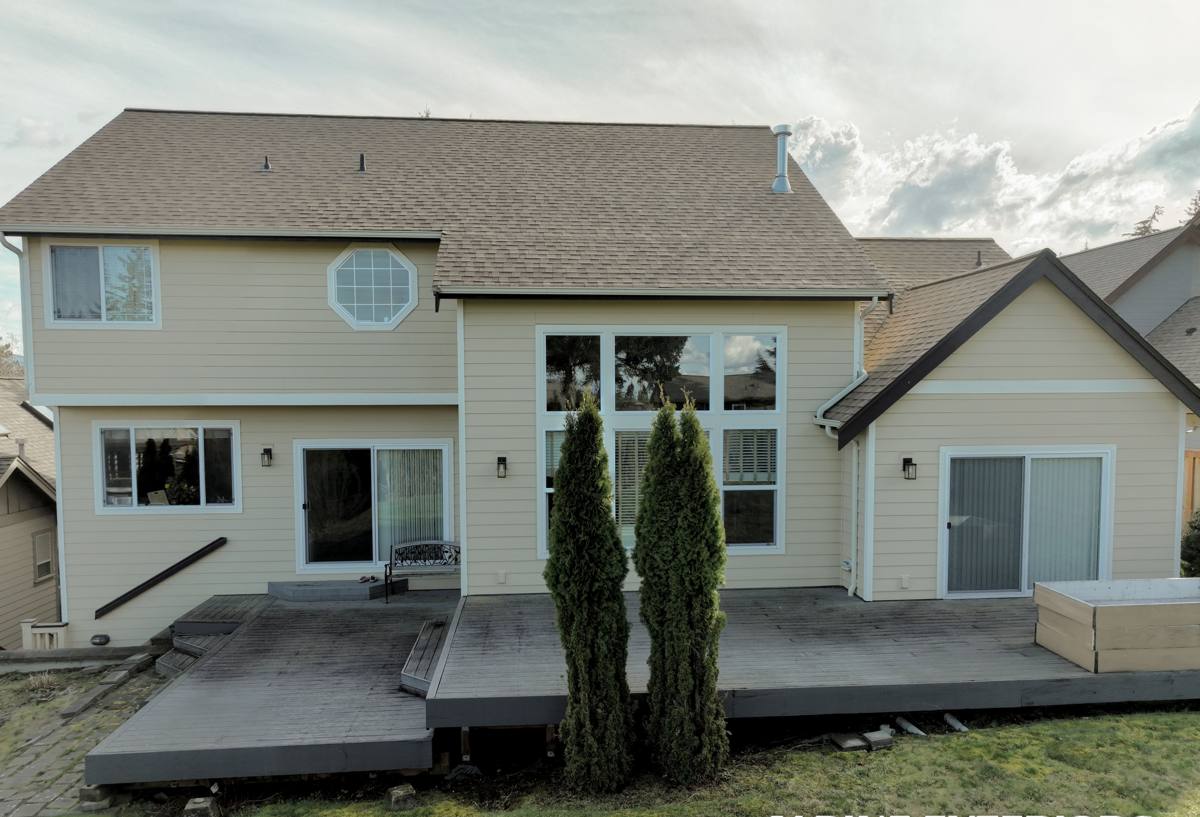
What Fairhaven's Climate Does to a Deck Over Time
Salt Air and Metal Hardware
Homes closer to the waterfront deal with airborne salt that accelerates corrosion on anything less than fully rated hardware. Standard galvanized fasteners can start showing surface rust in a few years in this environment; that rust doesn't stay cosmetic — it weakens the joint and can stain the surrounding wood or composite decking.
Driving Rain and Wind Exposure
Storms coming off the Sound don't always fall straight down. Wind-driven rain gets forced under rail caps, into end-grain cuts, and behind ledger boards where the deck attaches to the house. Any gap in flashing or sealing at that ledger connection becomes a slow, hidden leak path into the house framing — one of the most common and most expensive deck failures we see.
Shade, Tree Cover, and Moss
Fairhaven's mature trees and hillside lots mean a lot of decks get partial shade for most of the day, especially in the shoulder seasons. Combined with Whatcom County's long wet stretch from fall through spring, that shade keeps deck boards damp far longer than a deck in full sun. Damp wood is exactly what moss and algae need, and a slick, mossy deck surface isn't just unattractive — it's a slip hazard on stairs and landings.
What a Correct Deck Build Includes Here
A deck that holds up in Fairhaven isn't built differently in a dramatic way — it's built with more attention to the details that matter most in this climate. That includes:
- Corrosion-resistant fasteners and structural hardware rated for coastal or high-moisture exposure, not standard-grade galvanized
- Proper ledger board flashing where the deck meets the house, sealed to shed water away from the framing rather than trap it
- Adequate gapping between deck boards for drainage and airflow, so surfaces can actually dry between rain events
- Footings set below frost depth and sized for the soil conditions on the specific lot, since Fairhaven's terrain varies from flat to sloped
- Ventilation underneath the deck structure so joists and beams aren't sitting in trapped moisture
- A surface material selected with the site's actual sun and shade pattern in mind, not a one-size answer
None of this is exotic. It's standard deck-building practice applied consistently, without shortcuts on the parts that are easy to skip and hard to see once the deck is finished.
Choosing a Deck Surface for a Shaded, Damp Lot
Material choice matters more on a shaded Fairhaven lot than it would on an open, sunny site. Here's how the common options actually perform in this kind of environment:
| Material | Moss/Algae Resistance | Maintenance | Notes for Fairhaven Lots |
|---|---|---|---|
| Pressure-treated wood | Low — needs regular cleaning | Annual cleaning, periodic re-sealing | Lowest upfront cost; requires the most upkeep in shaded, damp spots |
| Cedar | Moderate | Regular sealing to maintain resistance | Natural rot resistance, but still needs maintenance in constant shade |
| Composite decking | Moderate to good, varies by product | Low — periodic washing | Surface texture matters; smoother caps shed algae growth better in shade than heavily wood-grained textures |
| PVC decking | Good | Low | Fully synthetic, doesn't absorb moisture; performs consistently in shaded, wet conditions |
We don't push one material as universally "best" — each has real trade-offs in cost, appearance, and long-term feel underfoot. What we will do is tell you honestly which options make sense for your specific lot's sun exposure, budget, and how much upkeep you actually want to do. A low-maintenance composite or PVC surface earns its higher upfront cost fast on a shaded lot that would otherwise need annual cleaning and re-sealing.
Framing and Structure: Where the Real Work Happens
The surface material is the part homeowners see and choose, but the framing underneath is what determines how long the deck actually lasts. In Fairhaven's damp, salt-touched air, the structural side of a deck build deserves as much attention as the decking itself:
Joists and beams need to be either naturally rot-resistant or properly treated, with cut ends re-sealed on site since factory treatment doesn't penetrate a fresh cut. Post bases should sit on proper post-base hardware rather than directly on or in concrete, keeping end-grain wood out of standing moisture. Every structural connector — joist hangers, post caps, ledger bolts — should match the corrosion resistance of the fasteners around it, since mixing metals or grades creates galvanic corrosion that accelerates rust at the connection point.
Railings deserve the same scrutiny. A rail post that isn't properly through-bolted or blocked can loosen over a few wet seasons even if it looks solid when installed, and a loose rail on a raised deck or stairway isn't a small problem.
Our Process for a Fairhaven Deck Project
- On-site assessment. We look at your lot's sun and shade pattern, existing structure if it's a rebuild, drainage around the foundation, and how the deck ties into the house.
- Design and material walkthrough. We go over layout, railing style, and surface material options with honest trade-offs for your specific site — no upselling toward the most expensive option by default.
- Permitting. Most deck projects in the City of Bellingham require a permit, particularly for raised decks or any structural attachment to the house. We handle that process rather than leaving it to you.
- Demolition and site prep (for rebuilds), including a check of the ledger connection and any hidden moisture damage in the framing behind it.
- Framing and structural work, built to the standards above — proper flashing, corrosion-resistant hardware, and correct footing depth.
- Surface installation and railings, with attention to board gapping and drainage.
- Final walk-through, where we point out anything you should know for ongoing care specific to your material and site conditions.
Maintenance That Actually Matters in Fairhaven
Whatever material you choose, a few habits make a real difference on a shaded, coastal-influenced lot:
- Sweep leaves and debris off the deck surface regularly in fall — trapped organic matter holds moisture and feeds moss growth
- Rinse or wash the surface at least once a year, more often in heavily shaded areas, to keep algae from getting established
- Check hardware and railings annually for early rust or loosening, especially after winter storm season
- Keep gutters and downspouts near the deck clear so roof runoff isn't adding extra water onto or under the structure
- Re-seal wood surfaces on the schedule the product calls for — skipping a cycle in this climate shows up fast
Why Local Experience with Fairhaven Sites Matters
A deck built to a generic spec sheet can still fail early if it's not built for the specific combination of conditions on a given lot. Fairhaven's mix of waterfront-influenced salt air, mature tree canopy, sloped terrain in places, and Whatcom County's long wet season is a specific combination — not identical to what a deck needs in drier, more open parts of Bellingham or further inland. A crew that already works this neighborhood knows which lots need extra attention to drainage, which need corrosion-rated hardware as a baseline rather than an upgrade, and which permitting details the City typically asks about for this kind of terrain.
That local familiarity doesn't replace doing the work correctly — it just means fewer surprises and fewer callbacks for the parts that are easy to get wrong when a crew isn't used to building here.
Get a Free Estimate for Your Fairhaven Deck
Whether you're planning a new deck, replacing one that's showing its age, or you're not sure whether a repair or full rebuild makes more sense, we're happy to take a look and give you a straightforward assessment. Fill out the form below for a free, no-pressure estimate on your Fairhaven deck project.